Lifebuoy Help A Child Reach 5 - Gondappa - Ad Analysis

AI Editor notes
Straight from the gut!!
“This thing is a Trojan horse for the emotions. You start out thinking, 'Okay, what's with the guy walking on his hands?' It feels like a quirky indie film. Then the reveal hits you like a ton of bricks. It's not just a birthday; it's a survival story. The brand is almost invisible until the end, which is the smartest thing it does. This is how you do purpose without it feeling like a cheap marketing ploy. It feels earned.”
Quick Summary
This isn't an ad about soap; it's a gut-wrenching film about a father's profound gratitude that his child survived to age five—a milestone many in his village don't reach. By withholding the 'why' until the final seconds, Lifebuoy transforms a strange ritual into a powerful emotional statement, brilliantly positioning handwashing not as a mundane chore, but as a life-saving act. It's a masterclass in purpose-driven marketing that builds brand equity far more effectively than any product-benefit spot ever could.
Executive Summary
The 'Gondappa' film for Lifebuoy’s 'Help A Child Reach 5' campaign is a landmark piece of purpose-driven marketing. It abandons the traditional problem-solution format of hygiene advertising in favor of a deeply emotional, documentary-style narrative that functions as a mystery. For over two and a half minutes, the viewer, alongside the characters in the film, is left to wonder why a father is undertaking an arduous pilgrimage on his hands. This central creative device is the engine of the entire piece, building curiosity and engagement that culminates in a devastatingly simple and powerful reveal. The strategy is to sell not a bar of soap, but the profound outcome of its use: a child's life.
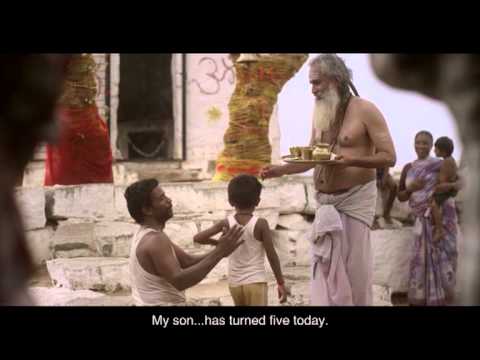
The execution follows a classic Setup-Turn-Payoff structure. The Setup establishes the mystery: Gondappa's strange, silent journey on his hands. The camera work, often from a low or upside-down angle, immerses us in his perspective, creating a sense of struggle and sacred purpose. The growing procession of villagers adds to the intrigue and sense of community importance. The Turn occurs when the journey ends at a temple. The initial assumption of a solemn religious penance shifts to one of celebration as Gondappa announces his son has turned five. This moment provides a brief release of tension, a feeling of shared joy with the crowd. The Payoff, however, is the film's masterstroke. An outsider, a tourist acting as the audience's surrogate, asks why turning five is such a big deal. The elderly villager's reply—“It’s a big thing, Madam. This is Gondappa’s first child to have survived till the age of five”—re-frames the entire story. The joy is not just joy; it is relief from unimaginable loss. This single line of dialogue provides the shocking context that makes Lifebuoy’s subsequent message about handwashing not just relevant, but urgent and vital. The brand only appears after the emotional hook is firmly set, positioning itself as the solution to the heartbreaking problem the story has just made real.
The debrief for the team that created this is that emotion, when rooted in a genuine human truth, is more powerful than any product feature. By having the courage to delay the brand reveal and the core message, they allowed the story to do the heavy lifting. The film doesn't tell you to care; it makes you care. It proves that for a social responsibility campaign to be effective, it must first be a compelling piece of human storytelling. The choice to use a long-form digital film format was crucial, giving the narrative the time it needed to breathe and build, creating an asset that was inherently shareable and discussion-worthy, ultimately earning more media and impact than a traditional TV spot ever could. [4, 9, 10]
Theme Keywords
Brand Position
Lifebuoy is the brand that makes a life-or-death difference through the simple act of handwashing.
Brand Archetype
Caregiver
Creative Game Plan
Transform the mundane act of handwashing into a heroic, life-saving gesture by telling a deeply emotional story where the ultimate benefit—a child's survival—is the dramatic core.
Diagnosis: Issues & Solutions
Primary Issue: Strategic Sense
The Problem:
The campaign's greatest strength—its subtle branding—could also be its biggest commercial risk. A viewer who skips the ad before the final 30 seconds would completely miss the brand and the message, leaving them with a memorable but un-actionable story.
The Solution:
For shorter edits or platforms where viewers drop off faster, introduce a visual cue earlier without breaking the narrative. This could be a subtle glimpse of the iconic red Lifebuoy soap in a home or a quick shot of a child washing hands, providing a hint of the theme that pays off more quickly.
Secondary Issue: Clarity of "What's Next?"
The Problem:
The call-to-action, 'Take the pledge on Facebook', feels slightly dated by today's standards and creates a barrier to entry (logging in, finding the page). The desired action is less immediate than the emotion the film evokes.
The Solution:
In a modern context, the CTA would be more direct and frictionless. For example, 'For every share, we'll help another family' or a simple link to a donation page or a site with shareable content. The goal should be to convert the powerful emotional energy into an immediate, simple action.