LAY'S® | The Little Farmer | 3:00 - Ad Analysis

AI Editor notes
Straight from the gut!!
“Three minutes is a massive ask for a potato chip ad. It’s beautifully shot, no question—almost a short film. But the 'farm-to-table' angle for a global giant like Lay's feels like a strategic stretch. Is anyone really thinking about the farmer when they grab a bag? This ad is a costly, high-production bet that they can make you start. It's a play for brand warmth over a quick sales hit.”
Quick Summary
In a bid to reinforce its market leadership with emotional weight, Lay's uses a long-form cinematic narrative to connect its mass-produced snack to the wholesome, authentic ideal of the American family farm. The ad effectively reframes the brand from just a factory product to a farm-to-table story, humanizing its supply chain through the eyes of a child.
Executive Summary
Lay's 'The Little Farmer' is a strategic pivot from product-focused advertising to ambitious brand myth-making. For a market leader like Lay's, the challenge isn't just to be known, but to be loved. This three-minute film, helmed by director Taika Waititi, is a direct attempt to build that love by grounding the ubiquitous snack in the soil of American family farming. The core insight is simple yet powerful: in an era of processed foods and complex supply chains, consumers crave authenticity and a human story. We want to believe that the food we eat is made with care.
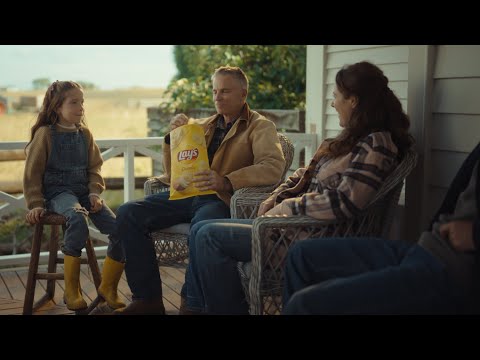
The execution follows a classic Setup-Payoff narrative arc. The Setup introduces us to a young girl on a family farm who feels left out of the day's work. She finds a single potato dropped from the harvest truck, giving her a mission. This initial scene establishes the emotional stakes. The bulk of the film is a montage that serves as the heart of the story, where we see her nurture this single potato plant through seasons and challenges—watering it, reading to it, and even protecting it from a storm with an umbrella. This extended sequence, set to a gentle folk song, forges a deep emotional connection between the viewer, the girl, and by extension, the potato. It's a metaphor for the care Lay's claims goes into its entire supply chain. The Payoff arrives when she harvests her single potato and proudly adds it to the family's massive harvest, which is loaded onto a Lay's truck. The final shot of the family enjoying a bag of Lay's on their porch closes the loop, explicitly connecting her dedication to the final product. The superimposition of real farming families at the end attempts to scale her individual story to the brand's entire operation. [1, 2]
The debrief for the marketing team is clear: emotional, long-form storytelling can effectively reframe a brand's origin story, even for a massive corporation. The key was anchoring a huge concept ('we use real potatoes') in a small, relatable story (a child's desire to contribute). While a three-minute runtime is a risk in a fragmented media landscape, it allows for the emotional depth necessary to make the message stick. The film doesn't sell chips; it sells a feeling of wholesome, American-made joy, a much more durable brand asset.
Theme Keywords
Brand Position
Lay's is the simple, joyful taste of America, rooted in the care and dedication of its family farmers.
Brand Archetype
The Innocent / The Everyman
Creative Game Plan
Humanize the massive scale of Lay's production by telling the intimate story of one small potato's journey, suggesting that the same level of care and dedication applies to every single one.
Diagnosis: Issues & Solutions
Primary Issue: Emotional Connection
The Problem:
The transition from the girl's single, lovingly-cared-for potato to the immense, industrial scale of the truckload is abrupt. It risks unintentionally diminishing her personal effort and making the viewer question how one special potato represents millions.
The Solution:
Bridge the scale gap more gracefully. Show a middle step where her potato is placed in a specific crate that her father is loading, giving her a more tangible sense of contributing to the family's specific work, before revealing the massive Lay's truck.
Secondary Issue: Clarity of "What's Next?"
The Problem:
The call-to-action is passive. The URL 'laysfarmtosmiles.com' appears briefly on a card with a lot of other text. Viewers are left with a warm feeling but no clear, compelling invitation to engage further with the farmer stories the brand is promoting. [2]
The Solution:
Strengthen the call-to-action with a direct invitation in the super. For example: "Meet the family behind your favorite chips. Laysfarmtosmiles.com." This turns the passive information into an active invitation to continue the story.