Lambi Judai | Native RO by Urban Company - Ad Analysis

AI Editor notes
Straight from the gut!!
“This is solid work. It gets the insight right: everyone in India has this weird, co-dependent relationship with their appliance guy. Turning that into a melodramatic 'judai' (separation) is a smart, funny hook that's instantly shareable. It respects the audience's intelligence by not just listing features. Is it a bit over the top? Yes, but that's the point. It cuts through the noise of a dozen other RO ads talking about purity and parts.”
Quick Summary
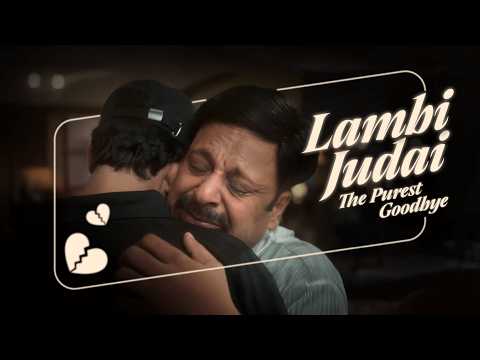
By framing the end of appliance maintenance as a gut-wrenching Bollywood farewell, this ad brilliantly transforms a functional benefit—no servicing for two years—into a memorable and hilarious story about breaking up with your technician. It's a clever, culture-first idea that makes a challenger product instantly stand out in a crowded, feature-obsessed market.
Executive Summary
In the commodified landscape of home appliances, Urban Company's 'Lambi Judai' for its Native RO is a masterclass in how to sell a functional benefit through emotional storytelling. Instead of leading with technical jargon like 'Multi-Micron Technology'—a path many competitors would take—the ad focuses on a universal human truth for its target market: the ingrained, often frustrating, ritual of appliance servicing. The campaign's strength lies in its core insight that Indian consumers have become so conditioned to frequent maintenance that its absence would feel like a genuine, if absurd, separation.
The execution uses a classic Setup-Turn-Payoff structure, amplified by cultural shorthand. The Setup is an exaggeratedly sorrowful family farewell, leaning heavily on the visual and musical grammar of 1980s Bollywood melodramas. This immediately hooks the viewer with its humor and familiarity. The Turn is the reveal that the departing individual is not a beloved family member, but the RO technician. This is the ad's comedic pivot, where the absurdity of the situation crystallizes. The Payoff is the clear, concise explanation from the most innocent character—the child—who spells out the 'why': the Native RO is so effective it won't need a service call for two years. The product becomes the hero that causes this comical 'heartbreak,' a far more engaging narrative than simply stating 'our filter is better.'
What the team behind this should learn is the power of dramatizing the problem your product solves. Native RO doesn't just offer clean water; it eliminates a recurring annoyance. By turning that annoyance into a character (the technician) and the solution into a dramatic event (the farewell), the brand created a narrative that is sticky, shareable, and far more persuasive than a simple product demo. It proves that even for a 'boring' category like water purifiers, a sharp cultural insight can be the most effective technology of all.
Theme Keywords
Brand Position
The smart, hassle-free appliance that eliminates the need for constant maintenance.
Brand Archetype
The Liberator
Creative Game Plan
Dramatize the end of the annoying, co-dependent relationship between homeowners and their service technicians by framing it as an over-the-top, tragic Bollywood farewell.
Diagnosis: Issues & Solutions
Primary Issue: Emotional Connection
The Problem:
The Bollywood parody is so well-executed and funny that there's a minor risk of it overshadowing the brand itself. Some viewers might remember the joke ('the sad goodbye to the technician') more than the product name ('Native RO').
The Solution:
Ensure the broader campaign includes shorter, performance-focused edits that reinforce the brand-product link, using the key characters to bridge the gap between the story and the sale.
Secondary Issue: Clarity of "What's Next?"
The Problem:
The call-to-action is a conventional end-slate listing retail partners. It’s functional but misses an opportunity to carry the ad's witty tone through to the final frame.
The Solution:
A more creative CTA could have amplified the ad's impact. For example, a simple line like 'Ready to say goodbye?' above the logos would have connected the ad's core joke directly to the purchasing decision.