LACOSTE - SAVE OUR SPECIES - Ad Analysis

AI Editor notes
Straight from the gut!!
“This is smart. Seriously smart. It’s not just another brand writing a check. They made their iconic logo—the one thing you should never, ever touch—the sacrificial lamb. That's what gives it weight. The product *is* the campaign. Tying the quantity of shirts to the number of remaining animals is a clever, gut-punch of a detail that makes the scarcity real. It’s a lesson in how to turn 85 years of brand equity into a headline.”
Quick Summary
Lacoste executed a masterstroke of brand activism by sacrificing its most sacred and valuable asset—the crocodile logo—to create a tangible, product-based statement about wildlife extinction. By replacing the crocodile with ten endangered species and limiting production to the number of animals left, the brand turned its iconic polo shirt into the ad itself, generating massive earned media and demonstrating a level of commitment that typical CSR campaigns rarely achieve.
Executive Summary
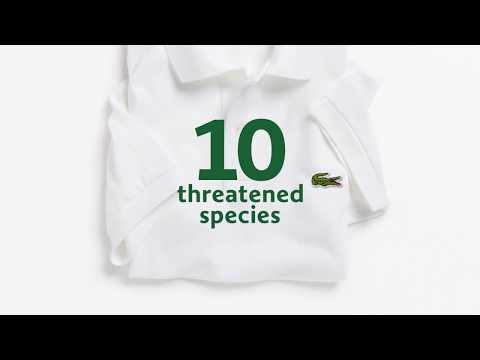
In a world saturated with brands claiming to stand for something, Lacoste’s 'Save Our Species' campaign cut through the noise with a simple, powerful, and daring act: it removed its own icon. For the first time in its history, the French apparel brand temporarily erased its famous crocodile logo from its classic polo shirt, a symbol it had cultivated for 85 years. [5] This wasn't just a marketing gimmick; it was the core of a campaign that was both the product and the message, executed with precision by the agency BETC Paris.
The core insight driving this work is that modern consumers, particularly Millennials, are tired of hollow corporate social responsibility gestures. They crave authenticity and tangible proof that a brand's values align with their own. Lacoste understood that a simple donation wouldn't suffice. To prove its commitment to conservation, it had to sacrifice something valuable. The campaign's execution followed a clean, direct structure perfectly suited for the digital age: a hook, a value proposition, and irrefutable proof, all leading to a clear call to action.
The hook is immediate and arresting: the familiar crocodile vanishes. The ad quickly explains that the logo's 'spot' is being given to ten threatened species. This is where the product itself becomes the creative. By replacing the crocodile with animals like the Vaquita or the Sumatran Tiger, Lacoste created a new, desirable object. The stroke of brilliance, however, was in the proof. The number of polo shirts produced for each species directly corresponded to the estimated number of animals remaining in the wild—30 shirts for the Vaquita, 67 for the Javan Rhino. [2] This mechanic transformed a limited-edition product drop into a stark, data-driven visualization of extinction, creating urgency and immense desirability. The shirts, launched during Paris Fashion Week, predictably sold out within 24 hours. [2]
The debrief for any brand team watching should be clear: your most powerful creative weapon might be your most protected brand asset. While most companies shield their logos, Lacoste and BETC turned theirs into a platform for a cause. The campaign didn't just talk about scarcity; it manufactured it to make a point. The result was a campaign that transcended advertising, becoming a cultural news story that earned an estimated €9.9 million in media and won a slew of awards. [9] It demonstrated that when a brand acts with courage and intelligence, the market and culture will respond with immense enthusiasm.
Theme Keywords
Brand Position
The classic, premium apparel brand that embodies timeless French elegance with an actionable social conscience.
Brand Archetype
The Sage
Creative Game Plan
Sacrifice our most iconic brand asset to make the threat of extinction tangible, turning the product itself into the medium for the message.
Diagnosis: Issues & Solutions
Primary Issue: Emotional Connection
The Problem:
The campaign's execution is clean, graphic, and highly intellectual. While effective, it misses an opportunity to forge a deeper, more visceral connection by showing the real-world impact and the animals themselves.
The Solution:
Develop a secondary content stream featuring short, documentary-style videos of the 10 species in their natural habitats. Show the conservation work being done by the IUCN on the ground, connecting the purchase of a polo directly to the beautiful, living creatures it helps to protect.
Secondary Issue: Clarity of "What's Next?"
The Problem:
The campaign's limited-edition nature created massive demand that far outstripped supply, leaving a huge, engaged audience with no way to participate after the 1,775 shirts sold out. [2]
The Solution:
Immediately follow the sold-out announcement with a clear secondary call-to-action on the same landing page. Offer alternatives like a direct donation link to the IUCN, a sign-up for a 'Friends of the Crocodile' newsletter for future initiatives, or a non-limited product where a portion of proceeds supports the cause year-round.
Additional Notes
Related Links
Credits
Share this Analysis
More Lacoste ad breakdowns
- The new Lacoste campaign I Choose the bucket hatLacoste
- Lacoste x Théo Curin I The first-ever collection conceived by a handisport athleteLacoste
- Lacoste Original Aqua: Aqua SplashLacoste
- The Run - Life is a Beautiful SportLacoste
- あなたならどう着る?LEVI'S FEATURING NEWJEANS | Levi'sLevi's
- Everyday Wear for Mr. Dependable featuring Rahul DravidUniqlo
- UNIQLO Premium Linen Shirt Collection featuring Kareena Kapoor KhanUNIQLO
- Levi’s featuring NewJeans | Levi’sLevi's