La muñeca que eligió conducir (2016) - Ad Analysis

AI Editor notes
Straight from the gut!!
“This is a solid piece of brand-building. It's a long-form ad that feels more like a Pixar short, and that's its strength. The 'pink aisle vs. blue aisle' is a well-worn trope, but tying it to the freedom of driving makes it feel fresh and, more importantly, ownable for a car brand. It’s a smart way to get cultural credit during the holidays without a hard sell.”
Quick Summary
This ad isn't selling a car; it's selling a modern value system. Audi masterfully uses a charming, feature-film-quality animation to position itself as a progressive brand that champions freedom and choice for everyone. By linking the thrill of driving to the childhood act of breaking gender stereotypes, the campaign builds significant brand equity with a generation of parents who want to see their values reflected in the brands they buy.
Executive Summary
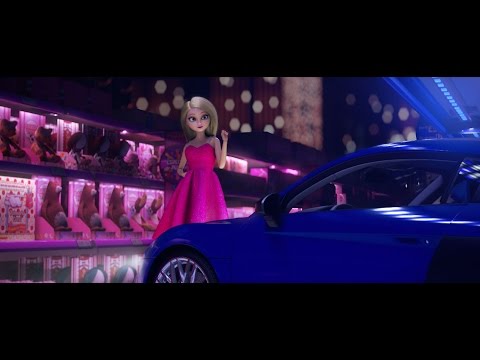
Audi's 'The Doll Who Chose to Drive' is a masterclass in modern brand building, using a social cause to create emotional resonance and differentiate itself in a crowded luxury market. Instead of focusing on horsepower or leather interiors, the ad focuses on a powerful idea: that the desire for freedom, performance, and choice is universal and should not be constrained by outdated gender norms. The campaign operates on the simple but effective insight that the stereotypes we learn in the playroom often follow us onto the road and into life. By positioning the Audi R8 as the ultimate vehicle of liberation for a doll trapped on the 'pink aisle,' the brand powerfully equates driving an Audi with an act of self-determination and progressive thinking.
The execution follows a classic narrative arc that makes its three-minute runtime feel earned. The Setup establishes the conflict: a visually segregated toy store representing societal expectations, with our hero, a doll, looking bored and confined. The Turn is her daring escape, a rejection of her assigned role. Her choice of the Audi R8 is critical; it’s not just any car, it's a symbol of peak performance and design, elevating her choice beyond mere transportation to an aspirational act. The journey through the store becomes a celebration of breaking norms, with other toys joining in this quiet rebellion. The Payoff brings the message into the real world. When a young boy insists on buying both the doll and the car, he validates the doll's journey. His mother's initial hesitation—'these don't go together'—is the voice of the old rules, which the child, and by extension Audi, are here to change. The final on-screen line, 'Playing, like driving, shouldn't be about gender,' lands with the force of a mission statement, not just an ad tagline.
The debrief from this campaign is clear: purpose-driven advertising, when rooted in an authentic brand connection, can be incredibly effective. Audi found a credible link between its core product function (driving) and a larger social conversation (gender equality). The success of this ad, which became a viral hit [6], demonstrates that audiences are receptive to long-form content from brands, provided it tells a compelling story. It proves that a brand can build more value by selling an idea it believes in than by simply listing product features.
Theme Keywords
Brand Position
The forward-thinking performance brand that champions freedom of choice.
Brand Archetype
Explorer
Creative Game Plan
Illustrate that the thrill of driving is a universal desire by showing a traditional doll rejecting her stereotyped world for the freedom and performance of an Audi.
Diagnosis: Issues & Solutions
Primary Issue: Strategic Sense
The Problem:
The ad's 3-minute-plus runtime, while effective for storytelling, makes it primarily a destination content piece for platforms like YouTube. This limits its adaptability for broader, higher-frequency media channels like broadcast TV or shorter pre-roll slots, potentially restricting its total reach.
The Solution:
Develop a suite of shorter assets (60s, 30s, 15s) that isolate the most powerful moments—the doll's escape, her first look at the Audi, the exhilarating drive—to deliver the core message with greater efficiency across a wider range of media placements.
Secondary Issue: Clarity of "What's Next?"
The Problem:
The primary call to action is the hashtag #CambiemosElJuego, which is strong for social conversation but lacks a concrete next step for consumers who are inspired by the message and want to engage further with the brand's initiative.
The Solution:
Pair the ideological CTA with a tangible brand action. For example, partnering with an organization that supports girls in engineering or design, and directing viewers to a landing page where they can learn more or donate, converting passive viewership into active brand engagement.
Additional Notes
Related Links
Credits
Share this Analysis
More Audi ad breakdowns
- Radoslav Yankov I #gooutAudi
- #youdareoryoudont (version longue)Audi
- The new Audi S6. #JekyllAndHydeAudi
- Audi R8 Spyder 'Beauty and the Beasts'Audi
- Projection of Greatness: The all-new Audi Q7Audi
- Audi - Italia. Land of quattro.Audi
- Kermit Gets Set Up, feat. Miss Piggy, Kermit the Frog, Julie Bowen, Viola Davis and Joel McHaleAudi
- Audi A8L TV CommercialAudi