Kya scene hai? | Party | Swiggy - Ad Analysis

AI Editor notes
Straight from the gut!!
“This is smart, fast, and knows exactly who it's talking to. It doesn't overstay its welcome. The 'sad jazz' to 'banger' transition is an old trick, but it works. The real play here is co-opting 'scene'. If they can actually make 'Swiggy hai toh scene hai' stick, that's a huge win. It's a bit of a gamble, but for a 26-second social ad, it's a solid, focused shot at cultural relevance.”
Quick Summary
This ad effectively positions Swiggy not just as a food delivery service, but as the essential catalyst for transforming any dull social gathering into a memorable event. It cleverly hijacks the popular slang 'scene' to embed the brand directly into the language of its target audience, making 'ordering Swiggy' synonymous with 'starting the party'. The strategy is to move the brand from a functional utility to a social necessity.
Executive Summary
Swiggy's 'Party' spot is a tight, disciplined piece of advertising that understands its objective and executes it without an ounce of fat. At its core, this isn't an ad about food; it's an ad about social currency. The brand is selling a solution to a common fear among young urbanites: hosting a lame party. This insight is what elevates the ad from a simple service reminder to a culturally relevant statement.
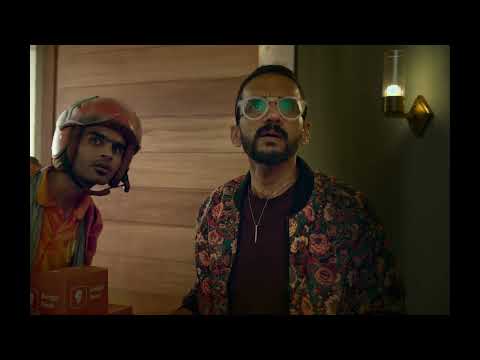
The execution follows a classic Problem-Solution framework, distilled to its most potent form for a social media feed. The Setup is immediate and relatable: a house party that's failing. The host’s desperate attempt to sell his guests on 'jazz' is a perfect comedic signal for social death. The lighting is moody, the guests are static, and the energy is zero. This is the 'problem' stated visually in under five seconds. The Turn is the arrival of the Swiggy delivery person. He is the catalyst, the agent of change. His appearance is punctuated by a guest's demand to change the music, linking the food's arrival directly to the imminent shift in vibe. The Payoff is instantaneous and sensory. The music flips from lethargic jazz to a high-octane Indian dance track, and the party explodes with life. The host's bewildered question, 'Yeh kya scene hai?' (What is this scene?), becomes the anchor for the brand's entire proposition. The delivery person's deadpan reply, 'Sir, party scene hai' (Sir, it's a party scene), reframes Swiggy's role. The brand isn't just delivering pizza; it's delivering the 'scene' itself.
The debrief for the team that made this should be focused on the power of owning a single word or phrase. The entire creative and strategic weight of the campaign rests on hijacking the ubiquitous slang 'scene'. By creating the memorable, reversible tagline, 'Scene hai toh Swiggy hai. Swiggy hai toh scene hai,' the brand attempts to create a closed loop of logic in the consumer's mind. Any time there's a 'scene' (a plan, a party, a gathering), Swiggy should be part of it. And if you have Swiggy, you are guaranteed to create a 'scene'. It's a confident, ambitious strategy that, if successful, will pay dividends in top-of-mind awareness far beyond what a simple product-benefit ad could achieve.
Theme Keywords
Brand Position
Swiggy is the official catalyst of the 'scene,' turning any moment into a memorable social event.
Brand Archetype
The Jester/Magician. The Jester brings fun and energy to the party, while the Magician transforms a dull situation into something wonderful.
Creative Game Plan
Transform Swiggy from a functional utility into the essential ingredient for any social moment.
Diagnosis: Issues & Solutions
Primary Issue: Strategic Sense
The Problem:
The campaign's biggest strength—its reliance on the slang 'scene'—is also its primary vulnerability. Cultural slang has a notoriously short shelf life. While highly effective now, the phrase could feel dated or cringey in 6-12 months, requiring the brand to constantly find the 'next' thing and potentially dating the ad quickly.
The Solution:
Diversify the 'scene'. While 'party' is a strong start, the brand should rapidly produce a series of short follow-up spots showing different 'scenes' (a late-night study scene, a post-breakup comfort food scene, a big cricket match scene) to broaden the platform's meaning beyond just parties and give it more strategic longevity.
Secondary Issue: Brand Distinctiveness
The Problem:
The core idea, while executed well, is not entirely defensible. A competitor could easily create a similar ad showing their food delivery service saving a different social situation. The link between food delivery and improving a social gathering is a category benefit, not a unique brand benefit.
The Solution:
Double down on the Swiggy delivery agent as a recurring character or brand asset. His calm, all-knowing presence in the middle of the chaos is a distinct element. Using him as a recurring 'Scene Savior' across different ads could build an ownable brand property that competitors can't easily replicate.
Additional Notes
Related Links
Credits
Share this Analysis
More Swiggy ad breakdowns
- Scene hai toh Swiggy hai. Swiggy hai toh scene hai.Swiggy
- What a delivery !Swiggy
- Swiggy Pawlice: A Heartwarming Feature to Help Find Lost PetsSwiggy
- Bae-ryani!Swiggy
- Mom never plays favourites. Or does she? Well, only one way to find out. #MomsFavouriteSwiggy
- Got a game? Don't let hunger 'strike' you out. #JustSwiggyItSwiggy
- Stay home, go places with Swiggy Gourmet!Swiggy
- Gulab Jamun Uncle is back with a sweet victory!Swiggy