Kotak Confident Reinvention Solutions_60 Sec_Master - Ad Analysis

AI Editor notes
Straight from the gut!!
“This is a smart pivot. The word 'retirement' is loaded with baggage. 'Reinvention' is active, hopeful, and modern. Using Rajkummar Rao to debate himself in a mirror is a classic but effective way to visualize an internal conflict that many people in their 40s feel. My only question is whether the product is as fresh as the marketing. The ad sells a feeling, but it's vague on the 'how'. It's a great wrapper, but I hope the candy inside isn't just another standard plan.”
Quick Summary
Kotak Life effectively reframes retirement from a passive, dreaded end-stage into an active, aspirational 'reinvention.' By using a celebrity's internal monologue, the ad transforms the abstract concept of financial planning into a personal and empowering solution for fulfilling long-lost dreams, cleverly shifting the category conversation from fear of the future to excitement for it.
Executive Summary
Kotak Life's 'Reinvent, Don't Retire' campaign is a clever strategic move in a category often defined by fear and complexity. The ad doesn't sell a financial instrument; it sells a new perspective on life after 50. It’s a solid piece of communication that understands its target audience's psychological state.
The Core Insight: The simple human truth at the heart of this ad is that for many successful, middle-aged professionals, the fear of retirement isn't just financial—it's existential. It’s the fear of irrelevance and the quiet grief for abandoned passions. They don't want to just stop working; they want the freedom to start living on their own terms. The campaign insightfully identifies that the word 'retirement' itself has negative connotations of an ending, while the audience is looking for a new beginning. [7]
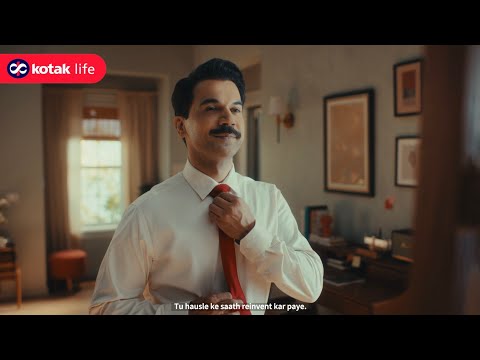
The Execution: The ad uses a classic Setup-Turn-Payoff structure, personified by the dialogue between a man and his reflection.
- Setup: We see a man (Rajkummar Rao) going through the motions of his successful life. His reflection, however, acts as his conscience, reminding him of his youthful, unfulfilled dreams—riding motorcycles, living in the hills. This establishes the internal conflict between the comfortable present and the desired future. The use of a relatable, everyman celebrity makes this inner dialogue feel authentic. [1, 6]
- Turn: The conflict is grounded in reality with a simple phone notification: 'Home EMI.' This single visual brings forth all the anxieties of financial responsibility that keep those dreams at bay. The man's question, "Kaise hoga?" ("How will it happen?"), is the central problem the ad aims to solve.
- Payoff: The reflection delivers the solution and the campaign's core proposition: "Retire nahin, re-invention ki planning kar" ("Don't plan to retire, plan to reinvent"). This single line reframes the entire problem. Financial planning is no longer a defensive measure against old age but an offensive strategy to enable a vibrant second act. The ad ends by explicitly naming the product, 'Kotak Confident Reinvention Solutions,' tying the aspirational message directly to the brand's offering.
The Debrief: This campaign is a good example of how to breathe life into a stale category. The key lesson is the power of reframing. By changing one word—'retire' to 'reinvent'—Kotak shifts the entire emotional landscape from negative to positive. It moves the conversation from scarcity and fear to abundance and opportunity. The use of a celebrity not as a superstar but as an embodiment of the audience's own inner conflict is a smart casting choice that adds credibility. The campaign successfully creates a differentiated brand platform that Kotak can build on.
Theme Keywords
Brand Position
The financial partner for a confident and purposeful second life.
Brand Archetype
The Sage
Creative Game Plan
Personify the internal conflict between responsibility and aspiration to reframe retirement planning as an act of empowerment.
Diagnosis: Issues & Solutions
Primary Issue: Emotional Connection
The Problem:
The ad is thoughtful but emotionally sterile. The protagonist's dreams—riding a motorcycle, a house in the hills—are generic archetypes of freedom. They feel like stock images of a mid-life crisis rather than specific, personal aspirations, which keeps the viewer at an arm's length.
The Solution:
Make the dream more specific and quirky. Instead of a generic motorcycle trip, what if he wanted to open a small bookstore specializing in vintage comics, or learn to play the cello? A more personal, idiosyncratic dream would have made the character more human and the emotional stakes higher.
Secondary Issue: Strategic Sense
The Problem:
The 'Reinvention' concept is brilliant, but the product itself remains a black box. The ad sells the 'why' (to reinvent your life) but is completely silent on the 'what' and 'how.' This leaves a gap between the aspirational promise and the tangible product, risking the campaign being perceived as clever but hollow.
The Solution:
In the final 5 seconds, add a simple, clear line or a visual that hints at the product's nature. For example: 'Flexible payouts that fund your next chapter' or 'A plan that adapts as your dreams evolve.' This would bridge the gap between the story and the solution without getting bogged down in jargon.