The Kaprao Criminals - Ad Analysis

AI Editor notes
Straight from the gut!!
“This is how you launch a localized product without getting roasted online. In Thailand, putting non-traditional ingredients in Kaprao is treated like putting pineapple on pizza in Rome. Instead of pretending their fried chicken bowl is authentic street food, KFC threw Colonel Sanders in prison for it. It is funny, self-aware, and solves a real brand-risk problem cleanly.”
Quick Summary
KFC Thailand avoids consumer backlash over a non-traditional menu launch by leaning directly into the country's fiercest culinary debate, self-deprecatingly locking Colonel Sanders in an 'unauthentic Kaprao jail' to reframe product liberty as consumer transparency.
Executive Summary
Launching a localized fast-food item in a market with strong culinary pride is inherently risky. In Thailand, Pad Kaprao is widely regarded as a sacred national staple. Any deviation—whether adding onions, baby corn, or long beans—frequently sparks viral complaints from culinary purists. For a foreign quick-service brand like KFC, putting fried chicken on a Kaprao rice bowl risked instant dismissal as cheap commercial bastardization.
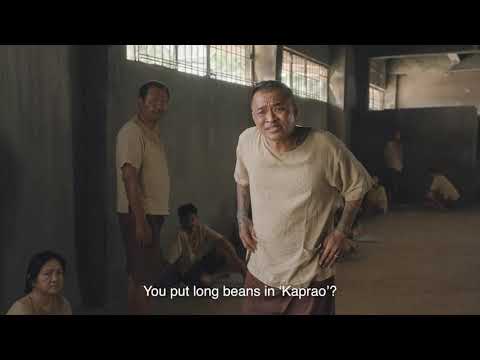
The creative strategy addresses this vulnerability head-on using a Setup–Turn–Payoff structure. The film opens on a familiar, relatable scene: an everyday customer at a street stall arguing with an auntie about unauthorized long beans in her Kaprao. The turn occurs when the ground gives way and drops the defensive vendor into the 'Unauthentic Kaprao Jail,' where inmates recount their culinary offenses—adding Chinese kale, onions, or sweet basil. The second, more decisive turn lands when Colonel Sanders himself crashes into the cell as inmate number 59.
Instead of arguing that KFC's version is genuine, the brand pleads guilty. The Colonel delivers a deadpan monologue acknowledging that everyone in the room broke the rules to provide variety: 'The routine menu, in a new way'. The resolution redefines the issue not as authenticity versus blasphemy, but as menu transparency. The film closes on vendors proudly listing their distinct interpretations—including KFC's 59 Baht crispy chicken version. By pre-empting criticism and turning culinary controversy into self-deprecating comedy, the campaign removes friction around trial and reinforces brand affinity.
Theme Keywords
Brand Position
The playful, culturally grounded fast-food innovator that offers bold local favorites without taking itself too seriously.
Brand Archetype
Jester (Witty, self-deprecating, irreverent)
Creative Game Plan
Acknowledge and embrace the brand's non-traditional recipe by putting Colonel Sanders on trial alongside offending street cooks in a fictional food-crime prison.
Diagnosis: Issues & Solutions
Primary Issue: Strategic Sense
The Problem:
At over four minutes in length, the digital film relies heavily on complete narrative buy-in and may lose casual viewers before the food payoff and pricing reveal at the three-minute mark.
The Solution:
Deploy 15- and 30-second cutdowns focusing specifically on the Colonel's prison reveal and direct product shots for high-frequency digital pre-roll buys.
Secondary Issue: Clarity of "What's Next?"
The Problem:
The film emphasizes product features and price clearly, but lacks clear delivery or mobile app order prompts.
The Solution:
Incorporate an end card with a direct app download incentive or delivery CTA to capture immediate digital ordering intent.