KFC Delivery | Halloween Trick or Treat - Ad Analysis

AI Editor notes
Straight from the gut!!
“This is a solid piece of tactical creative. It's a simple, fun idea that feels authentic because it's grounded in a real-world activation. Instead of a glossy, forgettable ad, they created an experience. You can see the genuine surprise and delight on people's faces. It's a clever way to own a cultural moment without a massive budget and makes the brand feel current and playful.”
Quick Summary
By sending monstrous versions of Colonel Sanders to make Halloween deliveries, KFC Australia created a simple, highly shareable stunt that generated brand buzz, reinforced its fun-loving personality, and smartly promoted its delivery partnership with Menulog.
Executive Summary
KFC Australia’s “Halloween Trick or Treat” campaign is a textbook example of effective experiential marketing, turning a simple food delivery into a memorable and highly shareable event. The work succeeds by tapping into a simple human truth, executing it with a clever twist, and leveraging the brand's most unique asset: Colonel Sanders.
The Core Insight: The foundational insight is that on Halloween, people aren't just looking for a convenient meal; they're seeking fun, spooky experiences and a little bit of mischief. The delivery occasion itself, which is typically purely transactional, becomes an opportunity for entertainment. By merging the ritual of trick-or-treating with the modern convenience of food delivery, KFC positions itself not just as a food provider, but as a participant in the holiday fun.
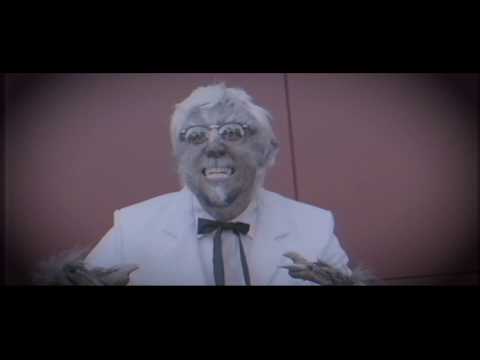
The Execution: The ad uses a classic Setup-Turn-Payoff structure. The Setup (0:00-0:23) leans heavily on horror movie conventions. It opens with spooky music and title cards like “THIS HALLOWEEN,” establishing a familiar, ominous tone. We see a horde of “Cursed Colonels”—a vampire, a werewolf, a zombie—emerging from a KFC, transforming the brand’s friendly icon into something monstrous. This creates narrative tension and primes the audience for a scare. The Turn (0:34) is the critical moment of the ad. Just as a zombie Colonel is about to deliver the food, the soundtrack abruptly switches from a creepy orchestral score to a high-energy electronic beat. The look of shock on the customers’ faces instantly morphs into laughter and delight. The expected “trick” of a horror movie becomes the “treat” of a fun, surprising prank. The Payoff (0:35-1:01) is a montage of these positive, authentic-feeling reactions. We see people happily taking selfies with the monsters, enjoying the experience. This montage serves as social proof, demonstrating the success of the stunt. The campaign tagline, “KFC x Menulog, Trick or Treat,” explicitly states the concept, and the final sign-off, “Always Delivering Treats,” connects the one-off stunt back to the core brand promise.
The Debrief: The key takeaway for the brand team is the immense value of leveraging distinctive brand assets in unexpected ways. Any food brand could have done a Halloween promotion, but only KFC could send out scary Colonels. This activation was successful because it was un-ignorable, inherently social, and perfectly aligned with KFC's fun, slightly irreverent brand personality. It proves that a moderate-budget, real-world stunt can generate more authentic engagement and brand love than a multi-million dollar traditional ad, especially when amplified effectively on social media.
Theme Keywords
Brand Position
The fun, slightly mischievous fast-food brand that provides satisfying and shareable moments.
Brand Archetype
The Jester
Creative Game Plan
Hijack the Halloween tradition of 'trick or treating' by transforming KFC delivery into a spooky but delightful surprise.
Diagnosis: Issues & Solutions
Primary Issue: Clarity of "What's Next?"
The Problem:
The ad showcases a brilliant activation but fumbles the immediate call to action. The end-slate “Always Delivering Treats” is a generic brand slogan that doesn't capitalize on the specific event. Viewers are left entertained but without a clear, urgent next step.
The Solution:
Add a simple, direct end card: 'Get your own surprise treat. Order KFC on Menulog tonight.' Even better, include the 25% off deal that was reportedly part of the actual promotion to create urgency and a tangible reason to act now. [7]
Secondary Issue: Strategic Sense
The Problem:
The partnership with Menulog is central to the execution, but the Menulog brand gets secondary visual treatment. The focus is overwhelmingly on the KFC experience, potentially weakening the co-branding benefit for the delivery partner.
The Solution:
Integrate the Menulog branding more deliberately throughout the execution, beyond just the delivery bags. For example, the final lockup could have animated the two logos coming together more dynamically to signal a more equal partnership.