KFC: Big Boss - Ad Analysis

AI Editor notes
Straight from the gut!!
“It's a Big Mac, but with chicken. The strategy is that simple and that obvious. Using 'We're Not Gonna Take It' is a bit on the nose, but it works. It's a classic challenger ad playbook from the 2000s, executed cleanly in 2014. You immediately get the joke, you know exactly who it's for (anyone who's ever dreaded a 1 pm meeting), and you know what the product is. It's not subtle, but fast food ads rarely are.”
Quick Summary
This ad successfully launched a new product by positioning it as a tool for rebellion against mundane daily life. It uses a simple, relatable insight—the desire to prioritize personal satisfaction over obligations—and wraps it in a humorous, high-energy package powered by a perfect music choice, directly challenging competitors like McDonald's Big Mac. [13]
Executive Summary
KFC's 'Big Boss' is a textbook example of how to launch a challenger product by creating a simple, powerful narrative around a relatable human truth. The ad doesn't sell a sandwich; it sells a moment of personal rebellion. The core insight is that for many people, especially young professionals, the daily grind of mundane responsibilities feels oppressive, and the idea of prioritizing a moment of personal satisfaction is a powerful fantasy. The Big Boss sandwich is positioned not as food, but as the catalyst for that fantasy.
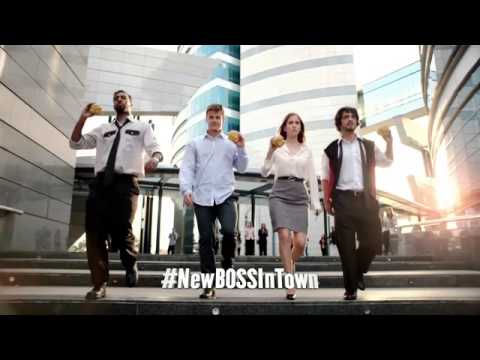
The execution follows a classic Problem-Solution structure, though framed with humor. The Setup is the introduction of our hero, the young professional, and his 'problem': an impending staff meeting. The Turn is the moment of decision, where he discards his phone—the symbol of his obligations—and chooses the sandwich. This kicks off the ad's central montage, which serves as the Proof. We see others—a valet, a retail worker, a security guard—all making the same choice, empowered by the Big Boss to reject their duties in favor of a moment of defiance. The Payoff is the final triumphant shot of the four 'rebels' walking together, owning their decision, followed by the product reveal. The use of Twisted Sister's 'We're Not Gonna Take It' is the engine of the entire piece; it's a cultural shorthand for rebellion that does the heavy lifting, instantly setting the tone and communicating the ad's core idea without needing a single line of dialogue.
The debrief for the team that created this would center on the effectiveness of a singular focus. The ad succeeds because it knows exactly what it is. It's not trying to be emotional or subtle. It identifies a clear enemy (the daily grind), provides a clear hero (the Big Boss sandwich), and celebrates a clear victory (choosing yourself). This clarity, combined with a high-energy execution and a killer music track, makes for a sticky and effective piece of launch advertising that gives a new product an instant personality.
Theme Keywords
Brand Position
KFC provides the ultimate satisfying food that empowers you to be the boss of your own moment.
Brand Archetype
The Jester/Outlaw
Creative Game Plan
Position the Big Boss sandwich as the official fuel for personal rebellion against everyday obligations.
Diagnosis: Issues & Solutions
Primary Issue: Strategic Sense
The Problem:
The ad's central premise, a double-patty sandwich named the 'Big Boss,' is a direct and undisguised shot at the McDonald's Big Mac. [13] The biggest risk is that it comes off as a copycat rather than a genuine alternative, potentially reinforcing the market leader's position rather than successfully stealing share.
The Solution:
Future creative should have leaned more heavily into what makes the KFC version unique—the 'hand-breaded seasoned chicken'—to create a stronger point of differentiation beyond simply being 'the chicken version'.
Secondary Issue: Emotional Connection
The Problem:
While the rebellious fantasy is entertaining, it's a surface-level emotion. The connection is broad but not necessarily deep, relying on a humorous trope rather than a genuine story. It entertains but may not build long-term brand affinity.
The Solution:
A follow-up spot could have shown a more personal, less bombastic story of someone using the sandwich as a small, well-deserved reward after a genuinely tough day, building a slightly deeper emotional layer.