It's time for a real change in weight loss. - Ad Analysis

AI Editor notes
Straight from the gut!!
“This is pharma marketing 101, executed cleanly for the Indian market. They're not selling a pill; they're selling a new belief system: "It's not your fault, it's a disease." That's the key that unlocks the door to a massive, previously inaccessible market. The emotional arc from shame to empowerment feels a bit by-the-book, but it's effective. It's a smart, calculated play to build trust before you ever mention a product name.”
Quick Summary
This is a classic disease-awareness campaign designed to reframe obesity from a personal failure of willpower to a legitimate medical condition. By systematically dismantling the social stigma and self-blame associated with weight, Lilly positions itself as an empathetic authority. This move is not just about public interest; it's a strategic effort to prepare the market and change the cultural conversation, priming consumers to seek medical solutions—like those Lilly provides—by encouraging them to "talk to your doctor."
Executive Summary
Lilly's 'We Know Now' campaign is a masterclass in modern pharmaceutical marketing, demonstrating a shift from product-centric advertising to narrative-shaping. Its core function is to dismantle a cultural belief—that obesity is a moral failure—and replace it with a medical diagnosis. The ad operates on a deep understanding of its audience's pain points, which are less about the physical reality of weight and more about the emotional weight of shame and social judgment.
The Core Insight: The simple human truth at the heart of this ad is that people struggling with their weight are tired of being blamed. For years, society, and by extension they themselves, have viewed their condition as a failure of willpower. The ad intuits that what this audience craves most isn't another diet tip, but validation. They want to be told that their struggle is real, legitimate, and not entirely their fault. This insight is the foundation upon which the entire strategy is built.
The Execution (Problem-Solution Framework): The ad's 45-second runtime is neatly divided into a classic Problem-Solution narrative.
- The Problem (0:00-0:26): The first half is a montage of quiet suffering. A man strains in a yoga class, a woman endures judgmental looks at a buffet, and another is shamed while shopping for clothes. The Hindi voiceover, which speaks of answering questions and being taunted, gives these scenes a poetic, painful quality. This section culminates in the most private moment of despair: a woman on a weighing scale, accepting the blame with the line, "Galti humari hi hai" ("The fault is ours alone"). This effectively establishes the emotional and societal problem.
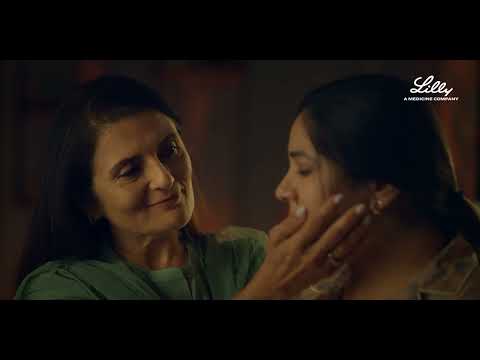
- The Turn & Solution (0:27-0:45): The pivot is initiated by an act of kindness from a mother, which leads the protagonist to seek information. The discovery of the headline, "WE KNOW NOW OBESITY IS A DISEASE," is the narrative's turning point. The music swells, the lighting brightens, and the tone shifts from despair to hope. The solution is presented as knowledge and understanding. This new knowledge is then validated by a trusted authority figure—a doctor—who repeats the core message: "Sometimes the body can resist weight loss." The final call to action, "Have a weight loss conversation with your doctor," frames medical consultation as the logical, empowering next step.
The Debrief: The key learning here is the power of narrative control in marketing. Lilly isn't just advertising; it's performing a strategic act of public education that directly serves its commercial interests. By funding the de-stigmatization of obesity, Lilly becomes the trusted ally in the audience's mind. [8] When the patient finally has that conversation with their doctor, Lilly is already positioned as the brand that understands. It proves that the most effective way to sell a solution is to first own the definition of the problem.
Theme Keywords
Brand Position
The empathetic scientific authority that understands the biological truth of obesity.
Brand Archetype
Caregiver
Creative Game Plan
Reframe obesity from a personal, moral failure into a legitimate, diagnosable disease to open the door for medical intervention.
Diagnosis: Issues & Solutions
Primary Issue: Emotional Connection
The Problem:
While emotionally resonant, the execution feels slightly generic, like a template for a 'disease awareness' ad. The scenarios (yoga, party, shopping) are relatable but also predictable, which can slightly blunt the authenticity of the emotion.
The Solution:
Incorporate a more documentary-style element or focus on a single character's journey with more specific, less-archetypal details. A moment of unexpected vulnerability or a less-polished visual approach could make the connection feel more raw and genuine.
Secondary Issue: Clarity of "What's Next?"
The Problem:
The CTA 'talk to your doctor' is standard and safe, but it leaves the viewer with a somewhat vague mission. What should they say? What should they ask for? The ad successfully creates motivation but provides a less-defined path.
The Solution:
Sharpen the CTA slightly to better guide the patient. A line like, 'Ask your doctor about the science of weight loss' or 'Ask your doctor what's possible now' would give the viewer a more concrete opening for the conversation, subtly pointing towards new solutions.
Additional Notes
Related Links
Credits
Share this Analysis
More Lilly ad breakdowns
- Annie Murphy’s #1 rule? Phexxi® (lactic acid, citric acid, and potassium bitartrate)Phexxi
- Never OverEli Lilly and Company
- The Journey MerckMerck
- Panado TV CommercialPanado
- Feliz Día, HombresUrufarma
- 1000 Lives Touched Per Minute | Sun Pharma – India’s No.1 Pharma Company (Hindi)Sun Pharma
- Eli Lilly Oncology: Beyond the momentEli Lilly Oncology
- World Organ Donation Day | 13th August | Hindi | Share the Gift of Life | Ft. Amitabh BachchanMankind Pharma