It's the little things... - Ad Analysis

AI Editor notes
Straight from the gut!!
“This is a very safe, pleasant ad. The miniature world is a nice visual trick to avoid generic farm footage. But the whole thing feels a bit by-the-numbers. It's telling me it's good, but it's not making me feel much. In a busy social feed, will 'pleasant' be enough to make anyone stop and care about European certification? I'm not so sure.”
Quick Summary
Arla is trying to build trust with health-conscious Singaporean families by making its production process transparent. The ad uses a charming miniature world to show that its 'little' commitments to organic, sustainable farming in Europe result in a 'good' and trustworthy milk you can give your kids.
Executive Summary
This Arla campaign is a solid, if conventional, piece of brand-building aimed squarely at the conscientious consumer. Its core strategy is to demystify the 'organic' label by providing tangible, albeit simplified, proof points. The ad doesn't try to be flashy or overly clever; its primary goal is to build trust through transparency, a common tactic in a food and beverage market crowded with health claims.
The core insight driving this work is that for millennial parents, feeding their family isn't just about nutrition—it's about values. They want to know the story behind their food. Where does it come from? How was it made? Is it good for the planet? This ad attempts to answer those questions directly, positioning Arla not just as a milk provider, but as a partner in responsible parenting.
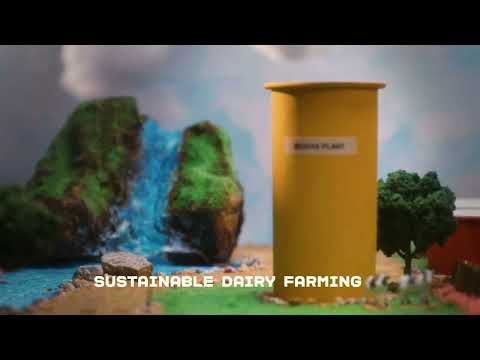
The execution uses a simple 'Setup-Turn-Payoff' structure. The Setup (0:00-0:06) grounds the ad in a relatable, warm reality: a mother and child sharing a moment over breakfast. This establishes the emotional stakes. The Turn (0:06-0:30) is the ad's main creative device, where the milk carton becomes a portal into a miniature world explaining the brand's practices. Using a diorama is a smart choice; it visualizes complex ideas like 'sustainable farming' and 'GMO-free' in a charming, non-preachy way that's more engaging than stock footage of farms. This section is an educational 'reason to believe,' methodically listing credentials from being the 'largest organic dairy producer' to its 'European-certified' status. The Payoff (0:30-0:41) brings us back to the kitchen, linking the miniature world of 'little things' directly to the happy, healthy family enjoying the milk. The final product shot, tagged for World Milk Day, neatly frames the ad as part of a larger, relevant conversation. [4]
In the debrief, the team should recognize that the mixed-media approach worked well to make an educational message digestible. However, the ad leans too heavily on the voiceover to do the storytelling. It's a classic case of telling, not showing. The music is pleasant and the visuals are clean, but there’s no creative tension or emotional hook to make it stick. It effectively communicates its credentials but fails to forge a deeper, more memorable emotional connection. It’s a competent explanation, but not a compelling story.
Theme Keywords
Brand Position
The transparent, high-quality European organic milk that gives conscientious families peace of mind.
Brand Archetype
The Caregiver
Creative Game Plan
Visually demonstrate that the 'goodness' inside our milk comes from the series of small, responsible choices we make on our farms.
Diagnosis: Issues & Solutions
Primary Issue: Emotional Connection
The Problem:
The ad is more cerebral than sentimental. It presents a logical argument for why a consumer should trust Arla but doesn't create a strong feeling. The mother and child are props for the message rather than characters in a story we connect with.
The Solution:
Rework the script to have a moment of genuine, unscripted-feeling interaction between the mother and daughter. Let the visuals and their connection tell the story of 'goodness' with minimal voiceover, making the brand a quiet facilitator of a cherished family moment, not the narrator of its own CV.
Secondary Issue: Strategic Sense
The Problem:
The ad assumes '100% European-Certified Organic' is a knockout blow. For a consumer in Singapore, this might be too abstract. What does a European standard mean for their child's health versus a local or Australian organic certification? The benefit feels distant.
The Solution:
Connect the 'European-Certified' credential to a tangible benefit for the Singaporean consumer. For example: 'Our European standards mean 30% more outdoor grazing space for our cows, leading to milk richer in Omega-3.' Make the foreign credential feel like a local advantage.