It's Lonely At The Top - Ad Analysis

AI Editor notes
Straight from the gut!!
“Okay, making the bad guy sympathetic is a classic trope, but doing it as a Disney-style villain song for a mobile game feature? That's smart. It's weird, it respects the players' intelligence, and it gives the brand a personality beyond 'another battle game.' The punchline where he accidentally incinerates his new 'friends' is a solid, dark-humor kicker. It works because it doesn't take itself too seriously.”
Quick Summary
This ad succeeds by flipping the script, making the game's main villain the protagonist. It uses humor and a relatable feeling—loneliness—to introduce a new user-generated content feature, the 'Base Builder.' By framing base-building for the enemy as an act of friendship, it gives existing players a clever, lore-friendly reason to engage more deeply with the game world, effectively turning a product update into an entertaining piece of storytelling.
Executive Summary
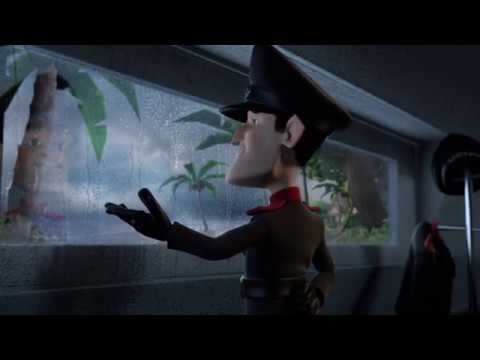
Supercell’s marketing for its games has often relied on building out the world and characters beyond the app icon, and “It’s Lonely At The Top” is a prime example of this strategy executed well. Instead of a dry, feature-focused announcement, agency Barton F. Graf and animation house House Special created a miniature musical to launch the 'Blackguard Base Builder'. [1] This approach serves a dual purpose: it informs existing players about a new way to interact with the game, and it deepens the brand's narrative lore, making the game's universe feel more alive.
The core of the ad is a simple, human insight applied to an inhuman character: even evil super-villains get lonely. This framing is the ad's central creative leap. It takes the game’s antagonist, Lt. Hammerman, and gives him a relatable motivation for launching the Base Builder feature. He doesn’t want to be more evil; he wants friends. This immediately reframes the user's task—designing a base for the enemy—from a simple game mechanic into a funny, story-driven act of mock-camaraderie. It’s a clever way to encourage user-generated content by making the player feel like they are part of the story.
The execution follows a classic musical theater structure. It opens with a slow, melancholic ballad where Hammerman laments his solitude, visually reinforced by the rainy, empty atmosphere of his lair. This setup establishes the 'problem'. The 'turn' occurs when he has his eureka moment, and the music shifts into an upbeat, triumphant villain song. The animation becomes brighter and more dynamic as he runs outside, full of purpose. The 'payoff' is twofold. First, the grand reveal of the Base Builder, now positioned as the solution to his loneliness. The second payoff is the comedic punchline where his own destructive nature gets the better of him, and he accidentally destroys the very 'friends' he sought to attract. This ending is critical; it keeps him in character as a comically inept villain and provides a dark, memorable laugh that aligns with the slightly anarchic spirit of the brand. The final, bleeped-out curse solidifies the edgy but still playful tone. This isn't just an ad; it's a piece of entertainment that respects the player base enough to give them a story, not just a feature list.
Theme Keywords
Brand Position
The fun, high-quality strategy game that doesn't take itself too seriously.
Brand Archetype
Jester
Creative Game Plan
Humanize the game's villain through a comedic musical number to make a new user-generated content feature feel like a fun, story-driven event.
Diagnosis: Issues & Solutions
Primary Issue: Clarity of "What's Next?"
The Problem:
The ad does a brilliant job of selling the 'why' but is a little light on the 'how' and 'where'. The URL shown at the end, basebuilder.boombeach.com, points to a web-based tool. [6] For a player watching on a mobile device, this requires leaving the YouTube app and opening a browser, which is a point of friction. It's not immediately clear if this is also an in-game feature or web-only.
The Solution:
A simple end card showing the feature's icon within the game's UI alongside the URL would provide a clearer path for players. A visual cue like 'Find it in-game!' or 'Build on the web or in the app!' would have closed the loop more effectively for a mobile-first audience.
Secondary Issue: Strategic Sense
The Problem:
The concept relies entirely on the audience being familiar with Lt. Hammerman as the game's villain. For a new potential player, the context is lost. They see a funny animated short but may not connect it directly to a specific game or understand the core conflict being humorously subverted.
The Solution:
This isn't a major flaw, as the ad is clearly for retention and engagement. However, a 6-second bumper version for broader prospecting could have established the hero/villain dynamic more explicitly before showing Hammerman's lonely lament, giving new viewers a faster entry point to the joke.
Additional Notes
Related Links
Credits
Share this Analysis
More Boom Beach ad breakdowns
- Royal Kingdom I Sofía Vergara I YogaRoyal Kingdom
- Royal Kingdom | LeBron James | Books Part 1Royal Kingdom
- RECRUITMENT VID!! PLZ WATCH!! | Luna | mo.como.co
- Kids vs DogsMatoto Play
- Bloodline Game Teaser - Nursery | OFFICIAL COMMERCIALBloodline: Heroes of Lithas
- PLUNDER PIRATES - GAME LAUNCH TRAILERPlunder Pirates
- Top Eleven ft. José Mourinho | Be A Football Manager (Official #TopEleven TV Commercial)Top Eleven
- Candy Crush Soda Saga - NYC Breaking News TV CommercialCandy Crush Soda Saga