Introducing the Icelandverse - Ad Analysis

AI Editor notes
Straight from the gut!!
“This is sharp, fast, and devastatingly effective. They saw the metaverse announcement, recognized it was corporate nonsense, and turned it on its head in days. [12] The casting of the 'Zuckerberg' character is perfect—just the right amount of awkward. It's a classic challenger move: take the market leader's big idea and expose its absurdity by contrasting it with your simple, human truth. It feels like an inside joke the entire world is in on.”
Quick Summary
By perfectly parodying the tech industry's abstract 'metaverse,' this ad brilliantly repositioned Iceland as the 'Icelandverse'—a real, tangible, and infinitely more desirable open-world experience. It used humor and timeliness to argue that authentic reality will always be more immersive than virtual reality, effectively hijacking a global conversation to serve its own brand.
Executive Summary
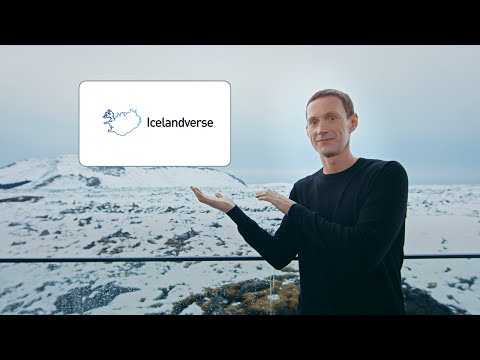
In late 2021, as the tech world fixated on the promise of an immersive digital future called the 'metaverse,' Inspired by Iceland executed a brilliant strategic pivot. Instead of trying to shout over the noise, they hijacked the conversation with a simple, powerful counter-narrative: the ultimate 'open-world experience' isn't virtual; it's real, and it's called the 'Icelandverse.' The resulting film is a case study in effective challenger brand marketing, using humor and cultural relevance to land a message that resonated far beyond the typical travel audience.
The core insight is a direct response to a growing societal feeling of digital fatigue. People are tired of screens, avatars, and simulated experiences. The ad taps into a deep-seated human desire for authenticity, for tangible sensations, and for connections that aren't mediated by technology. By framing Iceland's natural wonders—'water that's wet,' 'real moss,' and 'skies you can see with your eyeballs'—as features of its 'verse,' the ad cleverly exposes the absurdity of trying to replicate reality when the genuine article is available and infinitely more profound.
The execution uses a classic parody structure, adopting the visual and narrative language of a Silicon Valley product launch. The setup introduces us to 'Chief Visionary Officer Zack Mossbergsson,' a note-perfect caricature of Mark Zuckerberg, complete with his stilted delivery and awkward hand gestures. The 'turn' happens when he reveals the product is not a piece of technology but an entire country. This contrast between the high-tech, corporate-speak presentation and the raw, natural beauty of Iceland is the engine of the ad's humor. Every beat that follows reinforces this joke, from the montage of epic landscapes presented as 'features' to the presenter comically bumping into a glass door. The payoff is the simple, powerful branding: 'Inspired by Iceland.' The ad doesn't need to sell hard; the product sells itself once the parody has hooked the viewer.
The debrief for any brand team watching this is clear: speed and cultural attunement are massive competitive advantages. The campaign's brilliance was its timeliness, launching within weeks of the Meta announcement. [17] It demonstrates that a brand with a clear point of view can insert itself into any conversation, no matter how unrelated it may seem, and win. It also proves that you don't need a massive budget to compete if your idea is smart enough to generate its own publicity. For Iceland, the goal wasn't just to get people to book a flight; it was to cement its brand in the cultural consciousness as the antidote to a fake, digital world—a real place for real humans.
Theme Keywords
Creative Game Plan
Parody the overhyped, artificial 'metaverse' to position Iceland as the authentic, immersive, and superior 'Icelandverse.'
Diagnosis: Issues & Solutions
Primary Issue: Emotional Connection
The Problem:
The ad's greatest strength—its timely, high-concept parody—is also a slight limitation. Because it's so focused on cerebral humor and satire, it connects with the viewer's intellect more than their heart. The sense of awe and wonder, while visually present, is filtered through a layer of comedy.
The Solution:
A follow-up piece could have dropped the parody framework and simply shown people experiencing the 'Icelandverse' with genuine, unscripted emotion. Imagine a short film of a real family, overwhelmed by the Northern Lights, with the simple end card: 'The Icelandverse. It's real.'
Secondary Issue: Strategic Sense
The Problem:
The humor is so specific to the 2021 metaverse conversation that its sharpest edge could dull over time. New viewers years from now might miss the nuance of the Zuckerberg parody, slightly reducing its impact.
The Solution:
This is a minor and almost unavoidable issue for any reactive campaign. The strategy could be future-proofed by making the 'Iceland is the original open-world' concept an evergreen brand platform, evolving the creative expression away from specific parodies as cultural moments change.
Additional Notes
Related Links
Credits
Share this Analysis
More Inspired by Iceland ad breakdowns
- OutHorse Your Email to Iceland’s HorsesInspired by Iceland
- Looks Like You Need An AdventureInspired by Iceland
- LångevityVisit Halland
- Bees & Friends Hotels | Switzerland TourismSwitzerland Tourism
- Discover Zurich with Alayah Pilgrim | UEFA Women's EURO 2025 | Switzerland TourismSwitzerland Tourism
- Vienna: The last place you want to be. I ShortfilmVienna Tourist Board
- Don't Plan a Trip to Dublin, OH (Hero 15)Visit Dublin, Ohio
- You'll love coming to Lexington, but man will you hate to go.VisitLEX