They Disappeared Once; Don't Let Them Disappear Twice (Desapariciones) - Ad Analysis

AI Editor notes
Straight from the gut!!
“This is heavy, haunting, and impossible to look away from. Watching ordinary people simply evaporate in broad daylight—leaving just their empty clothes behind—hits you straight in the gut. But pivoting the entire emotional weight of Mexico's disappearance crisis onto 'investigation files' is a risky strategic turn. It works because it attacks administrative indifference, but you have to ask: will ordinary viewers feel moved to act, or just overwhelmed by systemic despair?”
Quick Summary
The ICRC turns bureaucratic investigation files from cold legal paperwork into living human monuments, using the arresting metaphor of vanishing bodies and falling clothes to protest administrative neglect.
Executive Summary
The Core Insight: Behind every statistic in Mexico's crisis of over 130,000 missing persons lies an ordinary, unfinished moment—a mother running errands with her daughter, a father discussing dinner over the phone, a teenager planning a weekend outing with friends. The human truth the ICRC taps into is that administrative abandonment is a form of secondary violence. When an official investigation file is shelved, forgotten, or lost, the system actively erases that individual all over again.
The Execution (Setup–Turn–Payoff Framework):
- Setup (0:00 - 0:50): The film opens with slice-of-life naturalism. We meet three distinct individuals grounded in authentic Mexican urban routines: Ximena walking with her mother, Jorge driving his cab while bantering about meatballs for dinner, and Mateo riding a bus with school friends. The tone is relaxed and familiar, establishing emotional vulnerability through ordinary domestic warmth.
- Turn (0:50 - 1:40): The transition is abrupt and surreal. Without violence or spectacle, the subjects simply cease to exist. A mother turns around to find her daughter gone; Jorge's taxi crashes into an intersection because the driver seat is suddenly unoccupied; Mateo's clothes hang empty on the bus handrail. The realization cascades through the supporting characters into frantic, helpless calls for help.
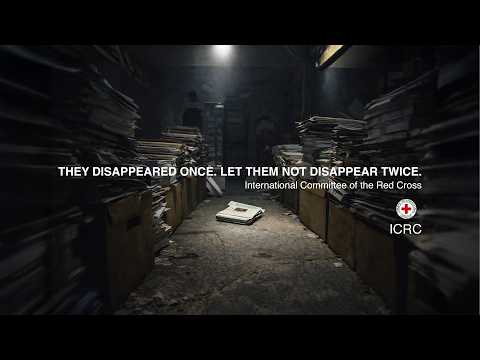
- Payoff (1:40 - 3:19): As a haunting vocal melody swells, clothing falls from the sky, litters electrical wires, and blankets city streets like a surreal layer of snow. The visual metaphor shifts to dark, cavernous storage rooms where official files are stacked to the ceiling. By cutting between the mother clutching her daughter's empty backpack and an evidence file box in an archive, the film delivers its thesis: the case file is the living continuation of the person. The closing title cards deliver the decisive punch: 'They disappeared once; let them not disappear twice.'
The Debrief: For institutional marketers and public interest communicators, this work proves that technical, legal concepts (like criminal investigation files) can be given intense emotional gravity when anchored to physical human artifacts. The team should learn how visual restraint—showing the void left behind rather than depicting explicit violence—often produces far greater emotional impact.
Theme Keywords
Brand Position
The indispensable humanitarian guardian that ensures no human being is forgotten in conflict or societal violence.
Brand Archetype
Caregiver / Guardian. Personality: Somber, Dignified, Unflinching.
Creative Game Plan
Dramatize the tragedy of administrative oblivion by showing that losing a case file is equivalent to vanishing a loved one a second time.
Diagnosis: Issues & Solutions
Primary Issue: Clarity of "What's Next?"
The Problem:
The film builds immense emotional tension and civic outrage around administrative case files but leaves the specific public action ambiguous at the payoff.
The Solution:
Direct the general public and victims' families to a specific actionable resource, such as the ICRC's official guide for tracking and demanding search file updates.
Secondary Issue: Strategic Sense
The Problem:
Targeting both institutional state actors (prosecutors and investigators) and the general public in a single 3-minute brand piece risks splitting the communicative focus.
The Solution:
Split distribution into tailored cuts: an emotionally driven broadcast cut for societal awareness and an accountability-focused cut for legal and civic forums.