INTER-LGBT - Love you, my girl - Ad Analysis

AI Editor notes
Straight from the gut!!
“This is a brutal piece of film. For the first minute, you're horrified, watching what looks like a father terrorizing his child. The reveal is a complete gut punch. It’s an incredibly clever and emotionally manipulative way to land a point, forcing the viewer to confront their own assumptions. It’s unforgettable and effective, but the initial intensity is so high it's a risky strategy that relies on the audience sticking around for the payoff.”
Quick Summary
This film uses a powerful bait-and-switch, leading the audience to believe they are watching a story of domestic abuse, only to reveal it's a story of a father's heartbreaking love. He isn't abusing his child; he's desperately trying to teach his transgender daughter how to survive the violence he knows she will face from the outside world. The dramatic shift from perceived cruelty to profound empathy is the entire strategic and creative point.
Executive Summary
This film from Inter-LGBT and TBWA\Paris is a masterclass in narrative misdirection for social impact. Its core insight is both simple and devastating: for the parent of a transgender child, the act of love can become a desperate act of preparing them for a violent world. The film isn't about the violence inside a home, but the violence a parent fears from the outside. The true tragedy is that this father believes he has to inflict a smaller pain to arm his daughter against a much greater one.
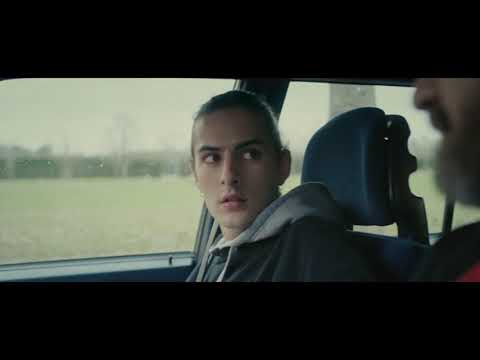
The execution uses a classic Setup-Turn-Payoff structure, deployed with precision. The Setup meticulously constructs a narrative of domestic abuse. The jarring cuts, the father's aggressive commands ("Hit me! Defend yourself!"), the mother's worried expression, and the gritty, handheld camera work all lead the viewer to a single, horrifying conclusion. We are conditioned to see a monster.
The Turn happens at the moment of ultimate crisis. After the father breaks down a door, the expected violence is replaced by a desperate, sobbing embrace. His anguished cry of "You did it" is the first clue that shatters our initial interpretation. The violence was a test, not an attack. This moment pivots the entire emotional trajectory of the film from fear to confusion and dawning empathy.
The Payoff is delivered by a simple title card: "One month earlier." The reveal that the youth is a transgender girl who is bullied ("They'll never get that I'm not a boy") re-contextualizes everything. The father's promise, "It's gonna be tough, but I'll help you," followed by the affirming "Love you, my girl," transforms him from a villain into a tragic hero. Every seemingly cruel act is retroactively understood as a heartbreaking lesson in survival. The final on-screen statistics are not just data; they are the justification for the father's terrible training, making the film's point inescapable. [2]
The debrief for the creative team is that high-risk emotional storytelling, when grounded in a powerful human truth, can be uniquely effective. By forcing the audience to confront their own biases before revealing the truth, the ad creates an empathy that is deeper and more permanent than a more straightforward appeal could ever achieve. It's a difficult film to watch, but its message is impossible to ignore.
Theme Keywords
Brand Position
The fearless advocate that confronts the brutal reality of transphobia to create understanding and change.
Brand Archetype
The Caregiver, expressed in its most protective and fierce form; the guardian willing to do anything to protect their charge.
Creative Game Plan
Dramatize the heartbreaking reality of a parent's love in a world that is hostile to their transgender child.
Diagnosis: Issues & Solutions
Primary Issue: Emotional Connection
The Problem:
The film's greatest strength—its shocking misdirection—is also a potential weakness. The initial depiction of violence is so intense that it risks alienating some viewers or causing them to disengage before the crucial reveal, potentially missing the message entirely.
The Solution:
Subtly soften the setup. Introduce a micro-expression of shared sadness or a fleeting, tender glance between the parents earlier in the film. This wouldn't spoil the twist but could provide just enough of a hook to reassure the audience that there's more to the story, encouraging them to endure the discomfort.
Secondary Issue: Clarity of "What's Next?"
The Problem:
The emotional weight of the film is so immense that the call-to-action URL at the end feels like an afterthought. The viewer is left grappling with the story's sadness, not necessarily galvanized to click a link.
The Solution:
Integrate the call to action more directly with the film's resolution. For instance, a simple voiceover after the final statistic could say, "The violence is real. The support can be too. Find out how to help at SupportTransPeople.com." This bridges the gap between the emotional experience and the desired action.
Additional Notes
Credits
Share this Analysis
More Inter-LGBT ad breakdowns
- Inter-LGBT / The Obstacle CourseInter-LGBT
- How to Hide a Boner, in StylePETA
- Coordown | No Decision Without UsCoorDown
- Fondation Abbé Pierre - #SoyonsHumains - UKFondation Abbé Pierre
- 2012 - The COORDOWN project for World Down Syndrome Day - 21 MarchCoorDown
- Part of societyMino Danmark
- TalkAboutTheTalkThe Brotherhood/Sister Sol