In the chaos of a medical emergency, panic takes over. - Ad Analysis

AI Editor notes
Straight from the gut!!
“This is a gut-punch of an ad. Using a split-screen to show the 'panic' route versus the 'smart' route is a classic but brutally effective choice. The emotional weight is heavy, and the message is incredibly clear. It's a bit long for a typical digital ad, but it earns its runtime by building real tension and delivering a significant emotional payoff. It's less an ad, more a vital PSA.”
Quick Summary
This ad's powerful takeaway is that in a medical emergency, your gut instinct to drive is the wrong, most dangerous choice. It argues that true control comes from making one simple decision: call Apollo's 1066 service to bring an entire emergency room to your doorstep, turning chaos and panic into a calm, professionally managed, life-saving process.
Executive Summary
This Apollo Hospitals ad is a masterclass in behavioral-change communication, built on a powerful and universally understood emotional insight.
The Core Insight: The ad identifies a critical human truth: in a moment of extreme stress, like a medical emergency, our instinct is to seize control through physical action. We feel compelled to do something—and for many, that means rushing a loved one to the hospital themselves. The ad’s insight is that this instinct, born from love and panic, is dangerously wrong. True control isn’t found behind the wheel of a car, but in the calm decision to trust an expert.
The Execution: The creative team employs a classic but flawlessly executed split-screen comparison to dramatize this insight. The structure is simple and powerful.
- Setup: The film opens on a scene of domestic tranquility—a son and his elderly mother sharing a quiet morning. This relatable moment establishes the emotional stakes before being violently interrupted by the mother suffering an apparent stroke. This jarring event serves as the hook, launching the audience directly into the crisis.
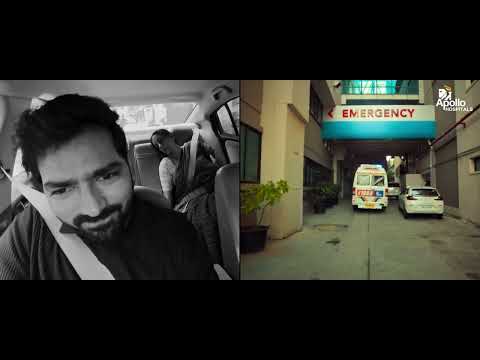
- The Divergence: The narrative splits, presenting two alternate realities. On the left, in frantic, desaturated black and white, is the path of panic. This is the choice most viewers might instinctively make: carrying the mother, fumbling for keys, and driving recklessly through congested city streets. Every frame communicates chaos, helplessness, and lost time. On the right, in calm, full color, is the path of reason. The son makes one correct decision: dialing 1066. This single action transforms the situation. The chaos is replaced by the calm authority of the emergency operator, and then by the swift, competent arrival of paramedics. Here, treatment begins immediately, turning the home into a temporary ER.
- The Payoff: The split-screen converges at the hospital, delivering the devastatingly clear conclusion. The ambulance arrives first, with the patient stabilized and receiving care. The son who drove arrives later, distraught, his frantic efforts only serving to delay critical treatment. The final on-screen text—"Why drive? When treatment can start at your doorstep?"—isn't a question but a closing argument. The ad doesn't just tell you to call 1066; it makes you feel the consequence of not doing so.
The Debrief: The key lesson here is the power of showing, not just telling. By visualizing the two paths, Apollo makes its case emotionally and viscerally. The ad validates the viewer's panicky instincts (the black-and-white sequence) before gently but firmly correcting them. This approach educates the audience and builds immense trust, positioning Apollo not as a seller of services, but as an expert partner in a moment of profound vulnerability.
Theme Keywords
Brand Position
Apollo is not just a destination for care; it is the expert partner that brings immediate, life-saving treatment to you.
Brand Archetype
Caregiver
Creative Game Plan
Dramatize the two paths one can take in a medical emergency—the chaotic, instinctive drive versus the calm, correct call—to prove that the fastest medical care begins at home.
Diagnosis: Issues & Solutions
Primary Issue: Strategic Sense
The Problem:
The ad's runtime of 2:23 is its single biggest strategic liability in a digital environment. While the long format allows for powerful emotional development, it is not optimized for paid media placements where viewer drop-off after the first 15-30 seconds is significant. Many viewers may miss the crucial payoff and call to action.
The Solution:
Develop a suite of shorter assets from this hero film. A hard-hitting 60-second version for YouTube pre-roll and a punchy 30-second cut for social media feeds are essential to ensure the core message—'In an emergency, dial 1066'—reaches the widest possible audience effectively.
Secondary Issue: Emotional Connection
The Problem:
The consequence for the son who chose the wrong path feels slightly underdeveloped. His arrival at the hospital is shown, but the full emotional weight of his mistake—the realization that his panic-driven actions delayed his mother's care—could land with even greater force.
The Solution:
Add a brief, two-second close-up on the face of the 'wrong choice' son as he stands in the empty hospital corridor, realizing the ambulance has already beaten him there. This moment of dawning horror would make the lesson even more permanent and emotionally resonant for the viewer.
Additional Notes
Credits
Share this Analysis
More Apollo Hospitals ad breakdowns
- Apollo Hospitals | What are the benefits of COVID-19 Vaccination?Apollo Hospitals
- Apollo Hospitals | Covid Vaccine - Can women go for vaccination during or post menstruation?Apollo Hospitals
- Because with you, care goes beyond medicine, thank you, nurses. | International Nurses DayApollo Hospitals
- #PioneersOfHealthcare | Apollo Hospitals | Celebrating 39th Anniversary of Apollo HospitalsApollo Hospitals