IKEA – Don't worry you can afford it. - Ad Analysis

AI Editor notes
Straight from the gut!!
“Finally, an ad that shows how people actually live. It’s not some pristine, untouchable showroom. Pets make messes. Stuff breaks. By leaning into that chaos instead of ignoring it, IKEA feels more honest. Showing a broken product is a gutsy move that pays off because the insight is so relatable. It’s a simple, smart way to talk about price without feeling cheap.”
Quick Summary
This campaign brilliantly reinforces IKEA's core promise of affordability by reframing a common frustration—pets breaking things—into a stress-free moment. It tells pet owners that home life can be messy and imperfect, but thanks to IKEA's low prices, replacing a broken item is a minor inconvenience, not a financial disaster, thus strengthening the bond between the brand and a growing demographic.
Executive Summary
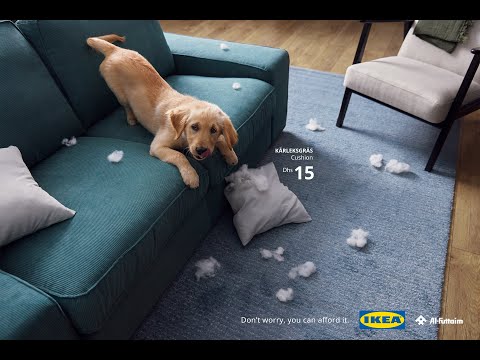
IKEA's 'Don't worry, you can afford it' campaign is a sharp, disciplined piece of communication that understands a fundamental rule of modern advertising: don't just sell a product, solve a problem. In this case, the problem isn't a lack of furniture; it's the quiet, low-grade stress that comes with owning nice things in a chaotic world, especially one shared with pets. The campaign, created by INGO Hamburg for the Middle East market, smartly taps into the booming pet ownership trend in the region to deliver a message of reassurance.
The Core Insight here is simple but potent: people love their pets, even when they break things, and the pain of a broken object is directly proportional to its price. By neutralizing the financial pain, IKEA neutralizes the frustration, allowing the owner's love for their pet to win out. This reframes IKEA's affordability from being merely 'cheap' to being 'stress-reducing,' a much more powerful emotional benefit.
The execution uses a straightforward yet effective Problem-Solution structure, presented as a series of mini-dramas. Each vignette opens with the 'problem': a shattered vase, a torn cushion, a broken mug. The 'culprit'—an adorable cat or dog—is always at the scene, looking comically innocent. This is the hook, grabbing the viewer's attention with a relatable and charming scenario. The ad then immediately presents the solution not as a grand gesture, but as a simple piece of text: the product name and its strikingly low price in Dirhams. This juxtaposition of the mess and the low price creates a moment of relief. The final tagline, 'Don't worry, you can afford it,' acts as the payoff, explicitly stating the campaign's core message. The structure is so clean and repeatable it could be infinitely extended across social media, a clear nod to its platform focus.
The debrief for the marketing team is a lesson in the power of creative confidence. The decision to show products as broken is unconventional and gutsy. It defies the old marketing rule that you must always show the product in its best light. However, by doing so, IKEA demonstrates a deeper understanding of its customers' lives. It shows that the brand is confident enough to step into the real, messy world of its audience rather than presenting an untouchable, aspirational fantasy. The learning is that when your value proposition is as strong as IKEA's affordability, you can afford to be honest, and that honesty builds a stronger, more authentic connection than perfection ever could.
Theme Keywords
Brand Position
The provider of stylish, democratic design that makes a better, less stressful everyday life at home possible for everyone.
Brand Archetype
The Everyman: IKEA is portrayed as down-to-earth, empathetic, and accessible, understanding the real-life, messy problems of ordinary people.
Creative Game Plan
Demonstrate that IKEA's affordability removes the stress from pet-related accidents at home.
Diagnosis: Issues & Solutions
Primary Issue: Strategic Sense
The Problem:
The campaign is hyper-focused on existing low-price-point items (mugs, vases). While effective for the core message, it misses an opportunity to connect the affordability halo to higher-consideration purchases that are also subject to pet damage, like sofas or rugs.
The Solution:
Create a follow-up vignette featuring a larger item, like a scratched POÄNG chair or a muddy SÖDERHAMN sofa cover. The tagline could be adapted: 'Don't worry, you can afford to fix it / replace the cover,' expanding the affordability story beyond just disposable items.
Secondary Issue: Clarity of "What's Next?"
The Problem:
The campaign successfully builds brand love but lives entirely at the top of the funnel. There is no bridge to action, not even a mention of IKEA's actual pet product line, which was launched concurrently.
The Solution:
Add a simple, non-intrusive end card after the Al-Futtaim logo that says, 'P.S. We have things they're *allowed* to play with. Discover the UTSÅDD pet collection.' This would connect the brand-building moment to a relevant product category without disrupting the creative.
Additional Notes
Related Links
Credits
Share this Analysis
More IKEA ad breakdowns
- Accidental Environmentalists - A Better World Starts at HomeIKEA
- Ikea - design your sleep while you sleepIKEA
- IKEA – Every home should be a haven - TV Advert 60 #WonderfulEverydayIKEA
- IKEA - Hej Hej Hej! (2024 Christmas Ad)IKEA
- IKEA - Like a baby 45''IKEA
- Recipes for Delicious KitchensIKEA
- IKEA: HipbumpIKEA
- ИКЕА Летни моменти – РазговорътIKEA