If You Ride The Liquid Death x Burton Deathtrap Snowboard You Will Die - Ad Analysis

AI Editor notes
Straight from the gut!!
“This is so on-brand it's almost a parody of itself. Telling people they'll literally die if they use your product is the ultimate Liquid Death move. It's not really a snowboard; it's a trophy. A middle finger to hang on your wall. The strategy is to sell a joke, and the joke is the product itself. For their audience, that's catnip. It’s smart because the people who get it, *really* get it.”
Quick Summary
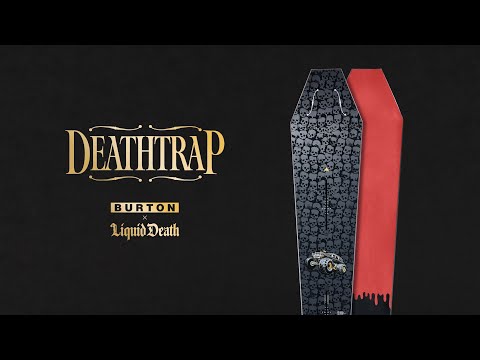
This is a perfect piece of brand performance marketing that uses extreme, self-aware humor to sell a deliberately unusable product. By creating a limited-edition 'Deathtrap' snowboard, the campaign transforms a piece of sporting equipment into a collectible art object. This brilliantly generates buzz and sales while reinforcing the core brand identities of both Liquid Death (irreverent, outsider) and Burton (snowboarding authority).
Executive Summary
Liquid Death and Burton’s 'Deathtrap' ad is a textbook example of how to execute a brand collaboration that elevates both partners. Instead of finding a safe middle ground, it pushes into an extreme territory that is pure Liquid Death, while borrowing the unimpeachable authority of Burton to make the joke land. The core insight is that for a certain counter-culture audience, the story and exclusivity of an object are far more valuable than its utility. A snowboard you can’t ride is useless, but a collectible artifact billed as an unrideable 'Deathtrap' is priceless.
The execution uses a classic Problem-Solution framework, twisted through a lens of extreme irony. The setup establishes the product with the gravitas of a horror movie trailer, introducing the coffin-shaped 'Deathtrap.' The 'turn' is the reveal of its core flaw: it’s engineered to be impossible to ride, a fact proven by showing a professional snowboarder, Rob Roethler, failing spectacularly. This isn't just a product demo; it's an anti-demo. Every crash serves as proof of the central claim. The payoff is the explicit instruction not to use the product for its intended purpose, but rather to 'Just hang it on your wall for wine and burrata night.' This final punchline reframes the snowboard not as sporting equipment, but as a piece of home decor and a social talking point, perfectly aligning with the campaign’s actual goal: selling a limited-edition collectible. The ad doesn't just sell a product; it sells entry into an exclusive club of fans who understand the joke.
The debrief for any brand team watching this is twofold. First, brand collaborations are most powerful when they amplify, not dilute, the core brand ethos. Liquid Death didn't soften its edge to accommodate Burton; it pulled Burton into its world. Second, for niche, high-value products, the marketing doesn't need to persuade; it needs to entertain and create folklore. By making the product itself a piece of advertising mythology, they ensured it would sell out and, more importantly, be talked about long after the 50 boards were gone. [9]
Theme Keywords
Brand Position
For Liquid Death, it reinforces its position as an entertainment brand that happens to sell water. For Burton, it reinforces its authenticity and willingness to engage with the counter-culture core of snowboarding.
Brand Archetype
Liquid Death operates as a perfect fusion of the Jester (subverting norms with humor) and the Outlaw (gleefully breaking the rules of marketing).
Creative Game Plan
Parody the self-serious tone of high-performance gear ads by launching the most absurdly dangerous and functionally useless snowboard ever made.
Diagnosis: Issues & Solutions
Primary Issue: Strategic Sense
The Problem:
The central joke, while brilliant for the core audience, risks being completely lost on anyone unfamiliar with Liquid Death's brand of humor. A casual viewer might just see an ad for a poorly designed product, missing the satirical point entirely and perceiving it as genuinely stupid rather than cleverly ironic.
The Solution:
The final scene with the couple laughing on the couch is very brief. Extending that moment slightly or making the context—that it's a conversation piece at a party—more explicit could have provided a clearer anchor for viewers who aren't already part of the brand's cult following.
Secondary Issue: Clarity of "What's Next?"
The Problem:
The campaign's reverse psychology is its greatest strength but also its main point of friction. The ad spends 50 seconds telling you not to buy or use the product, with only a URL at the very end as the true call-to-action. This creates a slight disconnect between the entertainment and the commercial intent.
The Solution:
A simple visual graphic on the end card showing the board hanging on a wall with the price tag visible next to the URL could have more seamlessly bridged the gap from 'this is a joke' to 'this is a real, expensive thing you can buy right now'.
Additional Notes
Related Links
Credits
Share this Analysis
More Liquid Death ad breakdowns
- Tom Segura’s Recycling Glory Hole by Liquid DeathLiquid Death
- Buy Ozzy Osbourne's DNA From Liquid DeathLiquid Death
- Liquid Death Tested Spicy Ghost Pepper Flavor on Their Real MomsLiquid Death
- The Toxic Avenger: Liquid Death SpokespersonLiquid Death
- Liquid Death ‘Safe For Work’ Big Game CommercialLiquid Death
- Liquid Death Iced Tea For Trucks CommercialLiquid Death
- Liquid Death Turned Internet Hate Comments Into A Country SongLiquid Death
- Hot Fudge Sundae Sparkling Water by Liquid Death x Van LeeuwenLiquid Death