Honda Kog - Ad Analysis

AI Editor notes
Straight from the gut!!
“This is smart. Really smart. Instead of trying to top one of the best car ads ever made, they subverted it. It's a confident, clever move that respects the audience's intelligence. Anyone who remembers the original 'Cog' gets this instantly. My only question: is the memory of a 13-year-old ad strong enough for the message to land with younger drivers? For the intended audience of existing owners, though, it probably works.”
Quick Summary
This ad brilliantly leverages the legacy of Honda's legendary 'Cog' commercial to deliver a simple, powerful message: only genuine parts work perfectly. By recreating the famous chain reaction and making it fail with a single non-genuine part, it transforms a complex idea about quality and reliability into an instantly understandable—and memorable—visual punchline.
Executive Summary
This 2016 spot from the Ontario Honda Dealers is a textbook example of how to build on a brand's legacy without being crushed by it. It’s a direct sequel and parody of 'Cog,' the brand's iconic, award-winning 2003 film. [3] Where the original was a two-minute ballet of mechanical perfection celebrating how 'things just work,' this 19-second sequel, aptly titled 'Kog,' shows what happens when they don't.
The Core Insight: The foundational idea is simple: precision matters. For a car owner, the desire for reliability isn't just about convenience; it's about trust. The belief that every single component in your vehicle is designed to work in perfect harmony is the bedrock of peace of mind. This ad taps into the subtle anxiety that a single, inferior part can compromise the entire system, turning a marvel of engineering into a point of failure.
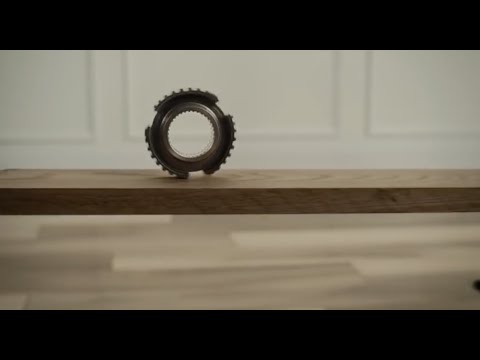
The Execution: The ad follows a classic Problem-Solution format, but with a clever twist. The setup mirrors the original 'Cog,' using genuine Honda parts to create a familiar Rube Goldberg-style chain reaction. This immediately hooks anyone with knowledge of the original ad, creating an expectation of a seamless, satisfying conclusion. The rolling gears and swinging exhaust pipe build a quiet, mechanical tension. The 'problem' isn't introduced at the start; it's the punchline. The entire sequence grinds to a halt when the final piece, a crankshaft, fails to complete its task. The camera reveals the reason: the part is painted a cheap-looking pink, a clear visual shorthand for an aftermarket, non-genuine component. The 'solution' is then delivered with stark simplicity via on-screen text: 'ONLY USE HONDA GENUINE PARTS.' The payoff isn't the machine working; it's the lesson learned from it failing.
The Debrief: The key takeaway for the creative and marketing team is the power of leveraging brand-owned assets. 'Cog' is more than just an old ad; it’s a piece of intellectual property that stands for Honda's commitment to engineering. By referencing it, the regional dealers' association borrows billions in brand equity for the price of a clever, low-cost production. It proves that you don't need a massive budget to make a powerful point if you have a strong, pre-existing brand narrative to build upon. The ad is a lesson in strategic efficiency, reminding us that the most effective creative ideas are often born from a brand's own history.
Theme Keywords
Brand Position
The only source for parts engineered for the absolute reliability your Honda was designed for.
Brand Archetype
The Ruler: Emphasizing control, quality, and setting the standard for how a vehicle should be maintained.
Creative Game Plan
Subvert our most iconic ad to prove that only genuine parts deliver the perfection we're known for.
Diagnosis: Issues & Solutions
Primary Issue: Strategic Sense
The Problem:
The ad's greatest strength is also its potential weakness: its reliance on the audience's memory of a 13-year-old commercial. For younger Honda owners or those less versed in advertising history, the context is lost, and it becomes just a short clip of a machine that breaks. The clever subversion is completely missed.
The Solution:
For future campaigns playing on heritage, consider a paired release strategy. Run the :19 'Kog' ad but also have a slightly longer :30 version that quickly intercuts a split-second of the original 'Cog' working, with a title like 'Remember when things just worked?' to provide crucial context for a new generation of drivers.
Secondary Issue: Clarity of "What's Next?"
The Problem:
The ad does an excellent job of implanting a thought ('use genuine parts') but offers a very soft call to action. While the YouTube description provides a link, the ad itself doesn't explicitly guide the viewer on what to do next, such as 'Visit your Ontario Honda Dealer' or 'Find a dealer at...' on the end card.
The Solution:
Strengthen the final screen. After the 'Genuine Parts' message, a simple animated graphic or text overlay could point viewers to the specific regional website (OntarioHondaService.com), converting the brand thought into a direct path for action.
Additional Notes
Related Links
Credits
Share this Analysis
More Honda ad breakdowns
- All New Honda Elevate | You're The ChaseHonda
- First-in-Segment Honda SENSING ADAS | All-New Honda AmazeHonda
- The New Honda Sensing Enabled City & City e:HEVHonda
- Room for All Your Adventures | All-New Honda AmazeHonda
- All-new Honda Elevate | Boldly Stylish Design | Bookings OpenHonda
- Honda Elevate Signature Black EditionHonda
- Honda Forza 750 Faster than TwitterHonda
- KHEA - NAVI (Official Video)Honda