Honda Civic "Space" - Ad Analysis

AI Editor notes
Straight from the gut!!
“It's a clever concept, but it takes too long to get to the point. The whole 'fleet of cars' thing feels ambiguous until the final seconds. Is it a car-sharing ad? A club? The payoff is a smart, confident flex, but what percentage of the audience will stick around for a 60-second build-up? It's an ad made for other ad people—strategically sound, but a real gamble on viewer patience.”
Quick Summary
This ad is a slow-burn reveal that uses visual misdirection to build a case for the Honda Civic's superiority. It spends 50 seconds looking like a standard 'car driving beautifully' spot, only to land a powerful competitive punchline: all the other competitor cars are just 'space' surrounding the one that truly matters, visually framing the Civic as the center of its universe.
Executive Summary
The core insight behind this Honda Civic ad is that in a commoditized market, the feeling of making the right choice is a powerful purchase driver. The compact sedan category of 2014 was a sea of competent, similar-looking vehicles, from the Toyota Corolla to the Hyundai Elantra. [1, 2, 5] This ad sidesteps a direct feature-by-feature comparison and instead aims to establish the Civic as the psychological default—the undisputed benchmark.
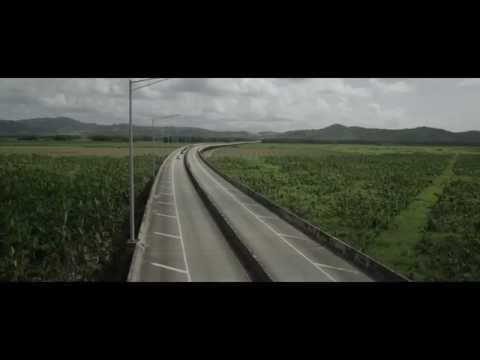
The execution follows a classic Setup-Turn-Payoff narrative structure. The Setup (0:00-0:45) is a deliberate misdirection. We watch a silver sedan move through a series of moody, cinematic environments: a tunnel, a highway, a ferry. It’s accompanied by a convoy of other cars, leading the viewer to assume this is a story about a journey, a club, or perhaps the launch of a fleet service. The insistent, electronic soundtrack and desaturated visuals create a cool, urban aesthetic but keep the narrative ambiguous. The Turn (0:46-0:52) happens abruptly in the final location: a rooftop parking lot. The hero car, a Honda Civic, parks. The other cars from the convoy—now clearly identifiable as competitors like a blue Toyota Corolla—begin parking in the spots around it. The camera pulls back, and the ad's true purpose begins to click into place. The Payoff (0:52-1:01) is delivered with a simple super: "Nothing comes close." The entire preceding minute is re-contextualized. The other cars weren't companions; they were the competition, literally filling the space around the central, superior product. The Civic isn't just another car on the road; it's the reference point by which all others are judged. The final branding, "Civic 2014" and the Honda logo, cements this confident, almost arrogant, positioning.
The key lesson from this piece is about the trade-off between cleverness and clarity. The central idea is strong and strategically sound for a market leader. However, withholding the entire point of the ad until the final ten seconds of a 61-second spot is a significant risk. The team gambled that the visual style and music would be compelling enough to hold the audience. In a less patient, more skippable media environment, this ad's brilliant punchline would likely go unseen by the majority of its intended audience.
Theme Keywords
Brand Position
The intelligent, confident benchmark in the compact sedan category.
Brand Archetype
The Ruler
Creative Game Plan
Visually demonstrate the Honda Civic's superiority by placing it at the center of its competitive set, proving that 'nothing else comes close.'
Diagnosis: Issues & Solutions
Primary Issue: Emotional Connection
The Problem:
The ad is entirely cerebral. It operates on a level of pure logic and visual metaphor, presenting a product-as-hero argument without any human element. By never showing a driver or conveying the feeling of owning and driving the car, it fails to forge a relatable, emotional bond with the audience, making the message feel cold and distant.
The Solution:
Incorporate a single, humanizing shot at the end. After the 'Nothing comes close' super, cut to a brief shot of the driver walking away from the parked Civic, giving a subtle, confident glance back over their shoulder. This would ground the ad's intellectual premise in a relatable human emotion: the quiet satisfaction of having made the right choice.
Secondary Issue: Strategic Sense
The Problem:
The ad's pacing is its biggest strategic weakness. The entire communication hinges on a reveal that occurs in the last 15% of the runtime. In any environment where the viewer has control (like YouTube pre-roll), the risk of the 'Skip Ad' button being hit before the punchline lands is exceptionally high, rendering the media spend ineffective.
The Solution:
Front-load the intrigue. Start with a quick, 3-second flash-forward of the final parking lot scene to pose a visual question. Then, rewind to the journey montage before returning for the full reveal. This would create a hook, giving the audience a reason to stick around and solve the mystery you've presented.
Additional Notes
Credits
Share this Analysis
More Honda ad breakdowns
- All New Honda Elevate | You're The ChaseHonda
- First-in-Segment Honda SENSING ADAS | All-New Honda AmazeHonda
- The New Honda Sensing Enabled City & City e:HEVHonda
- Room for All Your Adventures | All-New Honda AmazeHonda
- All-new Honda Elevate | Boldly Stylish Design | Bookings OpenHonda
- Honda Elevate Signature Black EditionHonda
- Honda Forza 750 Faster than TwitterHonda
- KHEA - NAVI (Official Video)Honda