Health Insurance Saved My Life - Rs 50 Lakh Medical Emergency True Story India - Ad Analysis

AI Editor notes
Straight from the gut!!
“This is heavy. It’s a punch to the gut. They are not selling insurance; they are selling fear of financial ruin. Using a real story with the actual father is a powerful, if manipulative, choice. Is it effective? Probably. Is it a comfortable watch? Absolutely not. It feels less like an ad and more like a grim PSA funded by the company that profits from the solution.”
Quick Summary
This ad weaponizes fear and empathy to sell a safety net. By dramatizing a real family's catastrophic medical and financial crisis, Policybazaar makes the abstract threat of being uninsured terrifyingly concrete, positioning health insurance not as a product, but as the only rational choice for survival.
Executive Summary
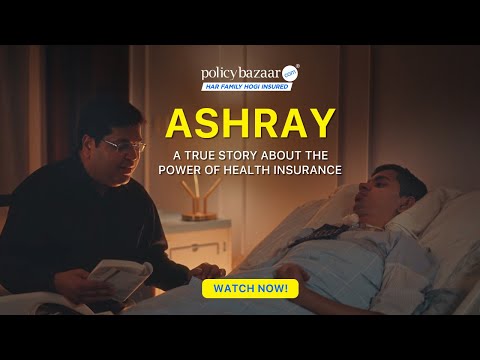
Policybazaar's 'Ashray' is a difficult, demanding, and deeply effective piece of advertising that operates less like a commercial and more like a cautionary tale. Its core strategy is to transform the abstract concept of financial risk into a tangible, emotional nightmare, forcing the viewer to confront a reality they would rather ignore.
The core insight is simple and universal: we believe we are invincible until catastrophe strikes, and the financial fallout can be more devastating than the medical event itself. The ad leverages this truth by presenting a story that is both specific—Ashray's accident—and universal—the fear of a family's future being wiped out by unforeseen circumstances.
The execution follows a classic Problem-Solution-Proof structure, but with a heavy, almost suffocating emphasis on the 'Problem'. The ad opens with the idyllic scene of children playing during Holi, a sharp contrast that makes the subsequent accident and its aftermath feel all the more brutal. The narrative lingers on the family's suffering: the father's solitary anguish in a sterile hospital corridor, the frantic rush to the ER, and the slow-burn financial crisis that leads to the repossession of their car and the humiliation of begging for time. This prolonged focus on the problem is a deliberate choice, designed to build unbearable tension and make the viewer feel the family's desperation. The 'Solution' arrives at the 1:53 mark when a representative quietly informs the father, 'Your Health Insurance claim is approved.' It's delivered not as a triumphant moment, but as a lifeline—a moment of quiet, profound relief. The 'Proof' is the testimonial from the actual father, Sunny Bhatia. His unscripted emotion lends the dramatization an unshakeable authenticity. The ad's most brutal and honest moment is the final text revealing that, seven years later, the son remains in a vegetative state. This isn't a happy ending; it's a story of survival, proving that insurance is not a magic wand but a necessary tool for a long, difficult fight.
The debrief for the creative team is clear: authentic, fear-based storytelling works in the insurance category, especially when grounded in a true story. The combination of high-quality cinematic dramatization with a raw, real-life testimonial creates a powerful emotional cocktail. However, the strategy walks a fine line between persuasion and emotional manipulation. While effective in driving urgency, it risks alienating viewers and does little to build a warm, positive association with the Policybazaar brand itself, which appears more as a functional cog in the machine than a compassionate partner.
Theme Keywords
Brand Position
The essential safety net that protects Indian families from financial catastrophe.
Brand Archetype
The Caregiver
Creative Game Plan
Dramatize the true, devastating story of a family's financial and emotional ruin after a medical emergency to prove that health insurance is not an optional expense, but a fundamental necessity for survival.
Diagnosis: Issues & Solutions
Primary Issue: Strategic Sense
The Problem:
The ad does an incredible job of selling the *category* (health insurance) but a mediocre job of selling the *brand* (Policybazaar). Any competitor could have made this ad. Policybazaar's unique value proposition as an online aggregator—offering comparison, choice, and transparency—is completely absent.
The Solution:
Incorporate a single line in the father's testimonial that subtly reinforces the brand's specific role. For example: 'A few years back, I spent an hour on Policybazaar comparing plans. That one hour saved our family.' This connects the positive outcome directly to the action of using the platform.
Secondary Issue: Clarity of "What's Next?"
The Problem:
The ad creates a powerful feeling of anxiety and urgency but fails to provide a clear, immediate outlet for that energy. The on-screen call to action, 'Choose Hope, Choose Health Insurance,' is philosophical, not practical. The actionable link is buried in the YouTube description.
The Solution:
End with a simple, direct, and actionable closing card. For example: 'Don't wait. Compare plans from 25+ insurers in 5 minutes. Visit Policybazaar.com.' This gives the viewer a concrete next step to take while the emotion is still high.
Additional Notes
Credits
Share this Analysis
More Policybazaar ad breakdowns
- Kapil Sharma Ki Advice: Car Insurance Kharido Sirf Policybazaar SePolicybazaar
- Got an opportunity to work in policy bazaar advertisement with my mom and actor Sumit Vyas.Policybazaar
- Make a difference with Term Life Insurance | PolicybazaarPolicybazaar
- Akhri Waqt Par Mat Pachtao – Kapil Ki Suno, Term Life Insurance Aj Hi Lo Policybazaar SePolicybazaar
- Policybazaar: Asli Barbaadi ft. Amitabh BachchanPolicybazaar
- Policybazaar - Health Insurance Asli Barbadi featuring Amitabh BachchanPolicybazaar