Hamara Bajaj - Ad Analysis

AI Editor notes
Straight from the gut!!
“You don't really analyze 'Hamara Bajaj.' You study it. This is chapter one in the playbook for 'How to Weave a Brand into the Fabric of a Nation.' It’s pure, unfiltered nostalgia from a time before advertising got so self-conscious. The grainy film quality, the earnest faces—it all feels like a genuine memory, not a piece of marketing. It’s what every brand-building campaign dreams of becoming.”
Quick Summary
This isn't just an ad for a scooter; it's a cultural artifact that positioned Bajaj as the literal vehicle for a modernizing India's aspirations. By weaving the product into a tapestry of everyday moments—family, work, community—it transcended commerce and became a symbol of national identity. The campaign's genius was in selling a feeling of collective progress, making 'Our Bajaj' an anthem for a nation on the move.
Executive Summary
The 'Hamara Bajaj' campaign is a masterclass in brand building, a landmark piece of work that secured Bajaj's place not just in the market, but in the heart of a nation. Launched in 1989, a time when India was on the brink of economic liberalization, the ad sidestepped the conventional product-feature narrative. [4] Instead of selling speed or efficiency, agency Lintas sold an idea: that Bajaj was the trusted companion of a modernizing, middle-class India. This was a direct response to the looming threat of international competitors, a strategic move to build an emotional fortress around the brand. [3, 6]
The Core Insight here is profound in its simplicity: a scooter is never just a scooter. It’s the vehicle for a child's first ride with their father, the transport for a small business owner's livelihood, the chariot for a newlywed couple's future. The insight was that Bajaj wasn't just in the business of manufacturing two-wheelers; it was in the business of enabling everyday life and aspiration for millions of Indians. The brand was already a part of the family; the advertising just had to reflect that truth back to the audience.
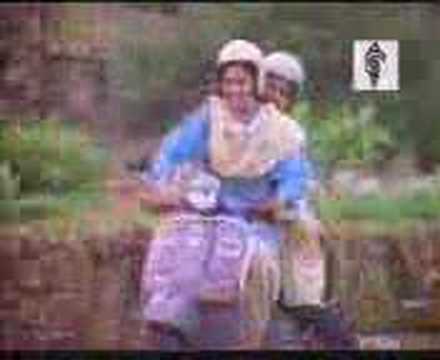
The Execution is a simple, yet powerful, lifestyle montage. It doesn't follow a traditional story arc but instead presents a tapestry of vignettes. The film opens, and the iconic jingle by Louiz Banks begins—a sound that has since become synonymous with Indian nostalgia. [1] We see a series of beautifully captured, authentic moments: a man washing his scooter at dawn, a family packed happily onto one, a Sikh father and son, a couple celebrating their wedding. These scenes, directed by Sumantra Ghosal, intentionally feature 'ordinary' people, not actors, to enhance the feeling of authenticity. [5] Each shot reinforces the scooter's role as a silent, reliable protagonist in the story of India. The campaign culminates with the powerful, unifying tagline, “Buland Bharat ki buland tasveer... Hamara Bajaj” (The strong image of a strong India... Our Bajaj), cementing the brand as a symbol of national pride. [1]
The Debrief for any team studying this ad is clear: when you have a deep, genuine connection with your audience, your job is to amplify that truth, not invent a new one. Bajaj and Lintas understood that the brand's strength lay in its ubiquity and its role in the common man's life. Instead of running from its image as a 'commonplace' vehicle, they embraced it and elevated it to a point of national pride. [6] The campaign teaches that the most powerful brand stories are not about the product, but about the people who use it and the lives it helps them live.
Theme Keywords
Brand Position
The people's vehicle, an inseparable part of India's journey.
Brand Archetype
The Everyman
Creative Game Plan
Equate the ownership of a Bajaj scooter with a stake in the progress and identity of the Indian nation.
Diagnosis: Issues & Solutions
Primary Issue: Strategic Sense
The Problem:
From a contemporary viewpoint, the campaign's greatest strength—its singular focus on high-level brand building—could also be seen as a limitation in a fragmented, digital-first media landscape. The strategy was flawless for its era of mass media dominance.
The Solution:
If launched today, this anthem film would need to be the top of a deep funnel. It would require a suite of supporting digital assets that connect the broad, emotional 'Why Bajaj?' to the specific, rational 'Which Bajaj?', guiding viewers from pride to product pages and local dealer inventories.