Guerrilla 450 | The Return Of The Real Roadster - Ad Analysis

AI Editor notes
Straight from the gut!!
“This is a classic 'us vs. them' play. The 'Cloneland' setup is a bit heavy-handed, but it gets the job done quickly. It's trying very hard to be the rebellious, cool choice, almost like a 90s fashion ad. It looks great, but the core idea of 'rejecting plastic bikes' feels a little manufactured itself. Is the target that tired of modern motorcycles, or is RE just reinforcing its own narrative? Solid execution, but the strategy feels a bit dated.”
Quick Summary
This ad positions the Guerrilla 450 not simply as a motorcycle, but as an act of defiance against a world of sterile, identical, 'plastic' products. By creating a fictional enemy called 'Cloneland,' Royal Enfield sells an identity rooted in authentic, raw individualism, making the bike a symbol for those who refuse to follow the crowd. [4]
Executive Summary
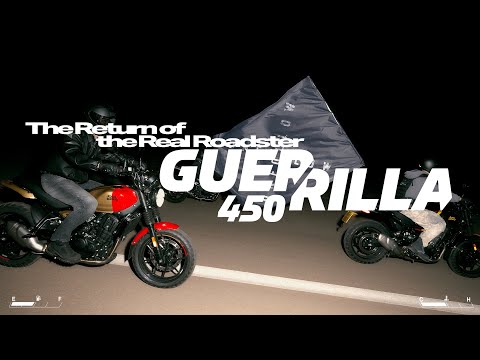
Royal Enfield's launch film for the Guerrilla 450 is a confident and well-executed piece of challenger brand advertising. Its core strategy isn't to sell features, but to sell an ideology. The campaign operates on a simple, powerful insight: in a world saturated with generic, over-engineered, and soulless products, people crave something real, tactile, and authentic that expresses their individuality. [10] The ad frames the purchase of this motorcycle as a conscious choice to reject the mundane and embrace a more visceral way of life.
The execution follows a classic Problem-Solution-Proof narrative structure. The 'Problem' is established immediately with the satirical 'Cloneland' commercial. This fictional, dystopian world of 'fantastic plastic' and 'really basic' clones serves as the perfect enemy. It represents everything Royal Enfield is not: generic, soulless, and conformist. The protagonist's visible disenchantment with this message makes him a stand-in for the target audience. The 'Solution' arrives with the sharp tonal shift. The cheesy jingle is replaced by a gritty, driving soundtrack as the protagonist grabs his Royal Enfield key. This isn't just a product choice; it's a statement of intent. The 'Proof' constitutes the majority of the film—a cinematic and aspirational montage of the Guerrilla 450 in its element. Slicing through a moody, neon-lit cityscape and eventually escaping to the open road with a diverse crew, the bike is presented as a tool of liberation and connection. The visual language, full of dynamic angles and dramatic lighting, romanticizes the act of riding. The final 'UNFOLLOW' message, glitched over the Cloneland ad, serves as the campaign's thesis and a direct call to ideological arms.
The team behind this should debrief on the power of creating a villain. By defining what they stand against ('Cloneland'), Royal Enfield makes what they stand for (authenticity, rebellion) incredibly clear. [13] It's a strategy that builds a strong in-group identity and transforms owners from mere customers into members of a tribe. The risk, however, is that the 'rebel' archetype is a well-worn trope in motorcycle advertising. While the execution here is stylish, the core idea could be seen as derivative. The key lesson is that even a familiar strategy can feel fresh if the execution is sharp, culturally relevant, and perfectly aligned with the brand's core values.
Theme Keywords
Brand Position
The definitive choice for riders seeking an authentic, characterful, and uncomplicated motorcycling experience.
Brand Archetype
The Outlaw
Creative Game Plan
Position the Guerrilla 450 as the antidote to a world of homogeneous, uninspired products.
Diagnosis: Issues & Solutions
Primary Issue: Emotional Connection
The Problem:
The ad is visually cool but emotionally distant. For most of the film, the riders are anonymous, helmeted figures. While this makes them effective avatars for the viewer, it prevents a deeper connection. We see the *act* of freedom, but we don't feel the *joy* of it through the characters' expressions.
The Solution:
Introduce more intimate, expressive close-ups. Show the riders' eyes through their visors, capturing their focus and exhilaration. Conclude with a shot of the group, helmets off, sharing a moment of genuine camaraderie, grounding the aspirational journey in a relatable human connection.
Secondary Issue: Strategic Sense
The Problem:
The 'Cloneland' enemy is a straw man. It paints all competing modern motorcycles with a single, bland brush, which might resonate with brand loyalists but could alienate potential customers who appreciate modern technology and performance from other brands.
The Solution:
Make the enemy less about competing products and more about a universal feeling. Instead of 'plastic clones,' the enemy could have been the monotony of daily life—traffic jams, office cubicles. This would broaden the appeal by positioning the bike as an escape from a shared struggle, not just an alternative to other bikes.
Additional Notes
Related Links
Credits
Share this Analysis
More Royal Enfield ad breakdowns
- Royal Enfield Classic 350 SignalsRoyal Enfield
- Royal Enfield Commercial: Handcrafted In ChennaiRoyal Enfield
- Flying Flea by Royal EnfieldRoyal Enfield
- 1985: Royal Enfield BulletRoyal Enfield
- Meteor 350 - Take It Easy | Royal EnfieldRoyal Enfield
- Bullet Electra adRoyal Enfield
- Royal Enfield Machine Love | Dil Ka Do Pahiya: Adventure Calls!Royal Enfield
- The Trip started in 1901.Royal Enfield