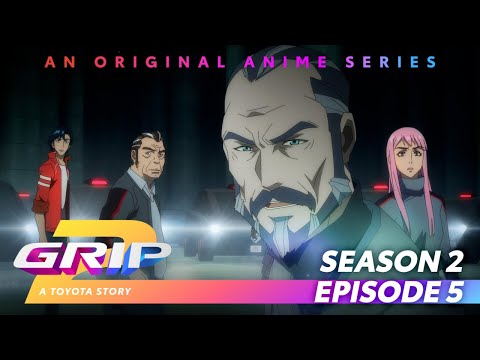
GRIP Anime Series | Season 2 Episode 5 | Only One | Toyota - Ad Analysis

AI Editor notes
Straight from the gut!!
“This is a bold, expensive swing for the fences. Creating a whole anime universe feels like a massive investment to court a niche audience. It's a cool idea, but the story has to be genuinely good on its own, otherwise it just feels like a try-hard marketing exercise. Does this actually build the brand, or does it get lost in the sea of *actual* anime that people are already watching?”
Quick Summary
Toyota isn't just selling cars; it's manufacturing culture. By creating a credible anime series, the brand embeds its GR performance line directly into a subculture that values authenticity, skill, and excitement. This long-term strategy makes the car a core character in a compelling story, aiming for brand love and relevance over a quick sale.
Executive Summary
Toyota's 'GRIP' is less of an advertisement and more of a full-fledged intellectual property play. This isn't just branded content; it's a concerted effort to build a world, aiming to shift the perception of Toyota from a reliable, practical choice to an exciting, culturally resonant one. By creating an entire anime series, Toyota is making a significant investment to embed its Gazoo Racing (GR) performance brand into the heart of a subculture that has long romanticized Japanese cars. The strategy is clear: instead of interrupting the culture with ads, become a part of it.
The core insight driving this campaign is that true driving passion is an innately human experience, one that is increasingly at odds with a future of automated, soulless transportation. [6, 7] The series personifies this conflict through its heroes, who champion manual driving skill in their GR cars, and the villains, who represent cold, machine-driven control. This episode, 'Only One,' perfectly encapsulates this theme when the antagonist, Dr. Synth, concedes, 'I forgot that vehicles need humanity to make them complete.' This line serves as the brand's thesis statement, positioning Toyota's GR line as the champion of the human element in driving.
The execution follows a classic episodic narrative structure: Setup-Turn-Payoff. The Setup establishes the world of high-stakes racing, with the heroes clashing against Dr. Synth's automated technology. The Turn is the dramatic reveal that Dr. Synth is the protagonist's father, a moment that shifts the conflict from a simple good vs. evil race to a complex family drama. This adds an emotional layer designed to hook the audience beyond the car chases. The Payoff is immediately subverted with a cliffhanger. Just as reconciliation seems possible, a new, greater threat emerges, hijacking the automated cars and ensuring the audience has a compelling reason to return for the next episode. The Toyota cars—particularly the GR Supra—are not just props; they are the heroes' trusted partners, their 'manual mode' steeds in a fight against a rogue digital world.
Ultimately, the debrief for the team behind 'GRIP' is that this approach requires patience and a commitment to quality. The success of this multi-million dollar campaign hinges entirely on the credibility of the storytelling. If the anime isn't compelling enough to stand on its own, it will fail as both entertainment and advertising, seen by its target audience as a clumsy corporate imitation. However, by enlisting a legitimate director like Jae Woo Kim and being inspired by classics like Initial D, Toyota has given the project a fighting chance to achieve what few brands can: genuine cultural relevance. [2, 3]
Theme Keywords
Brand Position
Toyota GR: The pinnacle of human-centric performance driving, blending Japanese engineering heritage with the soul of an enthusiast.
Brand Archetype
Hero
Creative Game Plan
Make Toyota's GR brand synonymous with the excitement of Japanese car culture by creating an authentic anime series where the cars are central heroes in a compelling narrative.
Diagnosis: Issues & Solutions
Primary Issue: Strategic Sense
The Problem:
The campaign's biggest risk is falling into the 'uncanny valley' of marketing—too much of an ad for hardcore anime fans, and too much of a niche anime for casual car buyers. It walks a fine line and risks appealing deeply to no one if the authenticity isn't perfectly maintained.
The Solution:
Double down on authenticity for future seasons. Collaborate with even more respected names in the anime industry (e.g., a notable scriptwriter or character designer) to lend the project unimpeachable credibility and signal a genuine commitment to the art form, not just the marketing trend.
Secondary Issue: Clarity of "What's Next?"
The Problem:
The campaign successfully gets viewers to watch the next episode, but it misses an opportunity to connect the fictional world back to the real product in a compelling way. The 'Learn More' link is a passive and generic call to action.
The Solution:
Create a stronger bridge between the show and the product. Integrate a more engaging CTA like, 'Explore the real GR garage' or 'See the real-world tech that inspired the series,' leading to a bespoke digital experience that rewards the viewer's engagement and smoothly transitions them from fan to potential customer.
Additional Notes
Related Links
Credits
Share this Analysis
More Toyota ad breakdowns
- Hum Hai Fuel-Efficient. #HumHaiHybridToyota
- Hum Hai Green. #HumHaiHybridToyota
- Take the HY road with the all-new Toyota Urban Cruiser HyryderToyota
- Hum Hai Affordable. #HumHaiHybridToyota
- Over 10 years of Hybrid Leadership in India | #ToyotaIndiaToyota
- Hum Hai Hybrid. Hum Hai Young. #HumHaiAwesomeToyota
- GRIP Anime Series S1 | Teaser | ToyotaToyota
- Toyota | Find Your Drive | Case FilmToyota