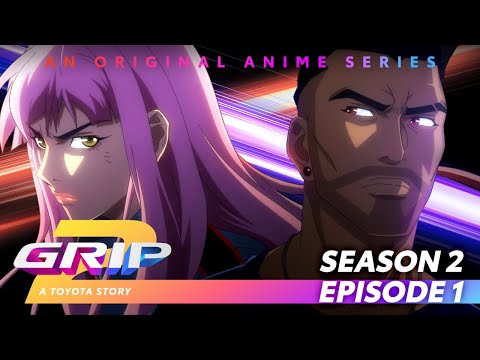
GRIP Anime Series | Season 2 Episode 1 | Who’s Next | Toyota - Ad Analysis

AI Editor notes
Straight from the gut!!
“This is a smart, long-term brand play. Instead of interrupting the culture with a 30-second ad, they're contributing to it. Making an actual anime series—and a decent-looking one—earns way more respect with the Gen Z target than another car-on-a-wet-road spot. The big question is attribution. How do you prove this sells cars? You probably don't directly, but you make the brand undeniably cooler.”
Quick Summary
Toyota is fighting its 'boring car' reputation by creating a legitimate anime series, embedding its GR performance cars into a culturally relevant world to build brand affinity with a younger, diverse audience that values excitement and authenticity over utility.
Executive Summary
Toyota's 'GRIP' isn't an advertisement; it's a piece of branded entertainment that understands its audience completely. The core strategy is to reposition Toyota—a brand often associated with reliability and practicality—as a purveyor of excitement and passion for a younger, Gen Z audience. It does this by tapping directly into anime, a medium that over-indexes massively with this demographic, and telling a story that pits the human spirit of driving against a soulless, automated future. [1, 11]
The core insight is powerful: in an era where technology threatens to sanitize every experience, the raw, tactile thrill of mastering a machine is a form of rebellion. Toyota places its Gazoo Racing (GR) cars at the heart of this rebellion. The GR Supra and GR86 aren't just vehicles; they are the chosen tools for heroes who believe in the 'spirit of driving'. This narrative directly counters the prevailing tech industry winds pushing for autonomous vehicles, positioning Toyota's performance line as the authentic choice for true enthusiasts. [5]
The execution follows a classic narrative structure designed for episodic content. The hook is immediate—a blast of high-energy J-pop and slick, fast-paced racing animation that instantly signals its genre credentials. It doesn't waste time trying to sell you a car; it sells you on a story. The value is delivered through the central conflict of the episode: an internal rivalry between drivers Linh and Kumail as they battle for the right to take on the main antagonist. This chase sequence provides the entertainment and serves as a dynamic product demonstration, showcasing the cars' agility and speed in a way that feels integral to the plot. The 'proof' of the cars' capability is baked into the action. The final scene sets up the next episode, and the only 'ask' is for the viewer to continue engaging with the story. By prioritizing narrative over a sales pitch, Toyota earns the viewer's attention and builds brand affinity organically.
The debrief for any marketing team watching this is clear: if you want to connect with a passionate subculture, you can't just borrow its aesthetic—you have to contribute to it meaningfully. Toyota funded the creation of a genuine piece of entertainment, complete with high-quality animation from a respected studio and a collaboration with a popular music group. [11, 8] It’s a masterclass in trading short-term, measurable ROI for long-term cultural relevance and brand love.
Theme Keywords
Brand Position
Toyota GR is the champion for those who believe in the pure, human-centric joy of driving.
Brand Archetype
Hero / Rebel
Creative Game Plan
Create an authentic anime series where Toyota's GR performance cars are the heroes in a fight to preserve the human spirit of driving.
Diagnosis: Issues & Solutions
Primary Issue: Clarity of "What's Next?"
The Problem:
The campaign does an excellent job of pulling viewers into its world but fails to provide a clear bridge from content consumption to brand interaction. The only CTA is to watch the next episode, leaving the journey from 'fan of the show' to 'potential GR owner' entirely to chance.
The Solution:
Integrate a non-intrusive interactive layer. For example, end cards could link to a 'driver profile' page on the Toyota website with car specs, or a simple poll ('Who should race the Synth Supreme? Vote now') that directs users to the GRIP landing page.
Secondary Issue: Emotional Connection
The Problem:
The characters' motivations in this episode are skin-deep. We see their rivalry ('I want to win'), but we don't understand the personal stakes. This limits the emotional investment a viewer can have, making the story exciting but not necessarily resonant.
The Solution:
Even in a short format, a single line of dialogue could add depth. For instance, if Linh said, 'My brother lost his ride to a Synth car, this is personal,' it would immediately create a stronger emotional anchor for her character and the overall conflict.
Additional Notes
Related Links
Credits
Share this Analysis
More Toyota ad breakdowns
- Hum Hai Fuel-Efficient. #HumHaiHybridToyota
- Hum Hai Green. #HumHaiHybridToyota
- Take the HY road with the all-new Toyota Urban Cruiser HyryderToyota
- Hum Hai Affordable. #HumHaiHybridToyota
- Over 10 years of Hybrid Leadership in India | #ToyotaIndiaToyota
- Hum Hai Hybrid. Hum Hai Young. #HumHaiAwesomeToyota
- GRIP Anime Series S1 | Teaser | ToyotaToyota
- Toyota | Find Your Drive | Case FilmToyota