God Only Knows - BBC Music - Ad Analysis

AI Editor notes
Straight from the gut!!
“This is a straight-up power move. You can't help but be impressed by the sheer logistical might required to pull this off. It's the modern equivalent of the old 'We Are The World' videos, but instead of a charity single, it's for a brand launch. It feels designed in a lab to give you goosebumps, and honestly, it works. The only question is, what exactly *is* BBC Music? This film is all sizzle, very little steak.”
Quick Summary
To launch its new 'BBC Music' brand, the BBC flexed its unparalleled cultural muscle by uniting 27 global music icons in a massive, high-production ode to music itself. This wasn't an ad for a product; it was a powerful statement of ownership, positioning the BBC not just as a broadcaster, but as the central, unifying force in the musical life of the nation, using a shared love for a classic song to generate immense goodwill and brand awareness.
Executive Summary
This film isn't an advertisement in the traditional sense; it's a coronation. The BBC isn't asking you to buy something, it's reminding the United Kingdom, and the world, of its immense cultural gravity. The goal was to launch 'BBC Music' not as a new product, but as the formal name for something the public already felt: that the BBC is the central curator of the nation's musical identity. [3, 8] This ambition required a piece of creative that felt just as significant, and agency Karmarama delivered an execution of staggering scale.
The core insight is simple: music is a universal force that unites us across generations and tastes. By selecting 'God Only Knows'—a song revered by musicians and the public alike—the BBC positions itself as the guardian of this universal truth. Including the song's original architect, Brian Wilson, alongside artists as diverse as Stevie Wonder, One Direction, Lorde, and Nicola Benedetti, was a masterstroke. [3] It visually and audibly proves the campaign's thesis: all music, from pop to classical to rock, lives here.
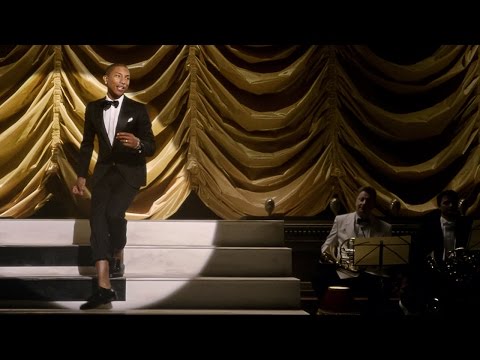
The execution follows a classic crescendo structure. It begins intimately with the BBC Concert Orchestra in a grand, historic hall, grounding the entire piece in a sense of timeless quality. The 'Setup' introduces the song's melody, passed between a handful of huge stars like Pharrell and Elton John in fantastical, personalized vignettes. This creates the hook—'who will be next?'. The 'Turn' is the acceleration. More artists appear, the visuals become more heavenly and surreal—hot air balloons, floating bubbles, angelic wings—and the music builds. The introduction of Brian May's iconic guitar tone over the orchestra is a key moment, signaling the fusion of rock royalty with classical tradition. The 'Payoff' is the final, powerful chorus where all voices unite. This collective swell of sound, paired with the sky-bound visuals, is the emotional peak, designed to evoke awe and a sense of shared experience. The final, quiet moment with Brian Wilson and a single floating feather brings it all to a poignant close, landing the tagline 'For The Love of Music.'
The debrief for the team is a lesson in wielding brand power. When you have the cultural authority of the BBC, you can make the ad itself the event. They leveraged their unique public service position to achieve something no commercial brand could. However, it also highlights the inherent weakness of such a 'big bang' launch. While it creates immense awareness and goodwill, the ad is so focused on the grand statement that it fails to communicate the functional 'what' of BBC Music. It's a spectacular flag planted on top of a mountain, but it doesn't tell you how to get there or what you'll find.
Theme Keywords
Brand Position
The trusted, definitive curator of all music, for everyone.
Brand Archetype
Ruler
Creative Game Plan
Unite the entire world of music under one iconic song to declare that BBC Music is the definitive home for all of it.
Diagnosis: Issues & Solutions
Primary Issue: Clarity of 'What's Next?'
The Problem:
The campaign's biggest flaw is the disconnect between its immense emotional power and its vague call-to-action. Viewers are left with a powerful feeling but no clear next step. What is BBC Music—an app, a new set of radio shows, a website? The ad doesn't provide a tangible 'ask,' relying entirely on the viewer's curiosity to visit a generic URL.
The Solution:
A simple end-card with a more specific directive, such as 'Download the BBC Sounds app to hear it all' or 'Listen now on BBC Radio 1,' would have channeled the emotional momentum into a measurable action, bridging the gap between brand love and user engagement.
Secondary Issue: Strategic Sense
The Problem:
While the scale is impressive, the 'everything to everyone' strategy risks being perceived as unfocused. By trying to encompass all of music, it doesn't give a specific audience a sharp reason to choose it over a more personalized service like Spotify or a genre-specific station. It's a statement of breadth, not depth.
The Solution:
Follow-up campaign assets could have been targeted to specific audiences. Imagine shorter cuts featuring only the rock artists for 6 Music, the pop artists for Radio 1, and the classical performers for Radio 3, each with a tailored message and call-to-action for that specific service under the BBC Music umbrella.
Additional Notes
Related Links
Credits
Share this Analysis
More BBC Music ad breakdowns
- Step into the adventure with Sky Movies this ChristmasSky Movies
- The Sun - Big Holidays for Small ChangeThe Sun
- Lost Votes – An Initiative by The Times of IndiaThe Times of India
- BBC One: Sprout BoyBBC One
- Libero Football Magazine / #TouchYourFootballsLíbero Football Magazine
- BBC Radio 4: 4 in FourBBC Radio 4
- The Sun - Get Holiday Ready - Grey LondonThe Sun
- Trendi & Lily - kaksi loistavaa on liittynyt yhteenTrendi & Lily