GEICO Hump Day Camel Commercial Happier than a Camel on Wednesday - Ad Analysis

AI Editor notes
Straight from the gut!!
“This is one of those brilliantly simple ideas you wish you'd thought of. It's almost stupid, and that's why it works. Taking a pre-existing, slightly lame phrase like 'hump day' and owning it with a talking camel is genius. For a solid year, you couldn't get through a Wednesday without someone in the office doing the voice. It's pure, uncut brand recall fuel.”
Quick Summary
This ad's effectiveness comes from hijacking a universal, mundane cultural moment—Wednesday's 'hump day'—and transforming it into a sticky, hilarious, and ownable brand asset. It embedded GEICO into everyday office chatter, creating massive brand recall that far outlasted the media buy.
Executive Summary
The GEICO 'Hump Day' commercial is a textbook example of how to create cultural currency for a brand in a low-interest category. Insurance is a grudge purchase, a commodity few people are excited to think about. The Martin Agency's long-standing strategy for GEICO has been to circumvent this apathy not by talking about the intricacies of policies, but by being relentlessly entertaining. 'Hump Day' is arguably the pinnacle of this approach, a piece of work that transcended advertising to become a genuine cultural phenomenon.
The Core Insight: At its heart, the ad taps into a simple, universal truth: the work week is a grind, and Wednesday represents a psychological tipping point. Getting over the 'hump' is a small, shared victory. The insight is that everyone, from the corner office to the mailroom, understands this feeling. By latching onto this existing cultural shorthand, GEICO didn't have to invent a new concept; it just had to own an existing one in a completely unforgettable way.
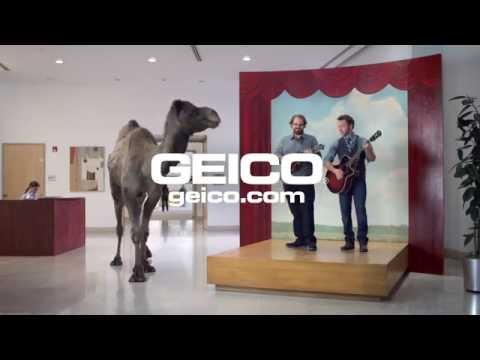
The Execution (Setup-Turn-Payoff): The ad's structure is brutally efficient. The Setup (0:00-0:18) establishes the absurd premise: a talking camel named Caleb wanders through a drab office, annoying his deadpan colleagues with the question, 'Guess what day it is?' The humor is born from the contrast between the surreal character and the mundane, relatable setting. The Turn (0:19-0:25) is the critical link back to the brand. It cuts away to the familiar GEICO folk singers, who pose the campaign's central question: 'How happy are folks who save hundreds...?' The answer, 'Happier than a camel on Wednesday,' provides the punchline and connects the preceding skit to GEICO's value proposition. The Payoff (0:25-0:31) seals the deal. The camel triumphantly yells 'Hump Daaaay!' as he passes the singers, reinforcing the catchphrase, followed immediately by the GEICO logo and classic tagline. In 31 seconds, the ad introduces a character, tells a joke, lands a brand message, and delivers a memorable catchphrase.
The Debrief: The key takeaway from 'Hump Day' is the power of association. The ad didn't try to sell insurance; it sold a feeling. It successfully associated the small joy of reaching mid-week with the happiness of saving money with GEICO. Its viral success, which saw the ad's viewership spike every Wednesday for years, demonstrated that when advertising provides genuine entertainment value, it can earn an audience rather than just rent one. It proved that a simple, funny, and sticky idea is often more powerful than a complex, rational argument, especially in a category governed by brand recall.
Theme Keywords
Brand Position
The clever, simple, and funny way to save money on insurance.
Brand Archetype
Jester
Creative Game Plan
Own the universal feeling of mid-week relief by linking it to the happiness of saving money with GEICO.
Diagnosis: Issues & Solutions
Primary Issue: Strategic Sense
The Problem:
The link between a talking camel and auto insurance is logically nonexistent. A competitor could, in theory, create a similarly absurd scenario with a different animal and day of the week.
The Solution:
This isn't a flaw to be fixed but a strategy to embrace. The strength of the 'Happier than...' campaign framework is its infinite flexibility. The brand should continue to find unexpected, humorous, and culturally relevant comparisons to reinforce its message, ensuring the execution remains fresh and prevents the formula from becoming predictable.
Secondary Issue: Emotional Connection
The Problem:
The emotion generated is pure, surface-level humor. It doesn't build a deep, trust-based relationship with the consumer, which can be a vulnerability in a category where trust is a key factor during a claim.
The Solution:
This is a deliberate strategic trade-off. GEICO's marketing ecosystem has other assets (like the more reassuring Gecko) to build trust. This ad's job is singular: create memorability and positive sentiment. Trying to inject a deeper emotional message would have diluted the humor and compromised its viral potential.