Garmi Ka Jugaad - 3 Parivaar, Upgrade Karne Ka Ek Solution I Home Credit India - Ad Analysis

AI Editor notes
Straight from the gut!!
“This is a classic teaser ad. It’s a perfectly competent setup, ticking all the boxes for relatability in the Indian market. But it feels a bit paint-by-numbers. We get the problem, but the ad ends before the satisfying part—the solution. As a standalone piece, it’s forgettable. It relies entirely on the audience being interested enough to see the next installment, which is a big ask in a cluttered feed.”
Quick Summary
This ad works by framing a consumer loan not as a debt, but as an immediate solution to a universal and highly relatable problem: the oppressive Indian summer. It effectively turns a financial product into an accessible tool for instant lifestyle improvement, setting the stage for a broader campaign that promises to 'upgrade' everyday life.
Executive Summary
Home Credit India's 'Garmi Ka Jugaad' is a textbook example of a Problem-Solution setup, executed as a teaser for a broader seasonal campaign. Its strength lies in its sharp focus on a single, universally understood pain point in its target market: the discomfort and frustration of dealing with the Indian summer. The strategy is to position Home Credit not as a mere lender, but as an enabler of immediate relief and a better quality of life. The core insight, as articulated by the brand's CMO, is that small, affordable upgrades to home appliances can have a significant impact on daily well-being. [10]
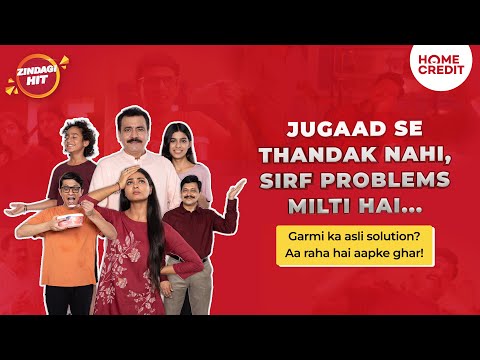
The execution follows a clean and efficient Problem-Solution narrative, even in its short 26-second runtime. The Problem is established within the first 15 seconds through three distinct, relatable scenarios: a man escaping to his office AC, a family with a faulty fridge, and siblings fighting over a cooler. These vignettes are chosen well, representing different demographics (a single professional, a young couple, a family with children) and broadening the ad's appeal. They effectively capture the 'makeshift solutions' (jugaad) people resort to. The Solution is then hinted at, rather than fully revealed. The voiceover's promise that 'life ke scenes' are about to be upgraded, combined with on-screen graphics for an EMI card and personal loans, bridges the gap. It explicitly frames financing as the 'how'.
This teaser format is a strategic choice optimized for social media, aiming to create anticipation. The closing line, 'Kaise? Janane ke liye bane rahein humare saath!' ('How? Stay with us to find out!'), turns the ad into the first chapter of a series. The debrief for the creative team would be that while this approach can build engagement over time, the initial installment is creatively safe. It relies more on the universality of the problem than on a powerful creative idea to hook the audience. The risk is viewer drop-off; if the problem isn't felt acutely enough, the motivation to 'stay tuned' may be weak. The work is solid and strategically sound for a multi-part campaign, but lacks the creative punch to be a standout piece on its own.
Theme Keywords
Brand Position
The accessible financial ally for everyday life upgrades.
Brand Archetype
The Everyman
Creative Game Plan
Connect with consumers by showing we understand their universal, seasonal frustrations and can provide the instant financial tool to solve them.
Diagnosis: Issues & Solutions
Primary Issue: Brand Distinctiveness
The Problem:
The ad's biggest weakness is its generic feel. The scenarios are so universal that any consumer finance company or appliance brand could have produced this spot. It establishes a category need ('I need a new AC') more than a brand preference ('I need to go to Home Credit for it').
The Solution:
Inject a more ownable brand element into the creative. This could be a unique visual motif, a recurring character, or a specific tone of voice that goes beyond just 'relatable.' The 'Zindagi Hit' tagline could be integrated more creatively into the narrative itself, not just shown on the end card.
Secondary Issue: Clarity of "What's Next?"
The Problem:
The teaser format asks the viewer to do work—to remember the brand and look out for the next part. In a fast-scrolling social media environment, this is a risky strategy. The ad doesn't provide a compelling enough creative reason to anticipate the next installment.
The Solution:
Strengthen the hook in the final seconds. Instead of just a generic 'stay tuned,' the ad could have posed a more intriguing question or presented a glimpse of the 'upgraded scene' to make the promised payoff more tangible and desirable, thereby increasing the incentive to watch the next video.