Fathers and their impact on children's well-being | Dove Men+Care - Ad Analysis

AI Editor notes
Straight from the gut!!
“This is the Unilever emotional marketing machine at its finest. It's the 'Real Beauty' playbook perfectly adapted for men, swapping unattainable beauty standards for obsolete masculine tropes. It feels engineered for virality, but it's undeniably effective. It sidesteps selling soap to sell an idea, one that resonates with just about everyone who is a father or has one. It's a smart, calculated piece of brand building.”
Quick Summary
This ad solidifies Dove Men+Care's brand platform that 'care is a man's greatest strength' by tapping into a simple, universal truth: from a child's first word to a grown-up's call for help, 'Dad' is the name people call when they need comfort, reassurance, and care. It reframes fatherhood around these small, authentic moments, moving the conversation beyond outdated stereotypes and positioning the brand as the champion of modern masculinity.
Executive Summary
The 'Calls for Dad' campaign is a masterclass in shifting a brand conversation from product attributes to cultural values. At a time when the men's grooming aisle was dominated by ads promising sex appeal through cartoonish masculinity (Axe) or celebrating bumbling incompetence (the 'doofus dad' trope), Dove Men+Care introduced a radical idea: a man's strength isn't in his swagger, but in his capacity to care. [9, 11]
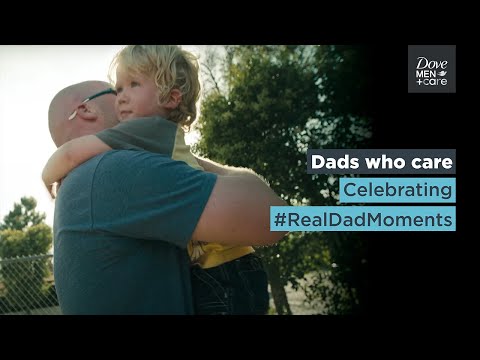
The core insight is brilliantly simple: the media's portrayal of fatherhood is outdated and doesn't reflect the reality of modern dads who are deeply involved in their children's emotional well-being. [3, 4] The ad's execution is built around a single, powerful audio device: the sound of children calling for their fathers. This serves as the emotional anchor for a montage of authentic, unglamorous moments of care. We don't see superheroes; we see dads helping with potty training, soothing nightmares, and brushing a daughter's hair. These small vignettes build a profound sense of truth.
The creative structure follows a clear AIDA (Attention, Interest, Desire, Action) model. It grabs attention instantly with the relatable cries of 'Daddy!'. It builds interest by showcasing a diverse and authentic tapestry of father-child interactions that viewers can see themselves in. The desire is cultivated as the film pivots to show these calls extending into adulthood—a daughter with a broken-down car, a bride's dance—transforming the narrative from simple childcare into a lifelong bond. The 'action' is not to buy soap, but to reconsider the definition of fatherhood and to celebrate it. The brand cleverly positions itself as the facilitator of this cultural conversation, with the final logo and hashtag feeling less like an ad and more like a signature on a manifesto.
The debrief for the team that created this is straightforward: purpose-driven marketing, when anchored in a genuine human truth, can be far more powerful than product-feature advertising. By identifying a cultural tension—the gap between the reality of modern fatherhood and its media depiction—Dove Men+Care created an emotional connection that competitors couldn't easily replicate. It proved that you don't need to show the product to build the brand, especially when your goal is to win long-term affinity and redefine the category.
Theme Keywords
Brand Position
The brand for modern men who know that caring is a sign of strength.
Brand Archetype
The Caregiver
Creative Game Plan
Demonstrate that the ultimate measure of a man's strength is answering the simple, lifelong call of 'Dad.'
Diagnosis: Issues & Solutions
Primary Issue: Strategic Sense
The Problem:
The associative link between celebrating caring fathers and buying men's grooming products is entirely emotional and indirect. A cynical viewer could easily dismiss the ad as 'sentimental soap-selling,' questioning the brand's authority to lead this conversation beyond a marketing objective. [8]
The Solution:
Subtly bridge the gap between the brand's purpose and its products. A brief, closing shot of a father quietly using a Dove Men+Care product as he prepares for his day could have grounded the abstract concept of 'care' in the tangible ritual of 'self-care' without feeling like a hard sell.
Secondary Issue: Clarity of "What's Next?"
The Problem:
The call-to-action, #RealDadMoments, is a passive request that puts the onus entirely on the viewer to create and share content. While effective at generating buzz, it lacks a mechanism to sustain engagement beyond the initial emotional peak.
The Solution:
Implement a more active engagement strategy. A prompt like, 'Share your #RealDadMoments for a chance to be featured in our next film,' would have created a clearer user journey, incentivized participation, and generated a pipeline of authentic content for the brand to use.
Additional Notes
Related Links
Credits
Share this Analysis
More Dove Men+Care ad breakdowns
- Dove Men + Care X The Family Man Season 3 - Srikant Tiwari, The Dove Man?Dove Men+Care
- Why paternity leave is important | Dove Men+CareDove Men+Care
- Promoting positive role models off the court | Dove Men+CareDove Men+Care
- Dove Men+Care The Man Manual: Protecting the Outer LayerDove Men+Care
- Celebrating Father’s Day with dads who care | Dove Men+CareDove Men+Care
- Dove Man enough to #CareNotTroll ft. Harsha Bhogle, Anil Kumble, Gaurav Kapur & Sanjana GanesanDove Men+Care