Explore your world with Google Maps - Ad Analysis

AI Editor notes
Straight from the gut!!
“This is just wonderfully clever. It's the kind of work that reminds you advertising can be delightful. Instead of a boring screen recording, they built an entire world to show off the product. It has that classic early-2010s Google vibe: optimistic, smart, and a little bit nerdy. It makes you appreciate the engineering of both the ad and the app itself.”
Quick Summary
This ad succeeds by translating the invisible, digital magic of Google Maps into a tangible, physical marble run. It transforms a complex utility into a delightful, easy-to-understand toy, making its features feel both powerful and effortlessly simple.
Executive Summary
This Google Maps ad is a masterclass in the art of the product demonstration. In an era where tech advertising could easily default to sterile screen recordings, this piece took the opposite approach, grounding a digital product in a meticulously crafted physical world. It’s a strategic decision that pays off, transforming the abstract concept of data-driven navigation into something tangible, whimsical, and deeply engaging.
The Core Insight here is that navigating the modern world can feel like an overwhelming, complex game, but with the right tool, it can become a delightful journey of discovery. The ad doesn’t just sell features; it sells a feeling of empowerment and effortlessness.
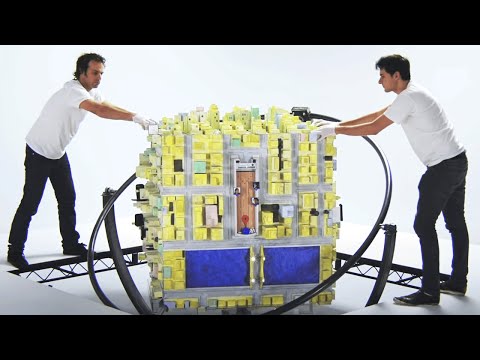
The Execution follows a classic Problem-Solution-Proof structure, visualized as a journey. The 'problem' is the intricate, sprawling city. The 'solution' is Google Maps, personified by the single blue marble representing the user. The entire 90-second runtime serves as 'proof,' as we watch the marble seamlessly navigate a series of challenges. Each obstacle is overcome by a specific Maps feature: a star rating guides a choice for food, indoor mapping solves the maze of a mall, live traffic data helps avoid a jam, and turn-by-turn directions provide the final precision. This structure allows Google to demo a suite of features without it feeling like a laundry list. The use of a physical, kinetic sculpture, co-directed by Bob Partington and Aaron Duffy, is the star. [1] This wasn't just a creative choice; it was a strategic one. It makes the technology feel reliable and real, not just like lines of code. The upbeat, piano-led soundtrack reinforces the ad’s playful, optimistic tone, turning what could be a stressful journey into a fun game.
The Debrief for any brand team watching this is clear: don't just tell, show. And when you show, do it with a level of craft and imagination that respects the viewer's intelligence. By creating a physical metaphor for a digital service, Google made its product benefits unforgettable. It’s a powerful reminder that the best way to explain complex technology is often through simple, human-scaled storytelling.
Theme Keywords
Brand Position
The smartest, most comprehensive, and most delightful way to explore and navigate the world.
Brand Archetype
The Magician
Creative Game Plan
Visualize the digital journey through Google Maps as a tangible, intricate marble run to make its complex features feel simple, magical, and fun.
Diagnosis: Issues & Solutions
Primary Issue: Emotional Connection
The Problem:
The ad is a triumph of cleverness and craft, but it connects with the head more than the heart. The overwhelming feeling is admiration for the execution rather than a relatable human emotion.
The Solution:
Introduce a subtle human narrative. For instance, the destination could have been a hospital for the birth of a child, or a first date. This would have grounded the delightful journey in a meaningful life moment, adding a layer of emotional warmth to the intellectual 'wow' factor.
Secondary Issue: Clarity of "What's Next?"
The Problem:
The ad brilliantly inspires play and discovery, but the most direct interactive element—the Cube game it was created to promote—is mentioned only in the YouTube description text. [1] This disconnects the viewer's excitement from the immediate, actionable next step.
The Solution:
Integrate the call-to-action for the game directly into the ad's end card. A simple title card like "Now it's your turn. Play Cube." would have created a much stronger bridge between viewing and interacting, capitalizing on the game-like nature of the film.