Don't Look Up Doomsday Hidden Camera Prank | Netflix - Ad Analysis

AI Editor notes
Straight from the gut!!
“This is a classic, big-budget stunt ad. It’s the kind of thing you do when you have a lot of money and a simple, high-concept idea to promote. It feels a bit like a throwback to the glory days of viral marketing pranks from 2010-2015. It's effective, for sure, but is it trying a little too hard? The scale is impressive, but the core idea—pranking people with a disaster—isn't exactly new. It gets the job done, but it doesn't feel groundbreaking.”
Quick Summary
By staging a real-world version of its movie's plot, Netflix created a piece of marketing that's more entertaining and memorable than a standard trailer. It doesn't just tell you the film's premise—it makes you watch it unfold with real people, proving the film's satirical point about public indifference to impending disaster and creating a highly shareable piece of content in the process.
Executive Summary
This stunt by Netflix isn't just an ad for 'Don't Look Up'; it's a real-world, live-action demonstration of the film's entire thesis. The campaign bypasses traditional advertising's pitfall of simply telling the audience what a product is about. Instead, it creates a separate, compelling narrative that proves the movie's point, making the marketing an entertaining extension of the film itself.
The core insight is brilliantly simple and directly lifted from the movie's plot: in an age of misinformation and constant media saturation, we've become dangerously desensitized to catastrophe. The ad wagers that even with chaos unfolding outside their window, people might believe an authority figure telling them everything is fine. This tension between what participants are told versus what they see is the engine of the entire piece.
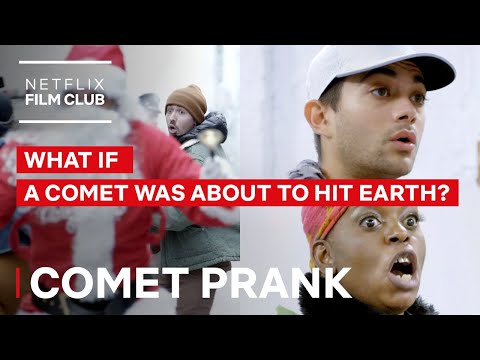
The execution follows a classic Setup-Turn-Payoff structure. The 'Setup' is the initial behind-the-scenes look at the prank's construction, which builds viewer anticipation and establishes the elaborate scale of the stunt. Unsuspecting participants are brought into a fake office for a mundane survey, a perfect misdirection. The 'Turn' occurs when the fake news report about the comet interrupts the proceedings. This is where the ad's cleverness shines. The actor-researcher's calm dismissal of the news as a 'hoax' directly conflicts with the escalating panic, performed by hundreds of actors, on the street outside. This creates a powerful dramatic question for both the participants and the viewer: who do you believe? The chaos is meticulously choreographed, from people running to a Christmas tree being knocked over, all while the focus remains on the participants' genuine confusion and growing fear. The 'Payoff' is two-fold. First, the moment the participants decide to reject the false authority and flee for their lives. Second, the grand reveal, where the wall lifts to expose the cameras. This final moment transforms their terror into laughter and relief, masterfully associating the intense experience with the entertainment value of Netflix and the film.
The debrief for any team watching this is clear: experiential marketing is most powerful when it's thematically inseparable from the product. Netflix didn't just make an ad; they created a shareable short film that works on its own terms while functioning as a perfect trailer. It generates curiosity and conversation far more effectively than a simple montage of movie clips could. It's a confident, high-impact play that understands that the best way to sell a story is to make the audience a part of it.
Theme Keywords
Brand Position
Netflix is the home of ambitious, conversation-starting entertainment that reflects and satirizes modern culture.
Brand Archetype
The Jester (with shades of the Sage, by provoking thought through humor).
Creative Game Plan
Prove the film's satirical premise is real by subjecting unsuspecting people to an end-of-the-world scenario and watching them ignore the obvious.
Diagnosis: Issues & Solutions
Primary Issue: Emotional Connection
The Problem:
The ad is very effective as a humorous, high-tension stunt, but it misses the opportunity to connect the prank to the film's more serious allegorical meaning about climate change and willful ignorance. The ending is all laughter and relief, which slightly undercuts the sobering message at the movie's core.
The Solution:
After the reveal and laughter, a final title card could have read: 'It's funny when it's a prank. It's less funny when it's real.' This would have added a layer of depth and more strongly linked the stunt to the social commentary of the film, encouraging deeper reflection.
Secondary Issue: Strategic Sense
The Problem:
The use of 'BASH,' the fictional tech company from the film, is a clever Easter egg for those who have seen the movie but is a completely contextless detail for the millions of viewers this ad is intended to attract. It doesn't harm the ad, but it's an insidery detail that doesn't add value for the uninitiated target audience.
The Solution:
Instead of relying on a name, the market research could have been framed around a more universal, fake tech-dystopia premise that anyone could understand, making the setup feel slightly more relevant to everyone watching, not just those already in the know.
Additional Notes
Related Links
Credits
Share this Analysis
More Netflix ad breakdowns
- Merlina, tu tierra te llama | Merlina temporada 2 | NetflixNetflix
- RUSTIN | Official Teaser Trailer | NetflixNetflix
- Castlevania: Nocturne | Main Trailer | NetflixNetflix
- International Women's Day | NetflixNetflix
- The World is on NetflixNetflix
- THE KILLER | Official Teaser Trailer | NetflixNetflix
- Pain Hustlers | Emily Blunt + Chris Evans | Official Teaser | NetflixNetflix
- Neon | Official Teaser | NetflixNetflix