Don't be the present he's waiting for - Ad Analysis

AI Editor notes
Straight from the gut!!
“This is how you do a PSA. It's dark, it's funny, and it's completely unexpected. Instead of wagging a finger, it creates a monster. The character is so perfectly slimy and despicable, you hang on his every word. It cuts through all the holiday schmaltz with a razor blade. This is the kind of work that makes you pay attention because you can't believe what you're seeing.”
Quick Summary
By personifying the abstract horror of drunk driving into a charismatic, ghoulish villain who literally profits from tragedy, this PSA transforms a tired safety message into an unforgettable and deeply unsettling narrative. It reframes a bad personal choice not as a mistake, but as a 'gift' to a malevolent force, making the stakes feel visceral and immediate.
Executive Summary
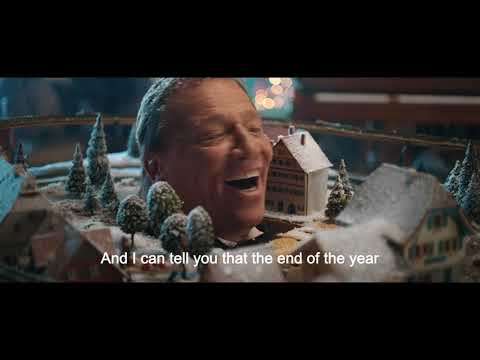
Public service announcements about drunk driving are a notoriously difficult brief. The message is old, the audience is numb, and the default creative route is often a clichéd, tragic scene. This campaign for Brussels Mobility by Mortierbrigade sidesteps the entire category convention by refusing to show the victims' point of view. Instead, it introduces us to the perpetrator's greatest beneficiary: a personification of the grim reaper, reimagined as a sleazy, holiday-loving profiteer named Baudouin.
The Core Insight here is that the consequences of drunk driving are not just an abstract risk but a tangible gain for a malevolent force. By giving this force a face—a charismatic villain who bets on accidents and celebrates fatalities—the ad makes the danger feel personal and targeted. You're not just risking an accident; you're risking becoming a 'present' that makes this despicable man richer.
The execution follows a classic Setup-Turn-Payoff structure. The Setup introduces Baudouin in his opulent home, talking lovingly about the holidays. The festive music and Christmas decor create a familiar scene, but his words are immediately unsettling. He dreams of a 'White Christmas,' but the Turn comes quickly as he clarifies he means cocaine, not snow. This is the moment the film reveals its true nature. The miniature snowy village, a symbol of innocence, becomes his personal diorama of death where he gloats over crashed cars. The Payoff is the campaign's masterstroke. Baudouin isn't just a passive observer; he actively encourages the deadly behavior, offering miniature beers to the figurines. The final shot of him watching fireworks and comparing them to young lives exploding, followed by the line 'Don't be the present he's waiting for,' is a chilling conclusion. The ad doesn't just ask you not to drink and drive; it dares you to defy the villain who wants you to fail.
The Debrief for any team watching this is clear: don't be afraid to personify the problem. When the 'enemy' is a behavior, giving it a human (or monstrous) form can be far more powerful than showing the consequences in a literal way. It allows for storytelling, character development, and a tone—in this case, wickedly dark humor—that is far more memorable and engaging than a straightforward warning.
Theme Keywords
Brand Position
Brussels Mobility is the essential public service that keeps you safe from the hidden dangers of the holiday season.
Brand Archetype
Caregiver
Creative Game Plan
Personify the deadly consequences of drunk driving into a sinister, odious villain who celebrates and profits from every bad decision made on the road.
Diagnosis: Issues & Solutions
Primary Issue: Emotional Connection
The Problem:
The primary risk is that the dark humor and sinister tone, while creatively brilliant, could be too jarring for a segment of the audience, potentially overshadowing the public service message for those who are put off by the style.
The Solution:
Ensure the final call-to-action is exceptionally clear and simple. The ad does this well with the four icons (Taxi, Bus, Metro, Bed), providing an immediate, practical solution that cuts through any emotional dissonance caused by the dark tone.
Secondary Issue: Strategic Sense
The Problem:
The villain is so compelling and the narrative so strong that there's a small risk of 'vampire creativity'—where the audience remembers the ad but not the brand (Brussels Mobility) behind it, as the branding appears only at the end.
The Solution:
In a broader campaign, integrate the brand more explicitly in supporting materials. The agency did this by creating interactive elements like a WhatsApp number for the villain and branded photo booths in bars, effectively connecting the memorable character back to the sponsor. [8]