Discovery Knows No Borders | Institute for Advanced Study - Ad Analysis

AI Editor notes
Straight from the gut!!
“It's a beautifully made, very serious film that feels like a cross between a Ken Burns documentary and a university fundraising video. The Oppenheimer timing is smart. But it's almost *too* reverent, bordering on cold. It does a great job of saying 'we are important,' but it doesn't necessarily make me feel 'I want to be a part of that.' It feels designed to impress existing stakeholders more than to attract new, disruptive minds.”
Quick Summary
This ad positions the Institute for Advanced Study as a timeless, borderless sanctuary for pure intellectual inquiry. By masterfully weaving its legendary past—personified by Einstein and a culturally relevant Oppenheimer—with its diverse present, it argues that its unique mission is more essential than ever in tackling humanity's most profound questions.
Executive Summary
The Institute for Advanced Study's 'Discovery Knows No Borders' is a masterclass in leveraging institutional heritage to assert contemporary relevance. It's not just an ad; it's a cinematic statement of purpose, designed to solidify the IAS's brand as an elite, timeless sanctuary for pure thought. The core strategy hinges on a simple, powerful idea: in a fractured, fast-paced world, the slow, deep, and borderless pursuit of knowledge is not a luxury, but a necessity.
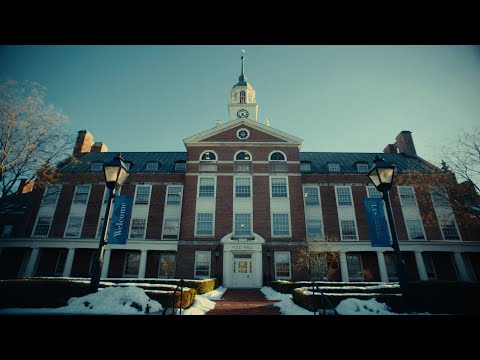
The execution employs a 'visual rhyme' technique, juxtaposing modern, high-definition footage of the campus and its current scholars with carefully restored archival imagery of its iconic past. [2] When we see diverse scholars exiting Fuld Hall today, the image dissolves into a black-and-white shot of figures from another era walking the same path. This isn't just a historical montage; it's a deliberate argument that the work is continuous, a single intellectual thread running from Einstein and Oppenheimer to the researchers tackling AI ethics and cosmology today. The use of archival audio from Einstein and Oppenheimer is the film's most powerful device. Hearing their actual voices doesn't just tell us about the Institute's legacy; it lets us feel its weight and authenticity directly, creating a sense of inherited mission.
The narrative structure is thematic, built around the core pillars of the IAS brand: inclusivity ('from all over the world, regardless of race or religion'), bridging disciplines ('between the sciences and humanities'), and tackling monumental questions. [5] The timing, released shortly after the film Oppenheimer's Oscar success, was a brilliant strategic move, drafting off a global cultural conversation to introduce itself to a wider audience. [3, 7] The ad knowingly targets two groups: the insiders (academics, potential members) who will appreciate the nuance and the history, and the newly curious public who recognize the name 'Oppenheimer' and are invited to understand the institution he led. [7]
Ultimately, the debrief for the team is that legacy, when actively connected to the present, is a brand's most powerful asset. The film avoids being a stuffy historical reel by showing that the same environment that fostered the minds of the 20th century is now fostering the diverse minds shaping the 21st. It proves that while the questions may evolve from the atom to AI, the ideal environment for answering them—one of unrestricted, collaborative, and deep inquiry—remains the same.
Theme Keywords
Brand Position
The world's foremost independent haven for pure, untethered theoretical research.
Brand Archetype
The Sage
Creative Game Plan
Connect the Institute's legendary past to its vital present to prove its enduring role as a sanctuary for solving humanity's biggest questions.
Diagnosis: Issues & Solutions
Primary Issue: Emotional Connection
The Problem:
The film's tone is one of profound reverence and intellectualism. While this builds prestige, it creates an emotional distance, making the Institute feel more like an untouchable monument than a living, breathing community of passionate individuals.
The Solution:
Create a series of short-form digital follow-ups that focus on the 'human' moments of discovery. Show the frustration, the collaboration, the excitement of a single scholar or a small group. Let them speak in their own voice about *why* they pursue these difficult questions, connecting their personal passion to the institution's grand mission.
Secondary Issue: Strategic Sense
The Problem:
The ad leans so heavily on its past that it risks being defined by it. The 'Oppenheimer' connection is a double-edged sword: it provides a timely hook but could also overshadow the Institute's current and future identity.
The Solution:
Launch the next phase of the campaign with the title 'The Next Chapter.' Use the current scholars featured in the ad to pose the next set of monumental questions the IAS is built to address, explicitly shifting the focus from 'where we came from' to 'where we are going.'
Additional Notes
Related Links
Credits
Share this Analysis
More Institute for Advanced Study ad breakdowns
- AUB celebrates 80 years of working the camera at WimbledonArts University Bournemouth
- Build “Success Story” of your dream at DPUDhurakij Pundit University (DPU)
- Your Story Starts HereJagiellonian University
- Certus – Un Título de Peso | HumansCertus
- Table Talk | Chinese New Year 2024Taylor's University
- Where great minds collideThe University of Melbourne
- Lead ChangeTroy University
- NostradamusUnopar