Dear Apple | Apple Watch - Ad Analysis

AI Editor notes
Straight from the gut!!
“This is textbook emotional branding, but done with such authenticity it hits differently. Instead of actors, they use real people with real, terrifying stories. It's a long watch for an ad, but you can't look away. It's a smart, almost scary pivot from 'close your rings' to 'this thing could save you from a stroke or a blizzard.' Who is this for? Anyone with a pulse and a sense of mortality. It's heavy, but it works.”
Quick Summary
By sidelining its signature high-gloss production in favor of raw, authentic user testimonials, Apple elevates the Apple Watch from a desirable gadget to an essential, life-saving device. The ad's power lies in its undeniable, user-generated proof, making an emotional case that no competitor can easily replicate.
Executive Summary
Apple's 'Dear Apple' is less of an advertisement and more of a documentary-style manifesto. It represents a strategic pivot for the Apple Watch, moving its core value proposition from the realm of 'wellness' into the critical territory of 'survival.' The campaign's strength is its stark authenticity, a deliberate move away from Apple's typically pristine and polished aesthetic.
The Core Insight here is simple but profound: people don't buy features, they buy feelings—and the most powerful feeling is security. Apple understands that while tracking steps is nice, surviving a stroke, a car crash, or being lost in a blizzard is a benefit that transcends cost. The brand has a unique advantage: it receives a constant stream of letters from users whose lives have been genuinely impacted. This campaign weaponizes that truth, turning customer feedback into the most credible marketing imaginable.
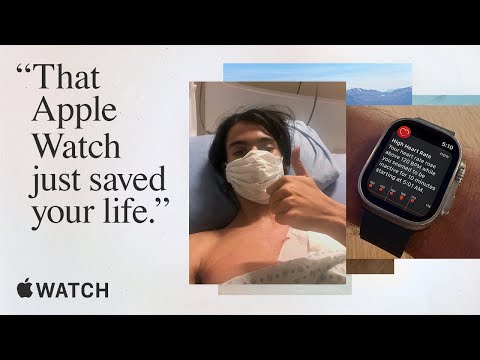
The Execution is a masterstroke in the Testimonial format. It's structured not as a single narrative, but as an overwhelming montage of proof. The framework is simple: Hook, Proof, and Payoff. The hook is the intimate act of typing 'Dear Apple,' instantly framing the stories as genuine correspondence. The proof is the main body of the ad, a relentless barrage of life-threatening scenarios—a collapsed lung, a stroke, a car accident, a hiking disaster—all solved by a specific Apple Watch feature (Heart Rate alerts, Fall Detection, Crash Detection, Emergency SOS). The use of mixed media, combining raw user-generated video with news clips and medical scans, gives each story an unshakeable sense of reality. You can't argue with a security camera. The payoff is the emotional release: the survivors, smiling and grateful, and the final, understated ' Watch' logo. There's no need for a hard sell; the evidence has already done the convincing.
The Debrief for any marketing team watching this is clear: authenticity is the new currency of trust. In an age of skepticism, the most powerful stories are the real ones. Apple's creative team made the smart choice to step back and let the users be the heroes. By curating and presenting these stories, Apple isn't just selling a watch; it's selling peace of mind, second chances, and the quiet reassurance that someone—or something—has your back.
Theme Keywords
Brand Position
The indispensable companion for a healthy, active, and safe life.
Brand Archetype
The Caregiver
Creative Game Plan
Prove the Apple Watch is an essential life-saving device by bringing to life the real, harrowing, and emotional letters sent by the very people it has saved.
Diagnosis: Issues & Solutions
Primary Issue: Strategic Sense
The Problem:
The ad's 3:19 runtime, while powerful in a captive viewing setting like a keynote or a direct YouTube watch, is a significant barrier in the fast-paced, skippable world of most digital advertising placements. Its emotional build-up requires time that it won't always be given.
The Solution:
Develop a disciplined cutdown strategy. Create :15 and :30-second versions, each focusing on a single, powerful story (e.g., 'The Fall,' 'The Crash,' 'The Alert'). This allows the campaign to retain its authenticity while adapting to different attention spans and platforms, ensuring the core message lands even in brief encounters.
Secondary Issue: Emotional Connection
The Problem:
While overwhelmingly powerful, the rapid succession of five different life-or-death situations can verge on emotional fatigue for the viewer. The intensity is so high throughout that the audience barely has a moment to process one miracle before being presented with the next.
The Solution:
Introduce more dynamic emotional pacing. For example, slightly expanding on the mental health or weight loss journeys—stories of 'life-changing' rather than 'life-saving'—could provide moments of quieter, inspirational emotion. This would create more contrast and make the life-or-death moments feel even more impactful when they hit.
Additional Notes
Related Links
Credits
Share this Analysis
More Apple ad breakdowns
- Mac | Lessons | AppleApple
- iPhone 16 Ceramic Shield | Trust Issues | AppleApple
- Heartstrings | Apple Holiday | Hearing Aid feature on AirPods Pro 2Apple
- Privacy on iPhone | Flock | AppleApple
- Apple Watch | Dear Apple | AppleApple
- Emergency SOS on Apple Watch | Rick’s Rescue | AppleApple
- The USB Paradox | AppleApple
- Introducing the all-new AirPods 4 | AppleApple