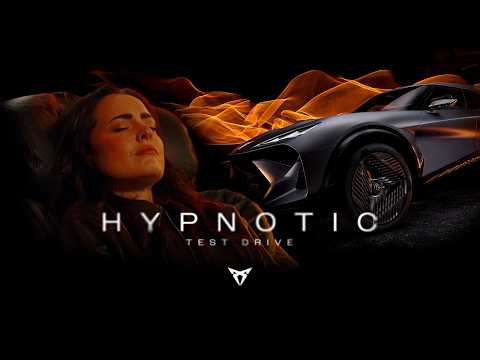
CUPRA Tindaya: The Hypnotic Test Drive - Ad Analysis

AI Editor notes
Straight from the gut!!
“Ten minutes is a massive ask for an online car spot, but the central premise is genuinely clever. Instead of standard auto marketing fluff about 'aerodynamic sculpting,' they put creators into a hypnotic trance to test-drive an undrivable prototype. It borders on self-indulgent at points, but it earns its keep by visualizing each creator's subconscious reaction rather than reciting spec sheets.”
Quick Summary
CUPRA overcomes the fundamental limitation of an undrivable concept car by transforming sensory marketing into high-concept entertainment, turning an abstract design study into a visceral emotional proof point.
Executive Summary
Automotive concept reveals suffer from a chronic strategic dilemma: how do you generate genuine excitement for a machine that audiences cannot buy, touch, or test-drive? Most automotive manufacturers default to sterile studio turntable shots paired with generic voiceovers touting 'design language' and 'emotional connectivity.' In 'The Hypnotic Test Drive,' CUPRA and 14 Agency dismantle this convention by turning the product's primary obstacle—its physical undrivability—into the central creative premise.
The Core Insight operates on a simple human truth: driving passion is psychological before it is mechanical. True performance enthusiasts do not merely calculate torque figures; they project identities, escapist fantasies, and visceral sensations onto the vehicle. By partnering with hypnotherapist Michele Occelli and a pan-European roster of automotive creators, CUPRA treats the human imagination as the vehicle's true test track.
The film executes cleanly through a modified Hook–Value–Proof–Ask structure. The Hook (0:00–0:40) establishes the central friction directly: Becky Evans introduces the CUPRA Tindaya show car and openly admits, 'You can't drive it, you can't buy it... so if you can't drive a car, how do you feel it?' The Value phase (0:41–2:30) grounds the vehicle's physical form through Head of Design Jorge Díez, framing the car's aggressive stance and tactile cockpit details as sensory triggers for the brain. The Proof phase (2:31–9:30) delivers the core of the film across individualized hypnosis sessions. As creators slip into Ericksonian trance states, their physical reactions—clenching hands, moving feet, shifting posture—are mirrored against stylized, AI-rendered dreamscapes spanning Las Vegas neon circuits, foggy Nordic forests, and aerial mountain ridges. The Ask (9:31–10:03) reframes the brand experience: driving is an internal, emotional state engineered by CUPRA's design ethos.
The Debrief for automotive marketers is evident: when product availability is zero, narrative immersion must be absolute. Rather than attempting a traditional spec-based product launch, CUPRA successfully positioned its challenger brand at the intersection of avant-garde psychology, emerging AI visualization, and creator collaboration.
Theme Keywords
Brand Position
The unconventional, emotion-first performance brand that challenges legacy automotive conformity.
Brand Archetype
The Outlaw / The Creator: rebellious, expressive, and provocative.
Creative Game Plan
Turn the physical impossibility of test-driving a concept show car into a sensory virtue by conducting the world's first hypnotic road test visualized through generative AI.
Diagnosis: Issues & Solutions
Primary Issue: Strategic Sense
The Problem:
At ten minutes, the video is too long for standard digital acquisition feeds and repetitive across six nearly identical hypnosis sequences.
The Solution:
Edit tight 60-second modular cuts focusing on individual creator journeys tailored for TikTok and YouTube Shorts, reserving the long-form cut for dedicated brand enthusiasts.
Secondary Issue: Clarity of "What's Next?"
The Problem:
The piece concludes on a purely philosophical note without directing viewers toward current production models sharing Tindaya's design cues.
The Solution:
Incorporate an end card linking the Tindaya concept to tangible CUPRA showroom models like the Tavascan or Born to capture generated consumer demand.
Additional Notes
Credits
Share this Analysis
More CUPRA ad breakdowns
- Kia India | The Kia Carnival Limousine | A new world of luxury & techKia
- Kia India | #TheLegendOfBadass | AnthemKia
- Soch Mein Swaraj – Celebrating the Spirit of IndependenceSwaraj Tractors
- Nissan Fleets for CateringNissan
- New Seltos | The game begins #TheBadassRebornKia
- Kia Carens | Coming Soon | The SquidKia
- Kia SELTOS | Pre-Book Now!Kia
- Kia Seltos x Bobby Deol | #TechIsNowBadassKia