Cricket Is Everyone’s Game ft. Kareena, Masaba, Vineeta, Mary & Faye | PUMA - Ad Analysis

AI Editor notes
Straight from the gut!!
“This is smart. Instead of another generic 'girl power' montage, they hit you with a statistic and a direct question. It's a bit of a public service announcement, but the celebrity firepower makes it feel like an event. The call to action is specific and immediate, which gives the cause-based message real teeth. It feels less like an ad and more like a movement PUMA is hosting.”
Quick Summary
PUMA uses a lineup of powerful Indian women to confront a stark reality—women don't watch women's cricket—and turns this uncomfortable truth into a direct, event-based call to action, positioning the brand as a champion of change rather than just a seller of sportswear.
Executive Summary
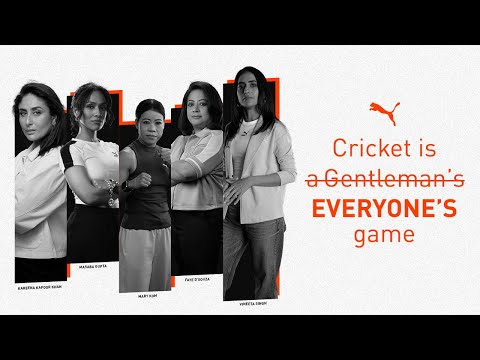
PUMA’s “Cricket Is Everyone’s Game” campaign is a sharp piece of strategic communication that operates more like a social intervention than a traditional advertisement. It sidesteps the common tropes of empowerment advertising—slow-motion shots of athletes overcoming adversity—for a much more direct and confrontational approach. The core of the campaign is built on a simple, uncomfortable truth: the biggest obstacle to the growth of women's cricket in India isn't the quality of the game, but the viewing habits of the audience, particularly women themselves. The execution follows a classic Problem-Solution framework, delivered with the precision of a legal argument. The problem is established immediately and methodically. Kareena Kapoor Khan opens with a direct question about the lack of attention on women's cricket. The ad then preemptively dismisses the usual excuses—'technique' or 'intensity'—with boxer Mary Kom asserting, “It’s all the same, isn’t it?” This neutralizes potential rebuttals before they can form. The argument is then fortified with data: Masaba Gupta states women’s cricket gets 1/8th the viewership, and journalist Faye D’Souza delivers the most damning piece of evidence, that only 18% of women who watch men's cricket also watch the women's game. This use of a specific, surprising statistic grounds the campaign in fact, not just feeling. The turning point of the ad is the pivot from problem diagnosis to assigning responsibility. Kareena’s line, “...but they can’t make it theirs until we make it ours,” is the crucial bridge. It transforms the viewer from a passive observer of a problem into an active participant in the solution. This leads directly to the call to action, which is not a vague appeal to 'show support' but a concrete, event-based directive: show up to the Delhi Capitals vs. Royal Challengers Bangalore match on March 10th. By inviting the audience to a specific 'Ladies' Night' at the stadium, PUMA gives the campaign a tangible focal point, turning a social cause into a real-world event. The debrief for this campaign is clear: data-driven, confrontational honesty, when delivered by a chorus of credible voices, can be more potent than generic aspirational messaging. The key lesson is that a social cause campaign gains immense power when it includes a specific, actionable task that empowers the audience to be part of the change they are being asked to support.
Theme Keywords
Brand Position
PUMA is the brand that actively champions and builds the ecosystem for women in sport.
Brand Archetype
The Ruler
Creative Game Plan
Use a chorus of powerful, respected women to confront the audience with an inconvenient truth about their own viewing habits and challenge them to become part of the solution.
Diagnosis: Issues & Solutions
Primary Issue: Emotional Connection
The Problem:
The ad is highly effective at making a rational argument but is less successful at forging a strong, visceral connection to the athletes themselves. The stylized black-and-white shots of the players feel anonymous and secondary to the famous faces delivering the message.
The Solution:
Incorporate 5-7 seconds of high-energy, full-color game footage showing the female cricketers' passion, skill, and celebratory moments. This would build a more direct emotional bridge to the athletes the campaign is meant to support, making the call to action feel more personal.
Secondary Issue: Clarity of "What's Next?"
The Problem:
The call to action is perfectly clear for the March 10th event, but it lacks a vision for what happens afterward. The campaign risks feeling like a one-off promotion rather than the start of a sustained movement.
The Solution:
Add a closing line or on-screen text that extends the call to action beyond the single event, such as, "Show up on March 10th. And keep showing up all season long." This would frame the event as a catalyst for ongoing behavioral change.
Additional Notes
Credits
Share this Analysis
More PUMA ad breakdowns
- The #Palermo Gang is back ft. Ibrahim Ali Khan & Shanaya KapoorPUMA
- #CHOOSETRICKS and Play LoudPUMA
- You know a #PropahLady when you see one 💁 #PUMAxANUSHKAPUMA
- PUMAx1DER by KL RahulPUMA
- PUMA IGNITE | MAXIMUM ENERGY RETURN FOR EVERY RUNPUMA
- THE ALL NEW PUMA IGNITE | ENERGY IN | MORE ENERGY OUTPUMA
- Propah Lady ft. Sara Ali Khan, Mary Kom, Dutee Chand, Anjali Lama | PUMAPUMA
- Usain Bolt hits a last ball SIX against Yuvi in PUMA Face-off | PUMAPUMA