Code Name: Project T3 | Coming 2025 - Ad Analysis

AI Editor notes
Straight from the gut!!
“This feels more like a corporate manifesto than a truck ad. They're selling the factory and the philosophy as much as the vehicle. It's a very cerebral, 'look how smart we are' film. I get the strategy of blending heritage and tech, but it lacks a human soul. Who is this for? An investor or a guy who needs to haul lumber? It feels caught between the two and a little sterile.”
Quick Summary
Ford is positioning its next electric truck not as a vehicle, but as an intelligent, adaptable platform for the future. It's a strategic attempt to win the tech narrative against rivals like Tesla and Rivian by reassuring traditional buyers that this forward-looking vision is grounded in a century of trustworthy American manufacturing.
Executive Summary
Ford's 'Project T3' teaser is less of an advertisement and more of a strategic declaration. It's a carefully constructed argument designed to prove that Ford, the incumbent, is not just participating in the electric revolution but leading it. The core insight is that for the traditional truck buyer, the leap to electric feels risky and untethered from the qualities they value: reliability, toughness, and heritage. Ford's strategy is to bridge that gap.
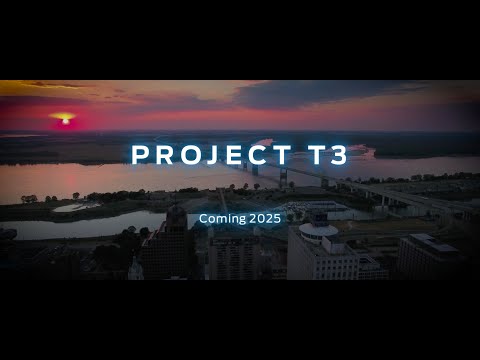
The execution follows a classic documentary-style narrative arc: Setup–Turn–Payoff. The Setup (0:00-0:15) is a masterclass in leveraging brand equity. By opening with archival footage and the line, 'What, you're not surprised?', Ford frames this massive technological leap as a natural, expected evolution of its 100-year legacy. It co-opts its history to normalize its future. The Turn (0:16-0:31) happens with the pivot question, 'So, what's new? Just about everything.' Here, the visual language shifts dramatically from grainy film to slick CGI, code, and abstract data visualizations. This section is all about establishing tech credibility, using the vocabulary of Silicon Valley—'digital platform,' 'updatable,' 'innovation'—to counter the narrative of competitors like Tesla and Rivian. The Payoff (0:32-1:10) connects this high-concept technology to tangible, human benefits. It's a rapid-fire list of desired attributes ('tough as hell,' 'fast to charge') culminating in the ultimate modern luxury: 'giving you back time.' By showing scenes of family and leisure enabled by features like hands-free driving, Ford translates abstract technology into a concrete improvement in the owner's life. The final branding, calling it an 'epic sequel to the F-150 Lightning,' is a smart move, drafting off the success of a known winner to build confidence in this new, unseen product. [3, 5]
The Debrief for the team is this: the strategy of merging heritage with innovation is solid, but the execution feels like a presentation. It tells instead of shows. It lists benefits instead of making us feel them. While effective as a statement of intent, it lacks the emotional spark required to become a piece of culture. It wins the argument but doesn't necessarily win the heart.
Theme Keywords
Brand Position
The Trusted Innovator.
Brand Archetype
The Creator
Creative Game Plan
Convince America that the most trustworthy truck of the future can only be built by the most trusted truck brand of the past.
Diagnosis: Issues & Solutions
Primary Issue: Emotional Connection
The Problem:
The ad is a cerebral list of features and philosophies, failing to anchor its grand vision in a relatable human story. It talks about 'time' and 'trust' but doesn't feature a character or narrative that makes the audience *feel* those things.
The Solution:
Instead of a sweeping montage, focus the narrative on a single person or family across generations. Show a grandfather who drove a 1980s F-150 and his granddaughter who is now an engineer designing the T3, connecting the legacy of 'trust' through a personal story.
Secondary Issue: Strategic Sense
The Problem:
The ad tries to speak to two completely different audiences at once—legacy truck loyalists and tech-savvy early adopters—and the message gets diluted. The historical footage might bore the tech crowd, while the CGI brains and code might alienate the traditionalists.
The Solution:
Create two distinct cuts of the ad for targeted placement. One version, heavy on heritage and toughness, for sports and country music programming. Another version, focused on software, aerodynamics, and sustainability, for tech and news platforms.