Celebrating the Spirit of India | 78th Independence Day | Air India - Ad Analysis

AI Editor notes
Straight from the gut!!
“It's a solid, patriotic ad. The 'Nahin Hoga' to 'Hoga' flip is a clever, culturally relevant hook. It feels very much like a 'New India' piece—aspirational, confident, and forward-looking. But is it an *airline* ad? The plane feels like an afterthought tacked on at the end. You could swap the Air India logo for a bank, a cement company, or a tech firm, and the ad would work just as well. It builds national pride, but I'm not sure it builds a preference for Air India.”
Quick Summary
This ad effectively positions Air India as a symbol of India's national ambition by transforming a common phrase of doubt, 'Nahin Hoga' (It won't happen), into a powerful chant of achievement, 'Hoga' (It will happen). It cleverly links the airline's own transformation journey with the country's broader story of progress, making Air India feel like a partner in the nation's success rather than just a carrier.
Executive Summary
Air India's 2024 Independence Day film is a confident piece of brand association, designed to align the airline's revitalization with the broader narrative of a rising, ambitious India. Its core strategy is to tap into the national sentiment of progress and overcoming adversity, positioning itself not just as an airline, but as the flag carrier of the nation's aspirations.
The Core Insight: The simple human truth at the heart of this ad is that every great achievement is born from a sea of doubt. For every visionary, there is a chorus of naysayers. In the Indian context, the phrase 'Nahin Hoga' ('It won't happen') is a familiar, almost reflexive, form of skepticism. By tackling this cultural trope head-on, the ad finds a relatable and powerful source of tension.
The Execution: The ad uses a classic Setup-Turn-Payoff structure.
- The Setup (0:00-0:21): The film introduces three parallel storylines—a space scientist, an engineer, and a cricketer—all working towards ambitious goals. The mood is dark and tense, both visually and audibly. Shadowy figures representing colleagues, family, and coaches loom in the background, their faces filled with doubt as they chant 'Nahin Hoga.' This effectively establishes the central conflict: individual ambition versus collective skepticism.
- The Turn (0:22-0:41): The turning point is a moment of pure determination. The protagonists, lit by a single source of light, stare down the camera, their expressions resolute. The chant shifts from the discouraging 'Nahin Hoga' to a powerful, percussive 'Hoga!' ('It will happen!'). This pivot transforms the ad's energy from one of struggle to one of imminent triumph. The visuals brighten, the pace quickens, and we see the fruits of their labor: a rocket launching, a bridge inaugurated, a match-winning six.
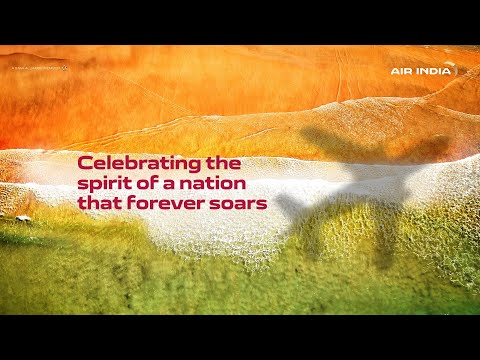
- The Payoff (0:42-0:58): The ad delivers its explicit message: 'To the naysayers... To the non-believers... India Dreams. India Achieves.' This ties the individual stories into a single national narrative. The final payoff is the reveal of the Air India aircraft soaring through the sky with the tagline 'Together We Soar.' This is where the brand inserts itself as the ultimate symbol of this collective achievement, the vehicle that carries India's dreams to the world.
The Debrief: The creative team successfully leveraged a powerful cultural insight. The 'Hoga' concept is sticky and ownable in the short term. The execution is polished, and the emotional arc is satisfying. However, the team should recognize the strategic trade-off made. The ad is so focused on the universal story of Indian achievement that the brand itself feels secondary. It's a powerful ad for India that happens to be sponsored by Air India. While effective for a national holiday, a future campaign would need to more tightly integrate the brand's specific role and services into the narrative to build preference, not just sentiment.
Theme Keywords
Brand Position
The authentic embodiment of India's global ambition and warm hospitality.
Brand Archetype
The Ruler (as the national flag carrier) with elements of the Explorer (connecting India to the world). Personality: Confident, Aspirational, Resurgent.
Creative Game Plan
Equate the rebirth of Air India with the aspirational spirit of a modernizing India.
Diagnosis: Issues & Solutions
Primary Issue: Brand Distinctiveness
The Problem:
The ad's core message is so universal to the 'New India' narrative that it lacks brand-specific differentiation. A competitor in almost any major industry (finance, infrastructure, tech) could have run an identical ad and it would have felt just as appropriate.
The Solution:
Future campaigns should weave Air India's role into the narrative itself, not just append it at the end. For example, show the scientist flying Air India to a global conference, or the engineer using the airline to connect with international partners, making the brand an enabler of the achievement, not just a symbol of it.
Secondary Issue: Clarity of 'What's Next?'
The Problem:
The ad generates a strong feeling of pride but leaves the viewer with nowhere to channel that emotion in relation to the brand. It doesn't suggest thinking about, booking, or interacting with Air India in any way.
The Solution:
A subtle, soft call-to-action could be integrated without undermining the brand-building tone. A simple end-card message like 'Carrying India's ambitions since 1932' or 'Experience the new spirit of India on board' would provide a gentle nudge towards brand consideration.
Additional Notes
Credits
Share this Analysis
More Air India ad breakdowns
- There's an air about India | The sound of a new IndiaAir India
- Air India A350 | The New Air India ExperienceAir India
- Discover Our Upgraded A320neo.Air India
- Summer Schedule 2024 | Air IndiaAir India
- Escape the Rush, Embrace the Calm ✈️ Experience the Best of India with Air India!Air India
- #AllYearTravel - August Edition Brings You Perfect Spots For Your Long Weekend EscapeAir India
- #ChangeIsInTheAir – Air India’s VISTA StreamAir India
- #AllYearTravel with Air India - June EditionAir India