Case | o2 | 28.57 m - Ad Analysis

AI Editor notes
Straight from the gut!!
“Okay, this is a case study, not a consumer-facing ad. It’s well-made and tells a compelling story. But is the link to a telco a stretch? They talk about data and tech, but it feels a bit tacked on to a classic Red Bull-style extreme sports story. I’m left wondering if the average German consumer connects 'surfing a giant wave' with 'better mobile service.' It's impressive, but the brand link feels forced.”
Quick Summary
O2 transformed its corporate tagline, 'can do,' from a passive slogan into an active demonstration by sponsoring a surfer's quest to break a world record. By using its technology to measure and broadcast the feat, the brand credibly positioned itself as an enabler of impossible achievements, generating significant earned media and associating its name with human potential.
Executive Summary
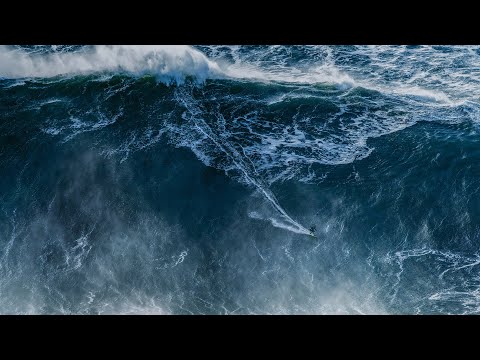
This film isn't just an ad; it's a case study for a modern, content-led brand campaign. O2, a German telecommunications giant, attempts to solve a classic marketing problem: how to make a corporate slogan feel real. Their answer is to move beyond saying 'can do' and instead, do something that embodies it. By partnering with big-wave surfer Sebastian Steudtner to break his own world record, O2 creates a compelling narrative of human achievement, positioning itself as the technological catalyst.
The Core Insight: The underlying human truth here is that people are captivated by those who defy perceived limits. We are drawn to stories of individuals pushing the boundaries of what's possible. It’s a timeless source of inspiration. O2's strategy is to attach its brand to this powerful, universal emotion. The campaign bets that if O2 can help one man do the impossible, then maybe it can help a regular customer with their everyday challenges.
The Execution: The creative format is a documentary-style case study. It follows a clear narrative arc: Setup–Turn–Payoff. The Setup establishes the stakes: Sebastian Steudtner has already surfed the biggest wave ever, and experts believe he's at the physical limit (0:10-0:15). The Turn introduces O2 as the enabler. The brand and its technology become the key to unlocking the next level, transforming the challenge from a purely athletic endeavor into a tech-assisted mission (0:17, 0:31). This section cleverly weaves in shots of data visualization and drones to substantiate the brand's role. The campaign's social media execution is highlighted, showing how the journey was shared with an audience over six months, building anticipation for the main event (0:36-0:43). The Payoff is the record-breaking moment on February 24, 2024, presented as a live-streamed event where the world witnessed the 'impossible' happen (1:16-1:33). The film concludes by presenting the campaign's impressive results—earned media, reach, engagement—framing the entire project as a successful marketing initiative.
The Debrief: The team should recognize the power of 'proof over promise.' Instead of just claiming a brand value, they demonstrated it through a real, high-stakes event. This is a solid example of creating culture, not just borrowing from it. However, the lesson is also about authenticity. While the technological angle with drones and data provides a hook, the connection to O2's core product (mobile service) is tenuous. The campaign feels more like a tech showcase (Porsche and Schaeffler were also tech partners) than a specific telco message. The risk is that the audience remembers the incredible feat but forgets the brand that sponsored it, or at least doesn't connect it to their next phone plan purchase.
Theme Keywords
Brand Position
The enabler of personal and collective ambition.
Brand Archetype
The Explorer
Creative Game Plan
Demonstrate the 'can do' spirit by enabling a world-class athlete to achieve the impossible using our technology and broadcast it to the world.
Diagnosis: Issues & Solutions
Primary Issue: Strategic Sense
The Problem:
The connection between surfing a giant wave and the core benefit of a telecommunications provider is weak. The ad successfully builds brand affinity through an inspiring story, but it fails to translate that feeling into a tangible reason to choose O2 over competitors like Deutsche Telekom or Vodafone for phone or internet service.
The Solution:
Future campaigns should bridge the gap between the grand 'can do' gesture and the everyday 'can do' moments a customer experiences. For example, follow this epic story with shorter content showing how O2's reliable network helps people in their own, smaller-scale 'impossible' moments—like navigating a new city or closing a business deal from a remote location.
Secondary Issue: Brand Distinctiveness
The Problem:
The campaign's DNA is heavily borrowed from the Red Bull playbook of sponsoring extreme sports to signify energy and daring. While effective, it doesn't carve out a unique space for O2. The brand is a participant in a well-established marketing genre rather than the creator of a new one.
The Solution:
To build a more distinctive platform, O2 could focus on enabling 'digital' impossibilities. Instead of another physical feat, the next 'can do' challenge could be about using their network to solve a complex social problem, create a groundbreaking piece of digital art, or connect a remote community in a novel way.
Additional Notes
Related Links
Credits
Share this Analysis
More O2 ad breakdowns
- Film | o2 | Big Fish (English | 60'')O2
- Dua Lipa at Wembley Stadium | Priority from O2O2
- O2 Be their armour for England Rugby #WearTheRoseO2
- Catch Some Stardust, with Priority on O2 | TV advertO2
- Look Behind YouVerizon
- Virgin Mobile Campaign keeps it simple and bets on good vibes themeVirgin Mobile
- Meet India's most unique auto driver | Fast & Curious | Ep. 1Airtel
- Good restaurant or Good Wi-Fi? – Get Airtel International Roaming!Airtel