Cadillac: Dinner Party - Ad Analysis

AI Editor notes
Straight from the gut!!
“It’s a very safe, by-the-book luxury ad. The 'diverse, attractive people enjoying life' montage could be for a bank, a coffee brand, or a competing car company. It does the job of saying 'we're not for your grandpa anymore,' but it lacks a unique point of view. It feels more like Cadillac is checking a box for multicultural marketing rather than telling a story only they could tell. It’s polished but forgettable.”
Quick Summary
This ad is a deliberate attempt to reposition Cadillac from a brand associated with an older generation to one that fits the modern, multicultural, design-conscious definition of success. It sells a lifestyle first and a car second, using an aspirational dinner party as a proxy for the taste and values of its target consumer, with the SRX presented as the logical extension of that curated life.
Executive Summary
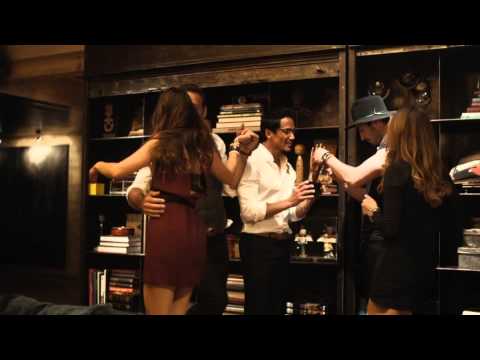
In the early 2010s, Cadillac faced a perception problem: it was a brand synonymous with old American luxury, struggling to connect with a younger, more diverse, and globally-minded consumer. This "Dinner Party" spot, from Spike Lee's agency Spike DDB, is a direct response to that challenge. It’s less an ad about a car and more a 30-second manifesto about who Cadillac wants its drivers to be. The strategy is clear: pivot from product features to personal identity. Instead of talking about horsepower, it talks about taste.
The core insight driving the work is that for the target audience—affluent, style-conscious Gen X and Millennials—value is defined by curation. They curate their homes, their friend groups, their food, and their experiences. The ad posits that a car is not just transportation; it's another detail in a carefully designed life. This insight is smart because it elevates the car from a mere object to a symbol of the owner's identity and judgment.
The execution follows a classic Setup-Turn-Payoff structure. The Setup (0:00-0:19) is a rich, warm montage of an idealized dinner party. Every frame is filled with signifiers of modern sophistication: diverse friends, artisanal-looking food, stylish-but-not-stuffy fashion, and genuine laughter. The voiceover explicitly calls out the hosts' "eye for design" and "refined taste." This isn't just a party; it's a mood board for the aspirational viewer. The Turn (0:19-0:21) is the crucial pivot. The VO says, "Well, say hello to the newest member of the family," and the visual cuts from the warmth of the party to the cool, sleek exterior of the Cadillac SRX. This line cleverly frames the car not as an acquisition but as an addition to the 'family'—both the literal family and the chosen family of friends. The Payoff (0:21-0:30) connects the dots. The VO names the model and immediately reinforces the 'design' theme with the Kelley Blue Book award for best interior. This provides a rational reason-to-believe that validates the emotional, lifestyle-based setup. Seeing the couple embrace near the car at the end visually seals the deal: the car belongs in this world.
The debrief for the team would be mixed. On one hand, the ad successfully executes its strategic goal of presenting a modern, multicultural vision for the Cadillac brand. It's well-produced, the casting is on point, and the message is clear. On the other hand, it plays it too safe. The 'aspirational lifestyle montage' is one of the most overused tropes in luxury advertising. By conforming so closely to category conventions, the ad sacrifices brand distinctiveness. The work modernizes Cadillac, but it doesn't make it unique.
Theme Keywords
Brand Position
Cadillac is the American luxury brand for those who lead with bold design and sophisticated taste.
Brand Archetype
The Ruler (projecting success and control), while aspiring to integrate elements of The Lover (emphasizing aestheticism and intimacy).
Creative Game Plan
Associate the Cadillac SRX with a modern, sophisticated, and multicultural vision of the American dream to shift perception from an old-fashioned brand to a contemporary one.
Diagnosis: Issues & Solutions
Primary Issue: Strategic Sense
The Problem:
The ad's primary pitfall is its lack of brand distinctiveness. By relying on generic luxury category tropes (the stylish dinner party, the diverse friend group), it fails to communicate what makes Cadillac unique, allowing it to be easily mistaken for a competitor's ad.
The Solution:
Incorporate a uniquely 'Cadillac' element into the narrative. Instead of just showing general 'good design,' the story could have subtly hinged on the brand's 'Art & Science' design philosophy or its specific American heritage, creating a narrative that only Cadillac could own.
Secondary Issue: Emotional Connection
The Problem:
The emotional connection feels broad and superficial. The ad creates a mood of general warmth and happiness but lacks a specific, memorable human moment that an audience can latch onto.
The Solution:
Instead of a montage, focus on a single, small story within the party. For example, a friend arriving late after a long journey, brought safely and comfortably by their Cadillac, making the car an enabler of the emotional peak of the evening.
Additional Notes
Related Links
Credits
Share this Analysis
More Cadillac ad breakdowns
- Urus SE - Dare To Live MoreLamborghini
- 2025 Genesis GV80 | Illuminated | Genesis USAGenesis
- Projection of Greatness: The all-new Audi Q7Audi
- Porsche Macan: BelieverPorsche
- Mercedes-Benz – LokiMercedes-Benz
- BMW Recreated The Monza Track In The Sahara Desert To Test The All-New X5BMW
- Audi India | Celebrating Journeys of ImaginationAudi India