Bring Out The Starry!!! - Ad Analysis

AI Editor notes
Straight from the gut!!
“This feels like an ad made by and for the internet. It's loud, dumb, and kind of funny. I get the strategy: be the weird, chaotic alternative to the cool, established Sprite. But does 'being afraid of soda' actually make anyone want to drink it? It's all vibe and no real product story. It's memorable, I'll give it that, but it feels like it's trying a little too hard to become a meme.”
Quick Summary
Starry is using chaotic, meme-worthy humor to carve out a distinct personality in a category dominated by Sprite. By parodying nostalgic Y2K-era talk shows and leaning into absurdity with its mascots, the ad sacrifices a clear product message for pure, unadulterated brand recall. The goal isn't to sell you on flavor; it's to make Starry the loudest and most irreverent choice in the lemon-lime aisle.
Executive Summary
In the hyper-competitive soft drink market, being a challenger requires making noise, not just making sense. PepsiCo's 'Bring Out The Starry!!!' campaign is a masterclass in this philosophy. The ad forgoes any rational product benefit in favor of creating a loud, absurd, and highly memorable piece of content designed to embed the Starry brand in the minds of a Gen Z audience. It’s a strategic bet that personality can beat product points when you’re fighting a market leader like Sprite. [8, 10]
The Core Insight here is that in the internet age, the most valuable currency is shareability. The ad isn't built on a deep human truth about refreshment, but on the cultural truth that bizarre, meme-able content travels fast. The team understood that to get Gen Z to even look up, they had to create something that felt less like a commercial and more like a skit you'd find on YouTube or TikTok. The fear of 'lemon-lime soda' is a ridiculous premise, which is precisely the point. It’s a setup for chaos, not a problem to be solved.
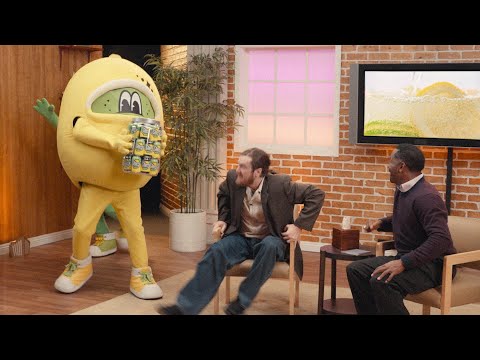
The execution follows a simple Setup-Turn-Payoff structure. The Setup (0:00-0:20) perfectly mimics the aesthetic and dramatic tone of a Y2K-era daytime talk show, establishing the absurd problem: Dylan’s phobia. The casting of Sway Calloway as 'Dr. Sway' adds a layer of nostalgic authenticity. The Turn (0:21) is the command 'Bring out the Starry!,' which unleashes the brand mascots and transforms the scene from a talk show parody into a full-blown physical comedy chase. This is the ad's main event, a prolonged sequence of screaming and running that dominates the runtime. The Payoff (1:02-1:08) isn't a resolution but a final joke—Dylan cornered in a closet—followed by a direct, almost comically out-of-place, call-to-action screen. The entire execution prioritizes brand exposure through chaos. The product is the catalyst for the mayhem, and the mascots, Lem and Lime, are the agents of that chaos, making them central and memorable brand assets.
The Debrief for the team is that this strategy works for generating initial awareness but has a limited shelf life. While this ad successfully puts Starry on the map as the wild, unpredictable choice, the brand will eventually need to give consumers a reason to keep buying. Leaning this heavily on one specific comedic tone risks becoming a one-trick pony. The next step must be to evolve this personality into a more sustainable brand platform that can start to layer in product-focused messaging without losing the irreverent edge it has worked so hard to create.
Theme Keywords
Brand Position
The refreshingly irreverent and chaotic alternative in the lemon-lime soda category.
Brand Archetype
Jester
Creative Game Plan
Establish Starry as the most memorable and irreverent lemon-lime soda by creating an absurd, shareable spectacle.
Diagnosis: Issues & Solutions
Primary Issue: Strategic Sense
The Problem:
The ad's single-minded focus on chaotic humor completely overshadows any product benefit. Viewers will remember the screaming man and the mascots, but they learn nothing about why they should choose Starry over Sprite, such as its taste or level of crispness.
The Solution:
Future creative should integrate a hint of the product truth into the chaos. For example, the mascots could leave behind a can that Dylan is secretly tempted to try, or the final shot could be someone in the audience drinking it with a look of surprising refreshment.
Secondary Issue: Emotional Connection
The Problem:
The humor is one-note and potentially polarizing. The relentless screaming and slapstick comedy, while memorable, can be perceived as grating or annoying, which might create a negative association with the brand for a segment of the audience.
The Solution:
Vary the comedic texture in the campaign. Introduce moments of clever wit or situational humor alongside the physical chaos to broaden the appeal and show more dimension to the brand's personality.