What Has the BBC Ever Done for Me? - Ad Analysis

AI Editor notes
Straight from the gut!!
“This is clever, self-aware, and ridiculously well-executed. Taking the classic Monty Python 'What have the Romans ever done for us?' setup and handing it to Romesh Ranganathan is a smart move because he naturally radiates deadpan cynicism. It directly tackles the awkward dinner table conversation every Brit has about the licence fee without feeling defensive or preachy.”
Quick Summary
By adopting the cynical posture of its fiercest critics and answering with an overwhelming, high-energy musical tour of its irreplaceable cultural footprint, the BBC makes an entertaining, disarming defense of the licence fee.
Executive Summary
The Core Insight: Public service broadcasting is often taken for granted. People remember the £169 annual licence fee bill, but they rarely aggregate everything it pays for—from local radio and investigative journalism to GCSE revision aids, Olympic coverage, and children's morning television. The insight here is human and behavioral: people evaluate public goods through narrow self-interest ('I don't watch EastEnders, so why should I pay?'), ignoring the collective ecosystem that enriches everyone.
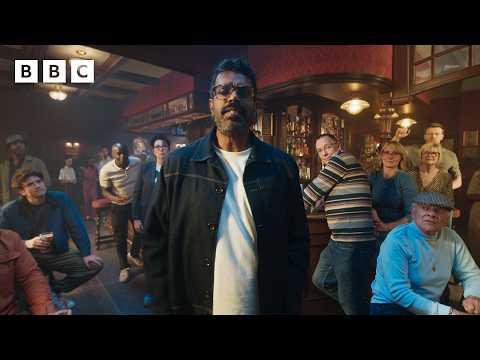
The Execution: Directed by Dougal Wilson, the film utilizes a musical Problem–Solution–Proof narrative structure, borrowing the classic comedic cadence of Monty Python's 'Life of Brian' ('What have the Romans ever done for us?').
-
The Hook / Setup (0:00–0:45): Romesh sits in the Queen Vic holding a newspaper asking if the BBC is worth it. He poses the cynical question, supported by Chris Martin on piano. He begins listing things he doesn't personally care about—EastEnders, The Traitors, charity appeals—immediately voicing the viewer's casual skepticism.
-
The Escalation / Proof (0:45–2:45): Romesh embarks on a seamless, theatrical journey across BBC IP. When he claims regional content doesn't help someone in Crawley, Ruth Jones hits back in Welsh. When he dismisses education, schoolchildren shout him down. When he questions news integrity, Clive Myrie and Sara Cox point out Romesh's own ubiquitous presence across BBC TV, radio, and podcasts. The pacing builds momentum by juxtaposing serious institutions (BBC News, wildlife documentaries) with absurd pop culture moments (Gladiators carrying Graham Norton's sofa, Feathers McGraw in an interrogation room).
-
The Turn / Reality Check (2:45–3:15): The musical stops cold when Louis Theroux stands beside an industrial switch marked 'BBC ON / OFF' and reminds Romesh—and the audience—that none of this has to exist if the public chooses to turn it off. This injects genuine strategic stakes into an otherwise joyful farce.
-
The Payoff (3:15–3:50): Armed with the £6.5B economic contribution stat, Romesh is swept onto the Strictly stage with a full choir and orchestra, ending on the unifying closing thought: 'There's a BBC for each of us. Funded by all of us.'
The Debrief: When defending an unpopular or contested business model, do not lecture your audience. Meet them at their point of skepticism, validate their frustration with self-deprecating humor, and use sheer entertainment value to remind them of your indispensable role in their daily lives.
Theme Keywords
Brand Position
The indispensable heartbeat of British culture, storytelling, and public discourse, owned and funded by everyone.
Brand Archetype
The Everyman / Sage (approachable, democratic, cultural anchor)
Creative Game Plan
Reframe the contested licence fee into a shared badge of cultural ownership by staging an ironic, star-studded musical inquiry into the BBC's ubiquitous presence.
Diagnosis: Issues & Solutions
Primary Issue: Strategic Sense
The Problem:
The four-minute runtime is built for broad cultural splash and digital virality, but in standard linear broadcast cuts, the rhythmic build-up and the pivotal Louis Theroux moment lose much of their narrative punch.
The Solution:
Ensure cutdowns (30s/60s) anchor specifically around the Louis Theroux 'BBC ON/OFF' existential turn rather than simply serving as high-speed montage promos.
Secondary Issue: Emotional Connection
The Problem:
The film leans heavily on celebrity cameos and flagship television properties, which risks reinforcing the criticism that the BBC is London/celebrity-centric rather than focused on grassroots local communities.
The Solution:
Dedicate greater visual real estate to frontline regional journalism, local radio stations, and ordinary British communities alongside major entertainment IP.