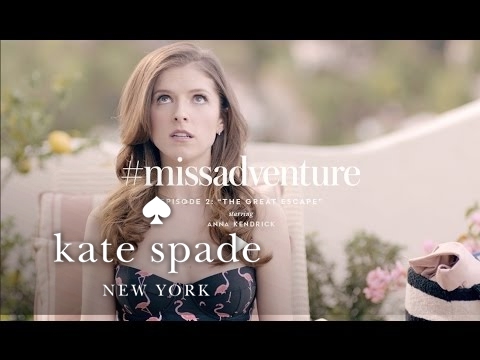
anna kendrick & lily tomlin in #missadventure: the great escape (s1) | kate spade new york - Ad Analysis

AI Editor notes
Straight from the gut!!
“This is a smart departure from the sterile, look-book style of fashion advertising. Instead of a model staring blankly, we get a story with charm and humor. It’s long for an 'ad,' but as a piece of content, it’s genuinely watchable. Is it aggressively selling a specific bag? No. It’s selling the *idea* of the Kate Spade woman, which is a much stronger, long-term play.”
Quick Summary
This campaign successfully sells a lifestyle, not just a handbag. It uses a charming, relatable celebrity (Anna Kendrick) in a quirky, cinematic short film to embody the brand's 'live colorfully' ethos. This makes the products feel like essential props for an interesting life, transforming the brand from a mere accessories label into a purveyor of personality.
Executive Summary
In a fashion landscape often saturated with stoic models and product-centric visuals, Kate Spade's 2015 '#missadventure' series was a breath of fresh air. 'The Great Escape' is a prime example of this strategy, functioning less like an ad and more like a charming indie short film. The brand wisely chose not to sell a handbag, but to sell a narrative—the story of the 'Kate Spade girl.'
The core insight is that the target customer sees herself as the protagonist in her own life, a life filled with charming, slightly chaotic moments. She isn't perfect; she's relatable. She gets into mix-ups, but handles them with wit and style. This is a powerful departure from the unattainable perfection often sold by luxury brands. By casting Anna Kendrick, the epitome of the approachable and funny celebrity, the brand found the perfect avatar for this persona. The products aren't the heroes of the story; they are the chic accessories for the heroine.
The execution follows a classic Setup-Turn-Payoff structure. The setup establishes Anna Kendrick's character at the glamorous Sunset Tower Hotel, immediately creating a cinematic, aspirational feel. The turn is the case of mistaken identity, where she's whisked away to a penthouse and mistaken for a meditation guru by the formidable Lily Tomlin. This is the 'misadventure.' Instead of correcting the error, she leans into the absurdity. The payoff is the brilliant meditation scene. Here, the product integration is clever and seamless. As she improvises a mantra, her thoughts drift to her 'super cute shoes' and a flamingo-print top, which she then uses as inspiration for her rambling guidance. The clothes and accessories become part of her quirky problem-solving, intrinsically linking the brand to wit and creativity. The film's warm, saturated visual style and jazzy score further enhance the feeling of old Hollywood screwball comedy, creating a world that is both aspirational and fun.
The key lesson from this campaign is the power of brand-as-character. By focusing on building an endearing, witty, and stylish persona for the brand, Kate Spade created a strong emotional connection with its audience. The campaign didn't just show products; it gave them a personality. It suggested that owning a Kate Spade bag or dress wasn't just about the item itself, but about subscribing to a more colorful, interesting way of living. It was a long-term play for brand affinity over short-term sales, and a move that successfully carved out a unique and memorable space in a competitive market. [6, 9]
Theme Keywords
Brand Position
The stylish and witty companion for a colorful life full of charming 'misadventures.'
Brand Archetype
The Everywoman (with a Jester twist). Personality: Playful, Witty, Charming.
Creative Game Plan
Create a cinematic world where our heroine navigates life's charming mishaps with style and wit, making our products an organic part of her story.
Diagnosis: Issues & Solutions
Primary Issue: Strategic Sense
The Problem:
The campaign's greatest strength—its near 3-minute, cinematic runtime—is also its biggest strategic pitfall in a digital environment. It relies on a highly engaged viewer willing to watch a long-form ad, risking significant audience drop-off on platforms where shorter content is king.
The Solution:
Develop a suite of shorter assets (6, 15, and 30-second cuts) that are optimized for different platforms. These shorter cuts should act as trailers, using the funniest moments to tease the narrative and drive traffic to the full-length film, ensuring the core story reaches a wider audience with varying attention spans.
Secondary Issue: Clarity of "What's Next?"
The Problem:
The path from inspiration to purchase is too subtle. While the products look great in the film, a viewer who loves Anna's flamingo top has to leave the video, navigate to the brand's website, and search for the item, creating significant friction.
The Solution:
Integrate a more direct, shoppable component. Utilize YouTube's interactive end-cards or overlays to feature the specific products seen in the final scene, with direct links to their product pages. This would bridge the gap between 'I love that' and 'I'm buying that' without disrupting the narrative flow.
Additional Notes
Related Links
Credits
Share this Analysis
More Kate Spade New York ad breakdowns
- anna kendrick in #missadventure: the waiting game (s1) | kate spade new yorkKate Spade New York
- zosia mamet & miss piggy in #missadventure: to the top (s2) | kate spade new yorkKate Spade New York
- Spark Something Beautiful: A Citywide Game of Hide-and-SeekKate Spade New York
- The Official Barbie x ALDO CollectionALDO
- Grab These Cool Men's Accessories | #MyntraFeelGoodFashion | MyntraMyntra