Amazon Prime Day | 20th & 21st July | English - Ad Analysis

AI Editor notes
Straight from the gut!!
“It's visually cheerful, but creatively it's playing it very safe. The 'escape the drab office into a fantasy world' concept is a well-worn path. The little animated pilot sidekick is a random addition that feels like a missed opportunity for a recurring brand character. It effectively communicates the 'what' (deals, launches, entertainment) but the 'why' (the feeling of 'joy') feels manufactured, not earned. It's competent, but ultimately forgettable wallpaper.”
Quick Summary
Amazon frames its biggest annual sales event not as a transactional frenzy, but as a joyful escape from the mundane. By using a mixed-media fantasy world, the ad positions the Prime membership's combined benefits of shopping, new products, and entertainment as the ticket to a rewarding, delightful experience.
Executive Summary
This Amazon Prime Day campaign for the Indian market is a textbook example of functional retail advertising dressed in the borrowed robes of brand storytelling. The core strategy is to bundle the key pillars of the Prime value proposition—deals, new product access, and entertainment—into a single, emotionally-driven concept: 'Discover Joy.' By doing so, Amazon attempts to elevate a purely transactional sales event into an aspirational experience.
The core insight driving the work is that for the target audience of urban professionals, shopping is not merely a chore but a form of escape and reward. The daily grind of office life creates a desire for moments of delight and discovery. The ad taps into this by positioning Prime Day as the literal vehicle for that escape.
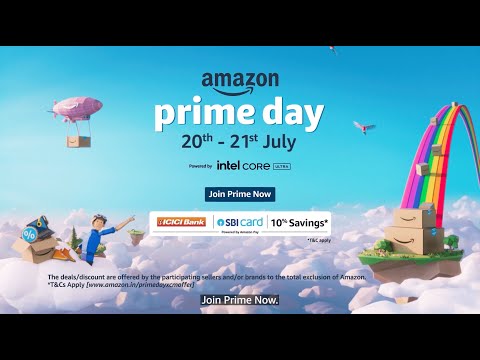
The execution follows a simple and effective narrative structure, best described by the Hook-Value-Proof-Ask model. The Hook (0-3s) is immediate: a woman in a mundane office is suddenly transported into a fantasy world on a cloud. This visual disruption is designed to stop the scroll and secure attention. The Value proposition (3-8s) is the promise of 'joy' and escape from the ordinary. This is where the ad establishes its emotional premise. The Proof (8-24s) section is the longest and most critical, as it substantiates the promise by methodically showcasing the three pillars of the event. We see floating islands for 'Great Deals,' a rainbow road for 'New Launches,' and a zeppelin displaying 'Blockbuster Entertainment.' This is the rational sell, providing tangible reasons to believe in the initial emotional promise. Finally, the Ask (25-30s) is direct and unambiguous, looping back to the call-to-action 'Join Prime Now,' reinforced with specific dates and partner bank offers to drive immediate consideration and action.
The debrief for the team would be a mixed bag. On one hand, the campaign is strategically sound. It’s a highly efficient communication vehicle that clearly articulates the key benefits of the event in a visually pleasing, easy-to-digest format. The mixed-media execution, blending live-action with animation, successfully creates a feeling of magic and possibility. However, the creative concept itself is generic. The 'escape to a fantasy world' trope is one of the oldest in the advertising playbook, which weakens the ad's ability to be distinctively Amazon. The campaign succeeds as a strong piece of promotional marketing, but falls short of being a memorable piece of brand building.
Theme Keywords
Brand Position
Amazon Prime is the single membership that unlocks the ultimate in convenience, savings, and entertainment.
Brand Archetype
The Explorer: It promises a journey of discovery through deals, new products, and entertainment.
Creative Game Plan
Transform the transactional nature of a sales day into a magical journey of joyful discovery.
Diagnosis: Issues & Solutions
Primary Issue: Emotional Connection
The Problem:
The ad explicitly labels the desired emotion ('joy') instead of allowing the audience to feel it organically. The connection is superficial because the fantasy is generic; it's a world of happy things, but it lacks a personal, relatable core that would make the joy feel earned and authentic.
The Solution:
Ground the 'joy' in a more specific, human story. Instead of a flight through a generic wonderland, show the protagonist discovering the one specific item that solves a problem or fulfills a dream in her *real* life, with the magic animating her actual world, not replacing it.
Secondary Issue: Brand Distinctiveness
The Problem:
The creative framework is not ownable. A competitor could swap the logos and products and run a nearly identical ad for their own sales event. The introduction of the animated pilot character was a missed opportunity to build a unique brand asset.
The Solution:
Develop and integrate ownable brand characters or visual motifs more deeply into the creative. Give the pilot a name and a role tied to Amazon's service (e.g., 'Captain Box Smile') to build a recognizable and uniquely Amazon asset for future campaigns.
Additional Notes
Credits
Share this Analysis
More Amazon ad breakdowns
- Amazon Prime Day, 12th - 14th July | New Launches coming soonAmazon
- Amazon Prime Day, 12th - 14th July | Mark your Calendars nowAmazon
- Amazon Prime Day, 12-14 July #KhaasAapkeLiyeAmazon
- Amazon Prime Day, 12th - 14th July | Great Deals Dropping soonAmazon
- Amazon | Har Tyohaar Behtar | HindiAmazon
- Amazon, Nayi Shuruwaaton ki Apni Dukaan.Amazon
- Amazon Great Indian Festival - Coming Soon | Deals under 499Amazon
- Amazon Prime Day | 23rd & 24th July - HindiAmazon