AirAsia | The Great Indian Fufaji - Ad Analysis

AI Editor notes
Straight from the gut!!
“Finally, an airline ad that doesn't just show happy people staring out of windows. The 'Fufaji' is a brilliant cultural hook. It's instantly recognizable to anyone from the subcontinent. Instead of listing features, they created a character whose entire purpose is to be defeated by them. It's smart. My only question: at 2.5 minutes, is it too long for the casual viewer? The episodic format helps, but it’s still a commitment.”
Quick Summary
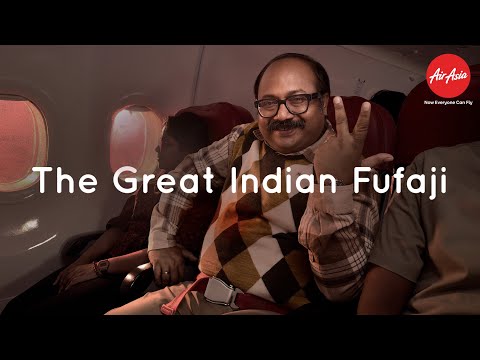
This campaign's strength is its use of a single, powerful cultural insight: the 'Fufaji,' or the perpetually complaining Indian uncle. By showing that AirAsia's service is so good it leaves even him with nothing to criticize, the ad effectively communicates multiple product benefits (comfortable seats, hot meals, baggage allowance, vast network) in a memorable and highly relatable way. It cleverly positions AirAsia not just as low-cost, but as a surprisingly high-value airline that neutralizes the common pain points of budget travel.
Executive Summary
This AirAsia campaign is a solid example of how to turn a list of product features into compelling storytelling. The strategy hinges on a simple, resonant idea rooted in a specific cultural truth, making it far more effective than a typical airline montage.
The Core Insight: The simple human truth at the heart of this campaign is universal yet culturally specific: every Indian family has a 'Fufaji'—a perpetually dissatisfied, nit-picking relative who is impossible to please. This character serves as the ultimate litmus test for quality. The insight is that if a service is good enough to silence the Fufaji, it's undeniably excellent for everyone else. This allows AirAsia to move the conversation from 'low-cost' to 'high-value' by tackling the perceived negatives of budget travel.
The Execution: The campaign uses a Problem-Solution narrative structure, repeated across four mini-episodes. The 'problem' is the Fufaji's inherent need to complain. The 'solution' is an AirAsia feature that foils his attempt.
- Setup: We are introduced to the Fufaji on a flight, immediately looking for something to criticize (0:07). His character is established through his grumpy demeanor and pointed questions.
- Turn: In each vignette, he encounters a key AirAsia offering: comfortable leather seats, hot meals, generous baggage allowance, and a wide network of destinations. Each of these features directly contradicts his expectation of a subpar low-cost experience. The 'turn' is his growing frustration as he finds his complaints neutralized by good service. For instance, when his biryani arrives hot, his complaint is that it isn't cold (0:42), a humorous inversion of a common airline grievance.
- Payoff: The final scene at the wedding serves as the ultimate payoff (1:55). The Fufaji is mentally broken, not by a bad experience, but by a 'traumatically' good one. He obsessively lists the airline's features, demonstrating how deeply the positive experience has affected him. The final shot of him relaxing contentedly on the plane brings the message home: AirAsia tames even the toughest traveler.
The Debrief: The team should recognize the power of using a cultural archetype as a creative vehicle. The Fufaji isn't just a character; he's a shortcut to a shared understanding with the audience. This allowed the brand to land multiple rational reasons-to-believe (comfortable seats, hot food, etc.) without feeling like a checklist. The episodic format is also a smart choice for a digital-first world, allowing the story to be told in bite-sized, shareable pieces. The key lesson is that grounding product features in a relatable human (or superhumanly grumpy) story makes them exponentially more memorable and persuasive.
Theme Keywords
Brand Position
The surprisingly delightful, value-driven airline that makes travel easy and complaint-free.
Brand Archetype
Jester
Creative Game Plan
Prove AirAsia's service is so surprisingly good that it can satisfy the most impossible-to-please person in India: the complaining uncle ('Fufaji').
Diagnosis: Issues & Solutions
Primary Issue: Clarity of "What's Next?"
The Problem:
While the ad does a fantastic job of building brand affinity, the final call-to-action is a bit soft. The 'Book Now' button at the very end feels like an afterthought. The campaign builds significant positive momentum but doesn't channel it into a specific, compelling next step beyond general awareness.
The Solution:
Integrate a more tangible offer or next step into the final pack shot. For example, 'Fufaji-Approved Fares starting at X' or 'Find your complaint-free flight on the AirAsia app.' This would connect the emotional high of the story to a concrete, immediate action for the viewer.
Secondary Issue: Strategic Sense
The Problem:
The ad's 2:26 runtime is a significant ask for an online viewer, even when broken into episodes. While the content is engaging, there's a risk of audience drop-off before the full range of benefits is communicated. The individual skits work, but the cumulative effect of the long-form version might be lost on many.
The Solution:
Create hyper-focused 15-second and 30-second cutdowns of each 'episode' for high-frequency placements like YouTube pre-roll or social stories. Each short ad could focus on landing just one benefit (e.g., 'The seat that silenced Fufaji') and drive to the longer-form video for viewers who are more engaged.
Additional Notes
Related Links
Credits
Share this Analysis
More AirAsia ad breakdowns
- AirAsia CNY 2019 | The Perfect Lou SangAirAsia
- Coolest Vacation Flights | Travel to Hills & Mountains with IndiGo | IndiGo 6EIndiGo
- There's an air about India | The sound of a new IndiaAir India
- British Airways | Your Family in the SkiesBritish Airways
- Because tiny things matter | LXmas For You | SWISSSWISS
- Air India A350 | The New Air India ExperienceAir India
- Mother Daughter Duo | Cabin Crew | Happy Mother's Day| IndiGo 6EIndiGo
- Cute Airport Moments | IndiGo 6EIndiGo