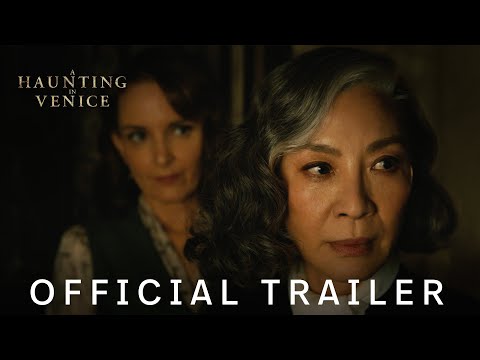
A Haunting In Venice | Official Trailer | In Theaters Sept 15 - Ad Analysis

AI Editor notes
Straight from the gut!!
“This is a hard pivot into horror. It feels less like an Agatha Christie mystery and more like they're trying to launch a Poirot-based `Conjuring` competitor. It’s a smart commercial play to inject new energy into the IP, but it feels a bit desperate. Does the world's greatest detective really need to be subjected to cheap jump scares? It risks alienating the core audience that shows up for the puzzle, not the frights.”
Quick Summary
This trailer's primary job is to reposition Kenneth Branagh's Poirot franchise from a stately, classic whodunnit into a full-blown supernatural horror film. It uses a barrage of jump scares, claustrophobic visuals, and a terrifying tone to attract a younger, horror-loving audience that might not typically watch an Agatha Christie adaptation.
Executive Summary
This trailer for 'A Haunting in Venice' is a calculated and aggressive pivot in marketing strategy. The core insight it leverages is that the ultimate challenge for a man of pure logic is not a complex crime, but a phenomenon that defies logic itself: the supernatural. The campaign abandons the stately, nostalgic comfort of a traditional Agatha Christie mystery and plunges headfirst into the visceral, high-stakes language of modern horror. It's a strategic decision to jolt a venerable franchise with new energy, aiming to capture a younger demographic that thrives on suspense and terror.
The execution follows a classic Setup-Turn-Payoff structure. The Setup (0:00-0:25) grounds us in familiar territory: the brilliant, skeptical Hercule Poirot is presented with a puzzle by his witty friend, Ariadne Oliver. The tone is that of a standard detective story. The Turn (0:26-1:12) happens the moment the séance begins. The psychic, played with unnerving confidence by Michelle Yeoh, directly challenges Poirot's skepticism, and the film's visual language shifts dramatically. The lighting darkens, the camera angles become unstable, and the sound design introduces unsettling whispers and sudden shocks. When a murder occurs, the Turn is complete: this is no longer just a game to expose a fraud; it's a life-or-death situation in a haunted house. The Payoff (1:13-2:25) is a relentless montage of pure horror. The trailer unleashes a barrage of jump scares, ghostly figures, and frantic screaming, showing even Poirot himself as a victim of the terror. This section intentionally prioritizes feeling (fear) over fluency (plot), hammering home the new genre. It’s designed to be cut into shorter, social-media-friendly clips that sell the scares, not the story. The final tagline, 'Death comes for everyone,' solidifies the shift from a 'whodunnit' to a 'what is it?'.
The debrief for the marketing team is clear: genre-bending an established IP can be a powerful tool for audience expansion. By isolating the core brand element (mystery) and fusing it with a high-demand genre (horror), they've created a compelling new proposition. The key lesson is that surprising your audience can be more valuable than reassuring them, especially on the third installment of a franchise. This trailer doesn't just sell a movie; it sells a shocking new experience for a character audiences thought they knew.
Theme Keywords
Brand Position
The home of stylish, star-studded mysteries that push the boundaries between rational detection and supernatural terror.
Brand Archetype
Sage (The Detective) vs. Chaos (The Supernatural)
Creative Game Plan
Force the world's most logical man to confront a terrifying, illogical reality, and see if his mind breaks.
Diagnosis: Issues & Solutions
Primary Issue: Strategic Sense
The Problem:
The trailer leans so heavily into horror that it risks misrepresenting the final product. By focusing almost exclusively on jump scares, it under-sells the core 'whodunnit' element that is central to the Poirot brand, potentially creating a disconnect for audiences who arrive expecting a full-blown horror film and instead get a mystery with horror elements.
The Solution:
A better balance could have been struck by integrating one or two more brief shots that highlight the mystery. Showing Poirot examining a crucial clue or a quick montage of the suspects exchanging distrustful glances would have reinforced the detective-story foundation without sacrificing the terrifying tone.
Secondary Issue: Emotional Connection
The Problem:
The rapid-fire pace and reliance on startling imagery create suspense but leave little room for emotional investment in the characters' motivations. We see they are scared, but we don't fully connect with *why* they are there, particularly the grieving mother who wants to contact her child, a potentially powerful emotional anchor that gets lost in the chaos.
The Solution:
Allowing one emotional beat to breathe for just a second longer—for instance, holding on Kelly Reilly's face as she speaks of her daughter—could have provided a moment of quiet desperation to anchor the louder scares, making the stakes feel more personal.
Additional Notes
Related Links
Credits
Share this Analysis
More A Haunting in Venice (Movie) ad breakdowns
- ROSÉ - Messy (From F1® The Movie) [Official Music Video]Formula 1
- You're Better Off At Topgolf | Summer 2025 | TopgolfTopgolf
- Love Island returns this June on ITV2 and ITV Hub!Love Island
- OBSESSION I Usyk2Fury Reignited Official Promo [4K]Riyadh Season
- GHOST KIDZ - GOIN' OFF ft. Vince Staples (Official Music Video)Ghost Kidz
- Topgolf Summer 2024 | BloopersTopgolf
- Castlevania: Nocturne | Main Trailer | NetflixNetflix
- Marvel Studios’ The Marvels | Teaser TrailerMarvel Studios