1991: Top Ramen noodles - Ad Analysis

AI Editor notes
Straight from the gut!!
“This is pure 90s gold. The strategy is so simple it's almost primal: 'My kid is a fussy eater, what do I do?' This ad answers that directly. The 'dad cooks' angle was a smart, modern touch for 1991, making it stand out. It’s not flashy, but it’s a solid piece of marketing that understood its audience perfectly—parents at their wits' end. The final 'Aur do' (Give more) from the kid is the perfect payoff.”
Quick Summary
This ad successfully launched Top Ramen in a market dominated by Maggi by sidestepping a direct feature war. Instead, it focused on a powerful emotional insight: the relief of finding a meal that a picky child will actually love. The combination of a memorable jingle, a simple problem-solution narrative, and the then-progressive image of a father cooking created a distinct and effective market entry.
Executive Summary
This 1991 ad for Top Ramen is a masterclass in challenger brand strategy, particularly for its time and market. Launching into an India where Nestlé's Maggi had already become synonymous with 'instant noodles', Top Ramen needed to do more than just announce its existence; it had to provide a compelling new reason to choose it. [2, 7] The ad achieves this not by claiming to be faster or cheaper, but by solving a more potent and emotional household problem: the fussy eater.
The core insight is a simple, universal human truth: parents feel a profound sense of relief and quiet victory when a child who typically rejects food, eats with enthusiasm. The ad frames Top Ramen not just as a convenience food, but as a hero product that can win this daily battle.
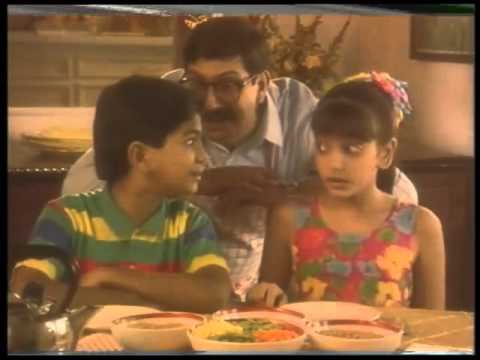
The execution follows a classic Problem-Solution framework. The 'problem' is subtly introduced with the family dynamic and then made explicit when the older siblings point out that their younger brother, Chotu, "eats nothing." This immediately grounds the ad in a relatable family struggle. The 'solution' is presented by a progressive, apron-clad father, a character choice that was itself a point of differentiation in early 90s Indian advertising. His introduction of the 'new' Top Ramen sets the stage. The ad then seamlessly integrates a Product Demo, with the jingle providing a cheerful, step-by-step guide to preparation that emphasizes ease. The 'proof' is the ad's climax: Chotu doesn't just eat the noodles, he devours the entire bowl and, in the ad's most powerful moment, asks for more. This simple, two-word endorsement—"Aur do" ("Give more")—is more persuasive than any complex sales pitch.
The debrief for the creative team would highlight the power of niching. Instead of fighting Maggi on its established ground of '2-minute' speed, Top Ramen targeted a specific, emotionally charged use-case. The memorable jingle served as a powerful audio mnemonic, ensuring the brand name and preparation method stuck in consumers' minds. It's a solid, strategically sound piece of advertising that understood it needed to win a specific battle before it could fight the larger war.
Theme Keywords
Brand Position
The delicious, easy-to-make instant noodle that solves the picky-eater problem.
Brand Archetype
Caregiver
Creative Game Plan
Demonstrate that Top Ramen is the ultimate secret weapon for parents to win over their fussiest child at mealtime.
Diagnosis: Issues & Solutions
Primary Issue: Emotional Connection
The Problem:
The ad's focus is almost entirely on the children's reaction. It misses an opportunity to close the emotional loop by showing a shared moment of relief or happiness between the parents (the mother is notably absent).
The Solution:
After the father's success, a final shot could have shown the mother entering the room, sharing a knowing, appreciative smile with her husband. This would have broadened the emotional payoff from 'problem solved' to 'a moment of family harmony'.
Secondary Issue: Strategic Sense
The Problem:
While successfully differentiating on the 'picky eater' angle, the ad doesn't strongly establish a unique product attribute. The soupy, ramen-style nature of the product is shown but not explicitly called out as a key difference from the competition.
The Solution:
A line in the jingle or voiceover such as 'A delicious soup in every bowl' could have helped create a clearer product distinction against Maggi's drier noodle style, giving consumers a functional reason to believe in the different taste.
Additional Notes
Related Links
Credits
Share this Analysis
More Top Ramen ad breakdowns
- Rollton on Fire. EnglishRollton
- BTS Jin’s Jinjja Love StoryJin Ramen
- BigBon! Tastes better than waiting for delivery!BigBon
- How to cook BigBon Tien Shan RAMEN?BigBon
- Pot Noodle: The RingPot Noodle
- NOAH'S ARK: SHARING (INDOMIE RAMADAN TVC)Indomie
- A Pot Noeldle Christmas - by Pot NoodlePot Noodle
- Dig, Twist & Slurrp | Zepto X Slurrp FarmZepto / Slurrp Farm